View by Topic
Recent Articles
-
 D.C. Circuit Upholds PFAS Hazardous Designation – Critical Implications for Real EstateSaturday, October 10th, 2026
 -
 TMDL Trump Executive Order – Why the Chesapeake Bay “Pollution Diet” Remains IntactSaturday, October 3rd, 2026
 -
 Maryland’s Packaging EPR Program Moves From Law to RealitySaturday, September 26th, 2026
 -
 Exposomics – The New Environmental Risk You Have Not Heard AboutSaturday, September 19th, 2026
 -
 Clean Water Isn’t a Constitutional Right? Fifth Circuit Says NoSaturday, September 12th, 2026
View by Month/Year
“Green Building Law Update” Headlines
Recent Articles & News from
Stuart Kaplow’s blog
at GreenBuildingLawUpdate.com
Subscribe to the Green Building Law Update!
Stuart Kaplow brings his expertise and extensive experience to the table with his unique digital publication, "Green Building Law Update". Subscribers receive regular updates to keep them informed about important issues surrounding Environmental Law, Green Building & Real Estate Law, as well as the emerging demand for Environmental Social Governance (ESG).
Get fresh content through the lense of Stuart Kaplow's cutting-edge expertise, innovative commentary and insider perspective. Don't miss another issue! Subscribe below.
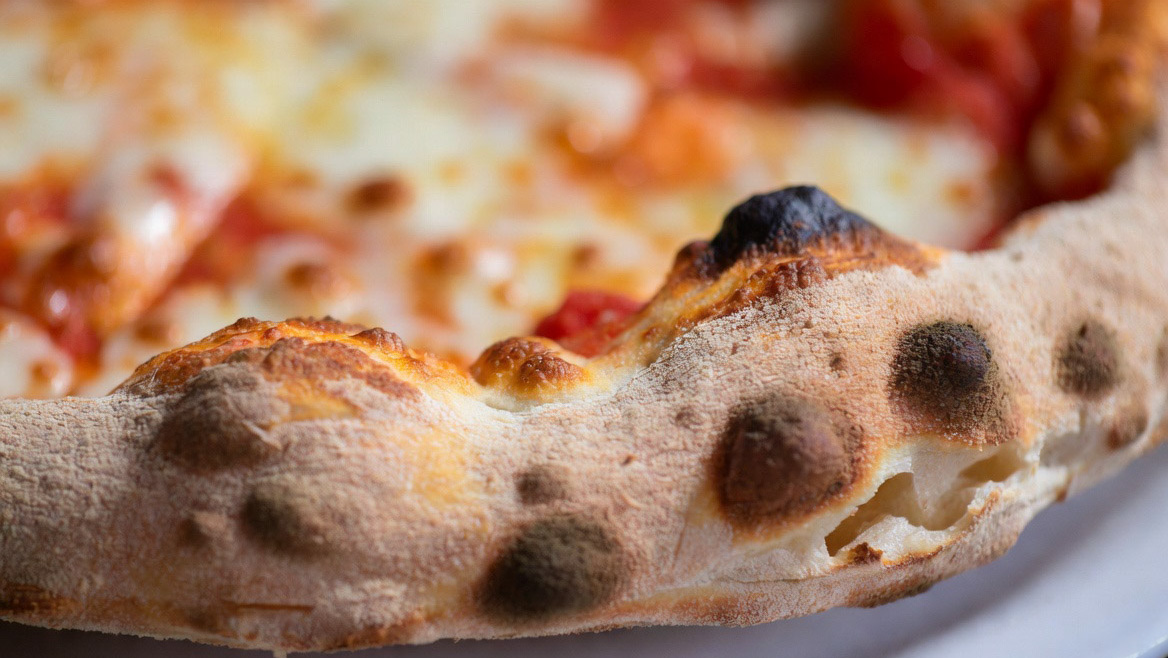
Potassium Bromate Is Banned Abroad. Will it continue to be in American Pizza and Bagels?
For most Americans, choosing what to eat is a matter of taste, convenience, and cost. Increasingly, however, it is also a matter of informed risk management.
As an environmental attorney who spends much of his professional life evaluating scientific evidence, regulatory trends, and long term risks, I support those consumers who are making the conscious choice not to eat pizza, bagels, and other baked goods made with flour containing potassium bromate.
While voluntary action by consumers and businesses is preferable, an impending wave of state bans, in this emergent space in environmental law, may soon make that choice for many Americans.
A Ban Is Coming
The issue has gained national attention because New York lawmakers have passed Senate Bill S1239A, the Food Safety and Chemical Disclosure Act, which would prohibit potassium bromate in foods sold in the state. The New York legislature passed the bill on April 21, 2026, and it currently awaits action by Governor Kathy Hochul. If signed, the manufacture and sale of foods containing potassium bromate would become illegal one year after the law takes effect.
This is not an isolated development.
California became the first state in the nation to ban potassium bromate through AB 418, the California Food Safety Act, enacted in 2023 with a compliance date of January 1, 2027. The lengthy transition period gave manufacturers nearly four years to reformulate recipes and supply chains.
Illinois is considering a similar prohibition through SB 93. Maryland legislators have already announced plans to introduce legislation banning potassium bromate during the 2027 legislative session. Other states, including Virginia and West Virginia, have begun restricting certain food additives in school meals, reflecting a broader trend of state level intervention in food chemistry that historically had been left largely to federal regulators.
Taken together, these actions represent a rapidly growing national movement in which states are bypassing federal inaction and establishing their own food safety standards.
Why Potassium Bromate Matters
Potassium bromate (KBrO3) is a white crystalline powder and a powerful oxidizing agent used in commercial baking.
For decades, it has been added to flour because it strengthens gluten bonds, improves dough elasticity, shortens production times, increases oven rise, and helps create the chewy texture consumers associate with New York bagels and many styles of pizza crust.
In practical terms, potassium bromate makes dough easier and more predictable to work with. Bakers can produce taller loaves, more uniform crusts, and consistent products with less effort and less fermentation time.
That convenience, however, comes with significant controversy.
Ideally, potassium bromate converts during baking into potassium bromide, a comparatively harmless compound. The reality is that incomplete conversion can leave residual bromate in the finished food product.
The Health Concerns Are Real
Potassium bromate is not being targeted because of internet rumors or social media hysteria.
Animal studies have repeatedly demonstrated that potassium bromate can induce kidney tumors, thyroid tumors, and mesotheliomas. Researchers have also documented oxidative stress, DNA damage, and cytotoxic effects associated with exposure.
The International Agency for Research on Cancer classifies potassium bromate as a Group 2B carcinogen, meaning it is “possibly carcinogenic to humans.” While direct evidence in humans is more limited than in laboratory animals, the classification reflects a substantial body of scientific concern.
The U.S. Food and Drug Administration permits potassium bromate in flour at levels up to 75 parts per million, based on the assumption that proper baking eliminates residual bromate. Critics argue that this assumption depends heavily on manufacturing controls and baking conditions that may vary from one bakery and pizza shop to another.
In risk management, assumptions matter.
When a chemical serves primarily to improve production efficiency and texture, while simultaneously carrying a recognized carcinogenicity concern, many consumers understandably conclude the risk benefit equation no longer works.
This Is Not Just a “MAHA” Issue
Some commentators have attempted to dismiss concern about potassium bromate as merely a “Make America Healthy Again” issue or the latest suburban parenting trend.
That misses the point entirely.
Most well informed people would choose a longer and healthier life over a slightly softer pizza crust, a marginally chewier bagel, or a more forgiving dough recipe.
This is not about politics.
It is about the science of exposomics and lifetime exposure. For decades, environmental law focused on the visible and the catastrophic: spills, smokestacks, Superfund sites, and enforcement actions after damage was done. Today, exposomics, a quieter but far more pervasive environmental issue is moving to the center of serious scientific and commercial attention. At its core, the exposome describes the totality of environmental exposures an individual experiences over a lifetime and how those exposures affect biology and health.
The same business owners who spend significant resources reducing workplace hazards, environmental liabilities, cybersecurity risks, and product liability exposures understand the logic. When safer alternatives exist and the market is increasingly demanding them, continuing to rely on a controversial chemical becomes harder to justify.
The Rest of the World Already Moved On
Perhaps the most telling fact is that potassium bromate has already been banned in more than 40 countries.
The European Union, the United Kingdom, Canada, India, Brazil, China, and many other jurisdictions prohibit its use in food products. Those nations continue to produce excellent bread, pizza, bagels, and baked goods without relying on bromated flour.
The notion that quality baking requires potassium bromate simply does not withstand international comparison.
Indeed, many of New York’s most celebrated modern pizzerias and artisanal bakeries already advertise that they use unbromated flour. In many circles, “unbromated” has become a marker of quality rather than a compromise.
What This Means for Business Owners
For restaurant operators, pizza shops, bakeries, and food manufacturers, the regulatory writing is on the wall.
Businesses that proactively transition to unbromated flour today are likely to enjoy several advantages:
- Reduced future regulatory risk.
- Simplified compliance as state bans proliferate.
- Stronger consumer confidence.
- Easier marketing to health conscious customers.
- Reduced exposure to future product liability claims.
Most importantly, reformulation is increasingly becoming a competitive necessity rather than a regulatory burden.
California’s 2027 deadline is approaching. New York may follow within a year of Governor Hochul’s signature. Illinois is considering similar legislation. Maryland is likely not far behind.
The Bottom Line
As consumers, we can choose what we eat.
As business owners, we can choose what we sell.
Potassium bromate was adopted because it made baking easier and products more uniform. But when a food additive is considered sufficiently concerning to be banned throughout much of the developed world, classified as a possible human carcinogen, and increasingly targeted by state legislatures across America, continuing to rely upon it becomes difficult to defend.
Consumers who choose unbromated pizza, bagels, and bread are making a rational exposomics based decision grounded in precaution and risk management.
And businesses that respond to that demand are likely positioning themselves on the right side of both risk mitigation and the marketplace.
_________________________
Join us for the next in our webinar series at the Intersection of Business, Science, and Law, “Environmental Issues in Commercial Leases” on Tues, June 16 at 9 am. The webinar is complimentary, but you must register here.
About the Author: Stuart Kaplow