
View by Topic
Recent Articles
-
 Australia’s High Court Puts Scope 3 GHG Emissions Back on the U.S. Business Risk MapSaturday, October 17th, 2026
 -
 D.C. Circuit Upholds PFAS Hazardous Designation – Critical Implications for Real EstateSaturday, October 10th, 2026
 -
 TMDL Trump Executive Order – Why the Chesapeake Bay “Pollution Diet” Remains IntactSaturday, October 3rd, 2026
 -
 Maryland’s Packaging EPR Program Moves From Law to RealitySaturday, September 26th, 2026
 -
 Exposomics – The New Environmental Risk You Have Not Heard AboutSaturday, September 19th, 2026
View by Month/Year
“Green Building Law Update” Headlines
Recent Articles & News from
Stuart Kaplow’s blog
at GreenBuildingLawUpdate.com
- Maryland’s New Recycling Tax? Packaging EPR Moves From Law to Reality September 27, 2026
- Exposomics – The New Environmental Risk That Will Change Real Estate September 20, 2026
- No Constitutional Right to Clean Drinking Water? Fifth Circuit Says Not So Fast September 13, 2026
- The Air We Share – Why Indoor Air Is Becoming a Real Estate Risk September 6, 2026
Subscribe to the Green Building Law Update!
Stuart Kaplow brings his expertise and extensive experience to the table with his unique digital publication, "Green Building Law Update". Subscribers receive regular updates to keep them informed about important issues surrounding Environmental Law, Green Building & Real Estate Law, as well as the emerging demand for Environmental Social Governance (ESG).
Get fresh content through the lense of Stuart Kaplow's cutting-edge expertise, innovative commentary and insider perspective. Don't miss another issue! Subscribe below.
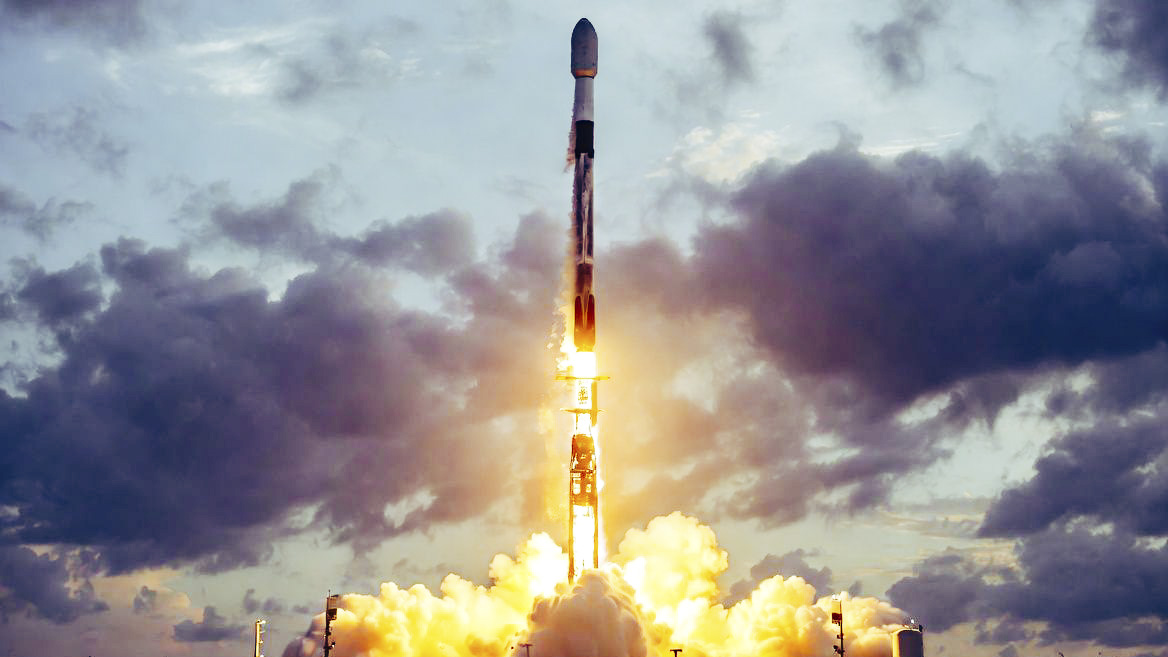
Commercial Space Launch Reform – FAA Proposal Will Cut Years from Licensing Approvals
The United States is in the midst of a new space race. Unlike the Apollo era, this competition is driven not only by governments but by private companies launching communication satellites, developing reusable rockets, planning lunar missions, and even envisioning data centers in low Earth orbit. If the United States intends to remain the global leader in commercial space, its regulatory framework must evolve as rapidly as the technology it governs.
On July 28, 2026, the Federal Aviation Administration announced a significant initiative to streamline commercial space licensing, making it faster and easier for innovators to obtain approvals to launch rockets, conduct spacecraft reentries, and operate launch and reentry sites.
This proposal is a win for innovation and competition, particularly for places that have existing rocket infrastructure, from Maryland to Texas and from Florida to California.
The initiative implements President Trump’s Executive Order, Enabling Competition in the Commercial Space Industry, which declared it the policy of the United States to foster a competitive commercial launch marketplace and dramatically increase launch activity and other commercial space operations by 2030. It also advances Congress’s longstanding directive that commercial space licensing should be simplified and expedited.
The timing could not be more important.
Today, U.S. companies operate approximately 11,400 satellites in orbit. Industry projections anticipate well over 40,000 satellites in the coming years, and that estimate does not include expanded lunar operations, eventual Mars missions, or emerging concepts such as orbital data centers. Commercial space activity is no longer a niche industry, it is becoming critical infrastructure for communications, navigation, national security, artificial intelligence, and economic growth.
Yet despite this explosive growth, regulatory approvals have struggled to keep pace.
Although the FAA has only 180 days to review a completed application, preparing an application and satisfying overlapping federal environmental review requirements often stretches the process to 36 months for a new operator or new launch vehicle. Those delays create uncertainty, increase financing costs, discourage investment, and can drive innovation overseas.
The FAA’s proposal directly addresses this problem.
The proposed rule would allow the Secretary of Transportation, after consultation with appropriate federal agencies to, consistent with authority granted in 1984, waive requirements under 13 federal statutes, including the National Environmental Policy Act (NEPA), the Endangered Species Act, portions of the Clean Water Act, the Clean Air Act, the National Historic Preservation Act, and several other environmental and natural resource laws, when those requirements are not necessary to protect public health and safety, property, national security, or the foreign policy interests of the United States. Not to mention what is the purpose of redundant reviews when environmental impacts are unchanged from prior launches?
Critics will undoubtedly characterize this as “eliminating environmental protections.”
That characterization is inaccurate.
The proposal does not eliminate substantive environmental protections where they are genuinely necessary. Rather, it recognizes that duplicative procedural reviews often add years of delay without improving environmental outcomes. Safety requirements remain fully intact, as do protections needed to safeguard people, property, national security, and foreign policy interests. The FAA is seeking authority to waive unnecessary procedural requirements, not to authorize unsafe launches.
The proposal also reflects a broader judicial reassessment of environmental review statutes.
The FAA specifically notes the U.S. Supreme Court’s unanimous 2025 observation that NEPA had evolved “from a modest procedural requirement into a blunt and haphazard tool employed by project opponents … to try to stop or at least slow down new infrastructure and construction projects.” Whether one agrees with that assessment or not, it reflects a growing recognition that environmental review has too often become an instrument for delay rather than informed decision making.
The numbers illustrate why reform is needed. The existing regulatory scheme was built for a world that no longer exists.
During the past five years, the FAA authorized more commercial space operations than it had during the previous three decades combined. Fiscal Year 2025 alone saw a record 204 authorized operations. Looking ahead, the FAA forecasts as many as 4,288 commercial space operations over the next decade, increasing from approximately 214 operations this year to more than 500 annually by 2036. A licensing system designed for dozens of launches cannot accommodate thousands.
Don Platt, the director of Spaceport Education at Florida Tech, observed, “It is perfectly reasonable to think that the 200th Starship launch or the 500th Falcon 9 launch shouldn’t have to do as much paperwork as the very first launch of a new vehicle.”
One non obvious insight is this proposal actually increases environmental leverage when licensing is predictable and repeatable; the FAA can impose consistent environmental conditions across all launches, something impossible under bespoke one off permit applications.
The economic implications extend well beyond Florida’s Space Coast.
While Cape Canaveral remains America’s premier launch complex, streamlined licensing will also benefit facilities such as NASA’s Wallops Flight Facility on Virginia’s Eastern Shore, including extending the life of the nearby Goddard Space Flight Center in Maryland; the Mojave Air and Space Port in California; and Blue Origin’s West Texas launch site. Faster approvals mean more investment, more high paying engineering jobs, expanded manufacturing, and stronger regional economies.
For U.S. business leaders, this proposal represents something even broader than space policy. An economic development official in Maryland said, noting that NASA plans to build bases on the moon beginning with more than 20 robotic landings through 2029, this proposal could “be the largest single act of economic advancement for the state in more than 25 years.” He observed that nearly half of Wallops employees live in Maryland and more than half of the flight center contractors have offices in Maryland.
The proposal signals a regulatory philosophy that distinguishes between environmental safeguards that produce measurable public benefits and procedural requirements that simply consume time and resources. That distinction matters not only for aerospace companies but for defense contractors, energy developers, infrastructure projects, and commercial real estate investments across the country.
If the launches do not take place in the U.S., they will take place in the UK, Australia, Japan, the UAE, or in any of the other nations that have modernized their launch facilities in the last few years. Reaching space is global.
The FAA’s proposal is now subject to a 30 day public comment period before a final rule is issued. As with any rulemaking, thoughtful public participation is important. But the central objective should not be lost.
Reducing a commercial space licensing process that can realistically consume three years does not weaken environmental stewardship. It strengthens American competitiveness and bolsters regional economies from Maryland to Texas while preserving protections where they are actually needed.
In the global race for commercial space leadership, regulatory efficiency is itself a strategic asset. More importantly, it demonstrates that environmental regulation can protect legitimate public interests without becoming an obstacle to innovation.
About the Author: Stuart Kaplow