View by Topic
Recent Articles
-
 D.C. Circuit Upholds PFAS Hazardous Designation – Critical Implications for Real EstateSaturday, October 10th, 2026
 -
 TMDL Trump Executive Order – Why the Chesapeake Bay “Pollution Diet” Remains IntactSaturday, October 3rd, 2026
 -
 Maryland’s Packaging EPR Program Moves From Law to RealitySaturday, September 26th, 2026
 -
 Exposomics – The New Environmental Risk You Have Not Heard AboutSaturday, September 19th, 2026
 -
 Clean Water Isn’t a Constitutional Right? Fifth Circuit Says NoSaturday, September 12th, 2026
View by Month/Year
“Green Building Law Update” Headlines
Recent Articles & News from
Stuart Kaplow’s blog
at GreenBuildingLawUpdate.com
Subscribe to the Green Building Law Update!
Stuart Kaplow brings his expertise and extensive experience to the table with his unique digital publication, "Green Building Law Update". Subscribers receive regular updates to keep them informed about important issues surrounding Environmental Law, Green Building & Real Estate Law, as well as the emerging demand for Environmental Social Governance (ESG).
Get fresh content through the lense of Stuart Kaplow's cutting-edge expertise, innovative commentary and insider perspective. Don't miss another issue! Subscribe below.
Puerto Rico’s Water Crisis – The Era of Potable Water Bankruptcy Has Arrived
Environmental law has in large measure focused on pollution: the contaminated river, the leaking underground tank, the smokestack, the Superfund site. But an equally consequential environmental problem is emerging when there is simply not enough water in the needed locales.
Puerto Rico is now providing a stark warning.
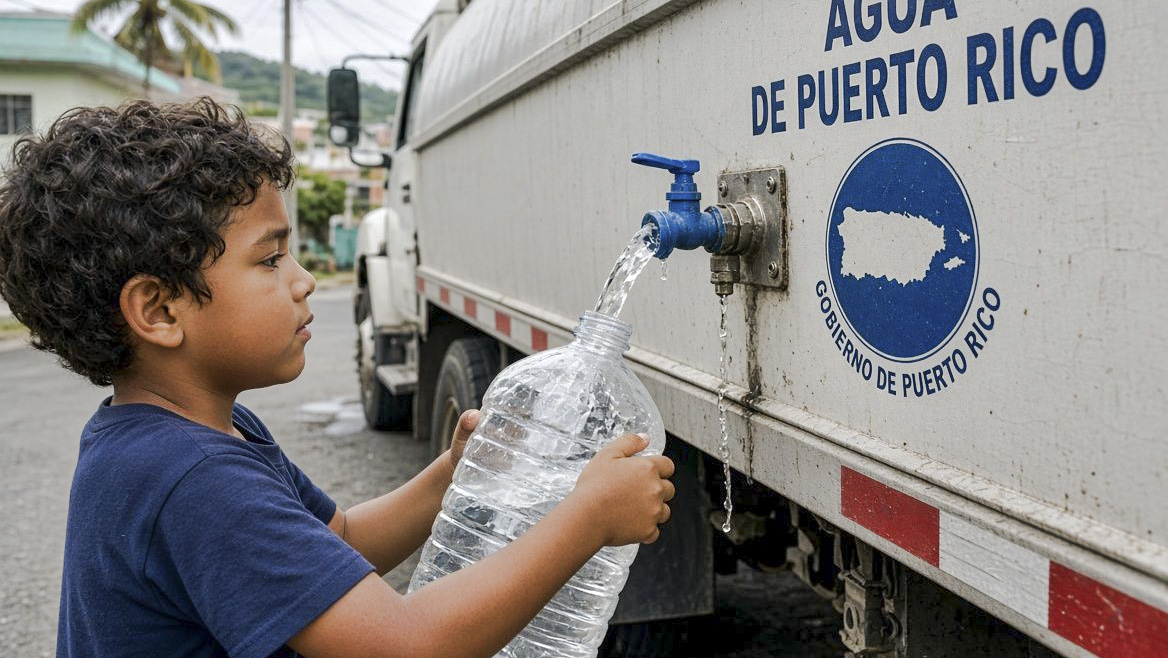
Beginning August 7, 2026, more than 180,000 customer accounts in San Juan and six surrounding municipalities, Carolina, Juncos, Gurabo, Trujillo Alto, Canóvanas and Loíza, are being subjected to alternating 48 hour water outages. Officials have warned that outages could extend to 72 hours if conditions deteriorate.
This is not merely a drought. It is potable water bankruptcy.
What Is Water Bankruptcy?
“Water bankruptcy” is not a formal regulatory classification. It is a useful way of describing the point at which a community’s dependable water demand persistently exceeds its available supply, and infrastructure, reservoirs, and other reserves can no longer reliably bridge the gap.
That distinction matters.
A drought is a meteorological event. Water bankruptcy is a societal and infrastructure failure that can result when drought collides with excessive demand, inadequate storage, leaking distribution systems, and years of deferred investment, as we blogged in Potable Water Bankruptcy as Environmental Crisis.
Puerto Rico is experiencing that collision in real time.
A Crisis Measured in Days Without Water
The numbers are extraordinary.
Residents in parts of the San Juan metropolitan area have already endured 118 days of water interruptions this year. July was the driest July, only 0.54 inches in rainfall, recorded in San Juan in more than 120 years, dating back to 1899. More than half of Puerto Rico was experiencing some level of drought, with approximately one quarter classified as severe drought in the latest reports.
The Carraízo reservoir, a critical source for the San Juan metropolitan area, has become sufficiently depleted that authorities are now rationing the remaining supply. The current rationing is expected to continue at least through August, with the duration ultimately dependent on rainfall and reservoir conditions.
And there is little reason to assume that rainfall will immediately solve the problem. Forecasts indicate that strengthening El Niño conditions could suppress rainfall and prolong the dry period into at least September.
The drought is real
This has nothing to do with climate change. The drought is real. But so is the infrastructure problem.
Puerto Rico’s water system has suffered from aging infrastructure, inadequate maintenance, and chronic service interruptions. In June, a rupture in a 72 inch transmission line of the Superaqueduct in Bayamón disrupted water service to thousands of customers. Puerto Rico’s Department of Health responded by inspecting water tankers and issuing guidance for safely storing and consuming water during the interruptions.
Recent reporting has also highlighted the extraordinary amount of water lost through leaks in the system.
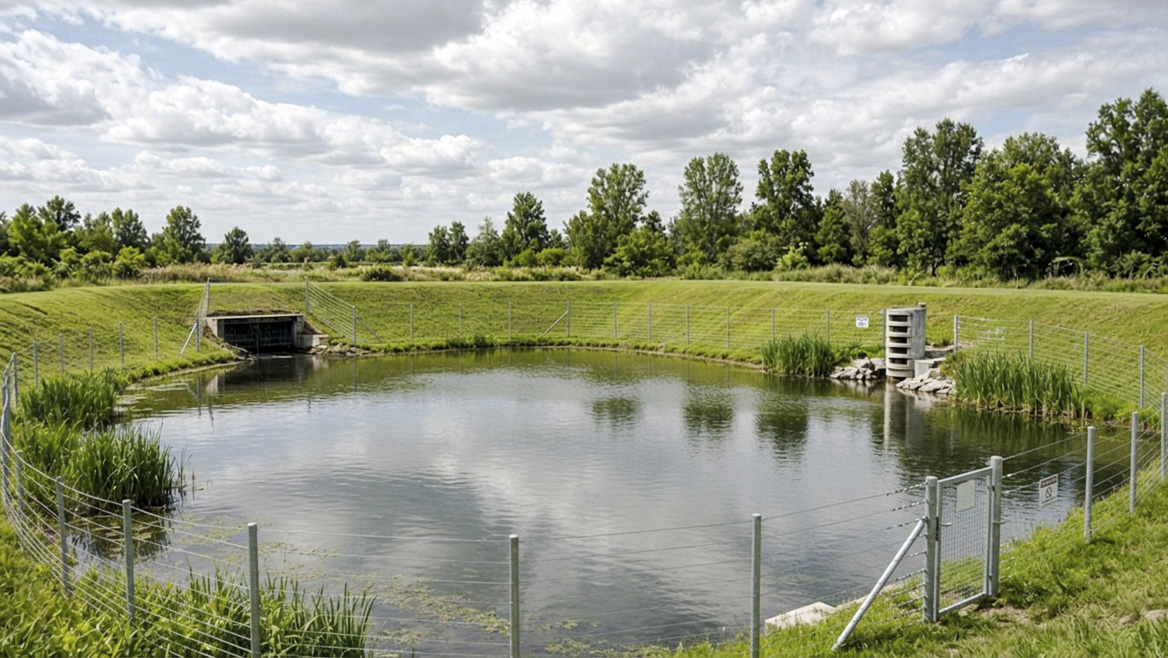
Moreover, government mandated stormwater management fundamentally altered the natural hydrologic cycle. Rainwater is a resource, not a source of pollution under some misguided regulatory scheme, and in looking for a solution to the island’s issues, a discussion of capture potential is of paramount import. We blogged some weeks ago, Historic Low Levels at Reservoirs Reveal Flaws in Modern Maryland Stormwater Management.
In other words, Puerto Rico does not simply have a water supply problem. It has a water management problem.
That distinction should matter to every policymaker and business leader confronting water scarcity.
The Business Consequences
Water rationing is an economic event.
Restaurants cannot operate normally without reliable water. Hotels cannot provide ordinary guest services. Manufacturers need water for processing and sanitation. Hospitals and nursing facilities require reliable potable water. Commercial buildings need water for restrooms, cooling, fire protection and basic operations.
When a municipal water system becomes unreliable, businesses are forced to create their own parallel infrastructure: bottled water, private tankers, cisterns, storage tanks, pumps and emergency contingency plans.
And this does not even consider the wave of cyberattacks on U.S. public water systems, from Georgia to Minnesota and Michigan to South Dakota, that many suspect are linked to Iran backed hackers, pointing to water insecurity.
The costs of all of that can quickly become material. More importantly, water insecurity can affect whether a business can operate at all.
For commercial real estate investors, this should be viewed as a physical asset risk. A building connected to an unreliable water system is not equivalent to the same building with dependable utility service.
The Legal and Environmental Lesson
Puerto Rico’s emergency response includes tanker deliveries prioritizing hospitals and other vulnerable facilities, while municipalities are providing water to residents. The Governor has also declared emergencies as interruptions have spread.
But emergency water deliveries are not a water system.
The long term solution requires investment in reservoirs, transmission capacity, leak reduction, redundant infrastructure, conservation, water reuse, and more resilient building level storage.
Businesses should be thinking about those issues now, not after the taps stop running.
For developers, lenders, investors and major water users, water availability increasingly belongs in due diligence alongside electricity, transportation, environmental contamination and zoning. Lease negotiations may eventually need provisions addressing water interruptions, emergency storage, service levels and business continuity.
Puerto Rico Is the Warning
I wrote last year that potable water may be the most immediate environmental crisis of our time. Potable Water Bankruptcy as Environmental Crisis
Puerto Rico demonstrates why. But so do the Western states that rely on the Colorado River, which is today at record lows.
We can transition energy systems over decades. We cannot transition away from water.
Puerto Rico is part of the United States. What is happening in San Juan should therefore not be dismissed as a distant problem in Tehran or Kabul. This is a case study in what happens when drought, aging infrastructure, inadequate investment and rising demand converge.
The era of water bankruptcy is no longer theoretical.
The question for policymakers, and increasingly for businesses including real estate owners, is whether we invest in water resilience before the next locale is forced to ration the most basic resource on which its economy depends (.. not to mention human life itself).
About the Author: Stuart Kaplow