View by Topic
Recent Articles
-
 D.C. Circuit Upholds PFAS Hazardous Designation – Critical Implications for Real EstateSaturday, October 10th, 2026
 -
 TMDL Trump Executive Order – Why the Chesapeake Bay “Pollution Diet” Remains IntactSaturday, October 3rd, 2026
 -
 Maryland’s Packaging EPR Program Moves From Law to RealitySaturday, September 26th, 2026
 -
 Exposomics – The New Environmental Risk You Have Not Heard AboutSaturday, September 19th, 2026
 -
 Clean Water Isn’t a Constitutional Right? Fifth Circuit Says NoSaturday, September 12th, 2026
View by Month/Year
“Green Building Law Update” Headlines
Recent Articles & News from
Stuart Kaplow’s blog
at GreenBuildingLawUpdate.com
- Maryland’s New Recycling Tax? Packaging EPR Moves From Law to Reality September 27, 2026
- Exposomics – The New Environmental Risk That Will Change Real Estate September 20, 2026
- No Constitutional Right to Clean Drinking Water? Fifth Circuit Says Not So Fast September 13, 2026
- The Air We Share – Why Indoor Air Is Becoming a Real Estate Risk September 6, 2026
Subscribe to the Green Building Law Update!
Stuart Kaplow brings his expertise and extensive experience to the table with his unique digital publication, "Green Building Law Update". Subscribers receive regular updates to keep them informed about important issues surrounding Environmental Law, Green Building & Real Estate Law, as well as the emerging demand for Environmental Social Governance (ESG).
Get fresh content through the lense of Stuart Kaplow's cutting-edge expertise, innovative commentary and insider perspective. Don't miss another issue! Subscribe below.
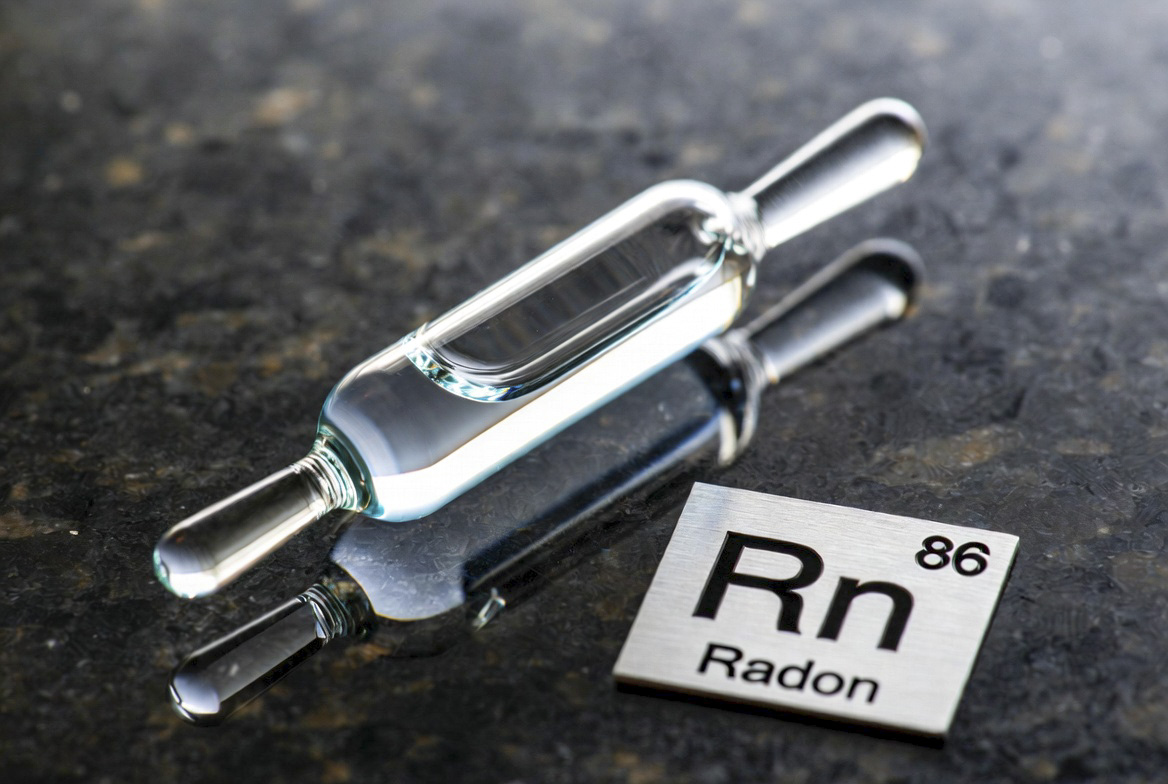
Radon – Test and Decide for Yourself
Radon is a real health risk. It is also an area where education and informed decision making are far more effective than additional government mandates.
Approximately 21,000 Americans die each year from radon induced lung cancer, according to the U.S. Environmental Protection Agency. Radon is the second leading cause of lung cancer in the United States after smoking and the leading cause of lung cancer among nonsmokers.
Those facts alone justify testing for radon. Fortunately, there is equally good news: radon reduction systems work, are widely available, and can often be installed for a cost comparable to other common home repairs.
What Is Radon?
First isolated in 1908 when it was called “niton” and since 1923, radon is a naturally occurring radioactive gas, with a half life of 1601 years, produced by the decay of uranium, radium, and thorium in soil, rock, and groundwater. It is colorless, odorless, and tasteless. Because uranium is found almost everywhere in the Earth’s crust, some amount of radon is present virtually everywhere.
The gas migrates through soil and enters buildings through cracks in foundations, gaps around pipes, sump pits, and other openings. Once inside, radon can accumulate to elevated levels.
Any home can have a radon problem. New homes, old homes, drafty homes, energy efficient homes, homes with basements, and homes without basements can all contain elevated radon levels. The only way to know is to test. Fortunately self test costs less than ten dollars at hardware stores.
At one time, radon rich spas were all the rage, like Hot Springs, Arkansas, because people thought radioactive gas conferred medical benefits. There are still radon rich spas, like Bad Gastein in Austria, where radon rich waters in the Gastein Healing Gallery (an abandoned mine tunnel) are visited by thousands each year for medicinal purposes.
The Government’s Unintended Consequence
There is an irony here that deserves attention.
Many elevated indoor radon levels are associated with the same energy efficiency measures governments have encouraged or required to reduce greenhouse gas emissions. New multi-pane windows, improved insulation, weather stripping, caulking, and high efficiency HVAC systems all make homes air tighter and reduce air exchange with the outdoors.
Those improvements often save energy and reduce emissions. They also trap radon inside a building that would otherwise escape through natural air leakage.
In that sense, some of today’s radon concerns are an unintended consequence of decades of policies encouraging tighter building envelopes. An unscientific testing of ten ENERGY STAR certified homes found nine of them had radon levels of concern.
If radon were not responsible for thousands of lung cancer deaths annually, this might simply be an interesting engineering observation. This is the quintessential example of an environmental unintended consequence; an unexpected outcome of human actions and policies aimed at fixing nature.
What Levels Are Concerning?
The EPA recommends mitigation when indoor radon levels reach 4 picocuries per liter (pCi/L) or higher. The agency also recommends homeowners consider mitigation for levels between 2 and 4 pCi/L because there is no known safe level of radon exposure. The average indoor radon concentration in U.S. homes is approximately 1.3 pCi/L.
Importantly, elevated radon levels have been found in every state, and EPA estimates that nearly one in fifteen U.S. homes has radon levels that warrant reduction.
Most of Maryland, Virginia, and the District of Columbia fall within EPA Zone 1, the highest radon potential category.
Radon Science Is Strong, even if Precise Numbers Are Debated
There is no serious scientific debate over whether radon causes lung cancer. The EPA, the National Academy of Sciences, the World Health Organization, and other major scientific bodies all classify radon as a known human carcinogen.
What scientists continue to study is the precise number of cancers attributable to radon exposure in buildings, from homes to schools and offices to warehouses. That question is difficult because people move, homes change over time, smoking histories can be uncertain, and many other factors contribute to lung cancer.
But the core conclusion remains unchanged: radon exposure increases the risk of lung cancer.
This is a real example of Exposomics Is the Environmental Issue Business Should Take Seriously.
The Good News: Mitigation Works
Unlike many environmental hazards, radon is often straightforward to address.
Modern radon mitigation systems typically use a fan and piping system to draw radon-laden soil gas from beneath a building and vent it safely above the roofline. EPA reports that properly installed systems can reduce radon levels by as much as 99 percent. Millions of Americans have successfully reduced radon levels in their homes.
For most homeowners, mitigation costs are modest compared to the value of the property and the potential health benefits.
Radon Litigation is Increasing
Radon related litigation is increasing across the United States. Lawsuits are being brought against homebuilders, developers, architects, engineers, and design professionals for failing to incorporate radon resistant construction techniques where appropriate; against sellers, landlords, and property managers for failing to disclose known radon conditions or material information about indoor air quality; and against contractors and radon mitigation professionals for negligent testing, improper installation, defective mitigation systems, or misrepresenting the effectiveness of remediation efforts.
In addition, claims are being asserted against home inspectors for failing to identify radon risks or recommend testing, against real estate brokers for alleged nondisclosure or misrepresentation, and against employers and commercial property owners based on workplace exposure.
Why More Laws Are Not the Answer
Some jurisdictions have imposed radon testing or disclosure requirements. For example, Montgomery County, Maryland, became the first local government in the nation to require radon testing as part of certain residential real estate sales and rentals. The state of Maryland requires the disclosure of elevated radon levels as a latent defect, if known by a home seller.
Radon is naturally occurring. It exists everywhere. Levels fluctuate daily based on weather, soil moisture, pressure differentials, building conditions, and occupant behavior. Government regulation has caused radon to accumulate in buildings, and even with new laws, government cannot eliminate radon from the environment.
Moreover, regulation inevitably creates compliance costs, potential liability, transactional delays, and litigation over testing methods and results.
The better approach is education.
Prospective purchasers should understand that radon is a genuine health concern, that testing is inexpensive, and that mitigation systems are effective. Armed with that information, buyers can make informed decisions based on their own exposomics and risk tolerance.
The right environmental public policy is not to compel more government in every transaction. It is to ensure every buyer knows enough to decide whether testing makes sense.
For a naturally occurring environmental risk that can be identified easily and mitigated successfully, informed choice remains the best solution.
____________________
Join us for the next in our webinar series at the Intersection of Business, Science, and Law, “Radon Risk and Opportunity in Real Estate” on Tues, August 4 at 9 am. The webinar is complimentary, but you must register here.
About the Author: Stuart Kaplow