View by Topic
Recent Articles
-
 Australia’s High Court Puts Scope 3 GHG Emissions Back on the U.S. Business Risk MapSaturday, October 17th, 2026
 -
 D.C. Circuit Upholds PFAS Hazardous Designation – Critical Implications for Real EstateSaturday, October 10th, 2026
 -
 TMDL Trump Executive Order – Why the Chesapeake Bay “Pollution Diet” Remains IntactSaturday, October 3rd, 2026
 -
 Maryland’s Packaging EPR Program Moves From Law to RealitySaturday, September 26th, 2026
 -
 Exposomics – The New Environmental Risk You Have Not Heard AboutSaturday, September 19th, 2026
View by Month/Year
“Green Building Law Update” Headlines
Recent Articles & News from
Stuart Kaplow’s blog
at GreenBuildingLawUpdate.com
- Maryland’s New Recycling Tax? Packaging EPR Moves From Law to Reality September 27, 2026
- Exposomics – The New Environmental Risk That Will Change Real Estate September 20, 2026
- No Constitutional Right to Clean Drinking Water? Fifth Circuit Says Not So Fast September 13, 2026
- The Air We Share – Why Indoor Air Is Becoming a Real Estate Risk September 6, 2026
Subscribe to the Green Building Law Update!
Stuart Kaplow brings his expertise and extensive experience to the table with his unique digital publication, "Green Building Law Update". Subscribers receive regular updates to keep them informed about important issues surrounding Environmental Law, Green Building & Real Estate Law, as well as the emerging demand for Environmental Social Governance (ESG).
Get fresh content through the lense of Stuart Kaplow's cutting-edge expertise, innovative commentary and insider perspective. Don't miss another issue! Subscribe below.
Clean Water Act Citizen Suits Face Higher Burden After Fourth Circuit PFAS Ruling
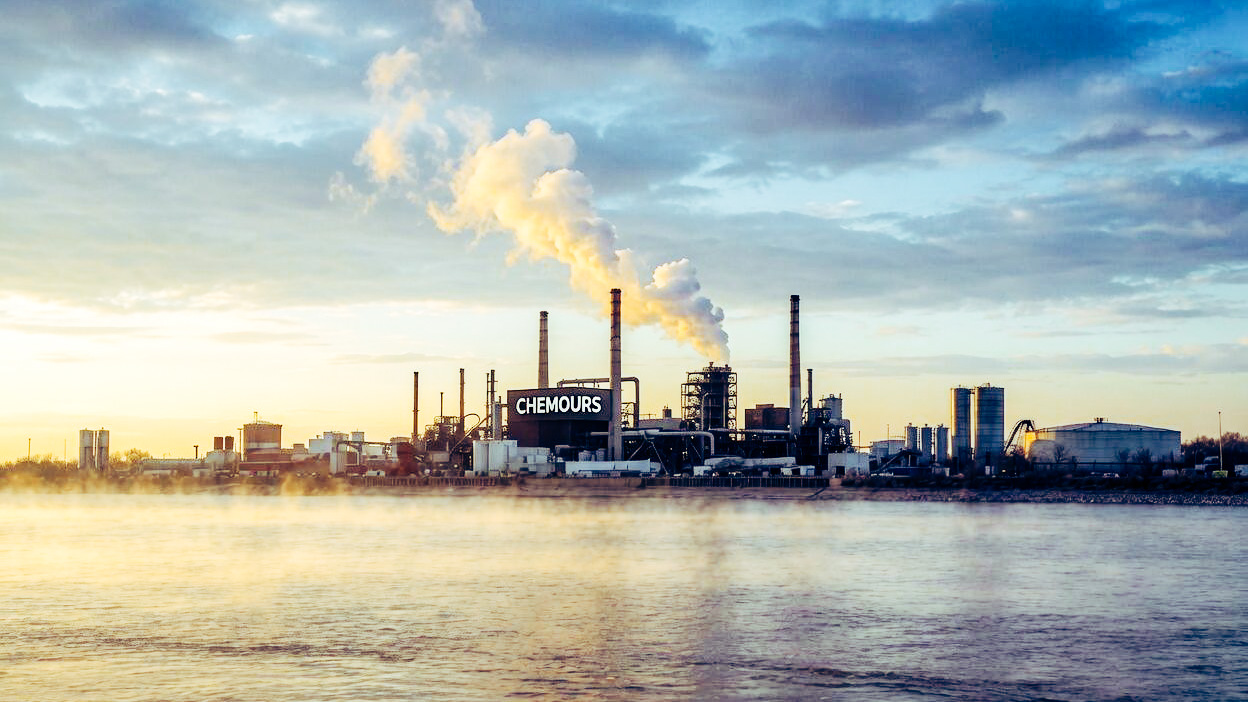
Businesses facing PFAS compliance challenges received an important victory in a court decision this month when the U.S. Court of Appeals for the Fourth Circuit vacated a preliminary injunction that had barred The Chemours Company from discharging PFAS compounds above permit limits into the Ohio River.
In West Virginia Rivers Coalition, Inc. v. The Chemours Company FC, LLC, decided June 3, 2026, the Fourth Circuit made clear that even in cases involving PFAS “forever chemicals” and admitted permit violations, environmental plaintiffs seeking a preliminary injunction must satisfy the same rigorous burden of proving irreparable harm that applies in all federal litigation.
For business owners, manufacturers, real estate developers, and operators of properties regulated under the Clean Water Act (i.e., far more than only those with PFAS issues), the decision is markedly important because it rejects the notion that a permit exceedance automatically justifies injunctive relief.
The Background
The dispute arose from operations at Chemours’ Washington Works facility in Parkersburg, West Virginia. The facility manufactures polymers and uses hexafluoropropylene oxide dimer acid (HFPO-DA), a PFAS compound commonly associated with the trade name GenX, as a processing aid.
Chemours operates under a Clean Water Act permit that authorizes discharges of HFPO-DA into the Ohio River subject to specific concentration limits established by West Virginia regulators, at two outfalls, with limits of 2,300 parts per trillion of HFPO-DA per day at both outfalls, as well as average monthly concentration limits of HFPO-DA of 1,100 ppt at one outfall and 1,400 ppt at the other. There was no serious dispute that Chemours exceeded those permit limits on multiple occasions beginning in 2022. Chemours had entered into an administrative consent order with the U.S. Environmental Protection Agency to address compliance issues.
In December 2024, the West Virginia Rivers Coalition filed a citizen suit under the Clean Water Act seeking to stop ongoing permit violations and requested a preliminary injunction requiring Chemours to immediately cease exceedances.
The federal district court granted that injunction. Chemours appealed.
The Fourth Circuit’s Decision
Writing for a unanimous panel, Judge Julius Richardson Quattlebaum Jr. agreed that the environmental organization had demonstrated a substantial likelihood of standing through one of its members who alleged that concerns about PFAS contamination caused her to avoid boating on the Ohio River.
The real issue on appeal was not standing, but whether the plaintiffs had demonstrated the “irreparable harm” required for a preliminary injunction under the Supreme Court’s decision in Winter v. Natural Resources Defense Council.
The Fourth Circuit concluded they had not.
The court identified three significant legal errors in the District Court’s analysis.
- Harm to the Public Is Not the Same as Harm to the Plaintiff
The District Court considered alleged harm to the public and the environment as part of its irreparable harm analysis.
The Fourth Circuit rejected that approach, emphasizing that the irreparable harm inquiry focuses on harm to the party seeking the injunction. Public harm is addressed separately under the “public interest” factor of the preliminary injunction test.
In the court’s words, considering public harm during the irreparable harm analysis improperly “double counts” that factor.
- Clean Water Act Violations Do Not Create a Presumption of Irreparable Harm
Perhaps the most important aspect of the decision is the court’s rejection of a presumed harm standard.
The District Court had reasoned that a continuing violation of federal environmental law should create a presumption of irreparable harm.
The Fourth Circuit disagreed, relying heavily on the U.S. Supreme Court’s decision in Weinberger v. Romero-Barcelo, which held that courts are not automatically required to issue injunctions for every Clean Water Act violation.
The appellate court made clear that Congress did not create a special rule exempting environmental plaintiffs from the ordinary requirements governing preliminary injunctions.
- Permit Violations Alone Are Not Irreparable Harm
The court also rejected the notion that exceeding a permit limit automatically constitutes irreparable harm.
According to the Fourth Circuit, a permit violation may be evidence relevant to a claim for relief, but it does not itself establish the type of imminent and irreparable injury necessary to justify emergency injunctive relief.
Instead, the plaintiff must prove that actual irreparable harm is likely to occur absent the injunction.
The Expert Testimony Problem
The court’s treatment of the scientific evidence may be equally important for future environmental (.. not only PFAS) litigation.
The environmental group’s expert testified that exposure to HFPO-DA increased the risk of adverse health effects. However, the Fourth Circuit emphasized that an increased risk is not necessarily enough.
The court explained that the plaintiff was required to show that irreparable harm was “more likely than not” to occur. The expert testimony, in the panel’s view, merely suggested that harm was more likely than it otherwise would have been, not that harm itself was more likely than not.
Compounding the problem, the expert acknowledged that she could not determine what specific harm the plaintiff would suffer based on the amount of exposure at issue.
The Fourth Circuit therefore concluded that the District Court clearly erred in finding that irreparable harm had been established.
Why This Matters for Businesses
This decision arrives at a time when PFAS litigation is beginning to expand across the country.
Businesses face increasing regulatory scrutiny from federal and state agencies, expanding drinking water standards, heightened permit requirements, citizen suits, toxic tort claims, and enforcement actions related to environmental matters including PFAS.
The Fourth Circuit’s decision does not lessen the importance of PFAS compliance. Chemours still faces the underlying Clean Water Act lawsuit, remains subject to EPA oversight, and continues to operate under an administrative consent order.
What the decision does accomplish is to reinforce that federal courts will not dispense with overarching legal principles simply because PFAS are involved.
For businesses, that distinction matters. Preliminary injunctions can force immediate operational changes, production curtailments, capital expenditures, or even temporary shutdowns before a case is fully litigated. The Fourth Circuit has now made clear that plaintiffs seeking such extraordinary relief must present concrete evidence demonstrating that irreparable harm to them is likely, not merely possible.
Looking Ahead
The ruling underscores the continuing tension among PFAS regulation, environmental advocacy, and traditional principles of judicial review.
As regulators continue to develop PFAS effluent limitations, drinking water standards, and cleanup requirements, citizen groups will remain active in seeking judicial intervention. At the same time, courts appear increasingly focused on ensuring that environmental cases adhere to the same procedural and evidentiary standards applied in every other category of federal litigation.
The Fourth Circuit’s message is straightforward: even where PFAS permit violations are undisputed, obtaining a preliminary injunction requires more than proof of a violation. Plaintiffs must demonstrate a likelihood of actual irreparable harm to themselves, supported by evidence sufficient to satisfy the demanding standards established by the Supreme Court.
For businesses navigating the evolving PFAS landscape, as well as other environmental matters, this decision is a profoundly impactful measure of certainty in an area of law often characterized by regulatory change and expanding litigation risk.
About the Author: Stuart Kaplow