View by Topic
Recent Articles
-
 D.C. Circuit Upholds PFAS Hazardous Designation – Critical Implications for Real EstateSaturday, October 10th, 2026
 -
 TMDL Trump Executive Order – Why the Chesapeake Bay “Pollution Diet” Remains IntactSaturday, October 3rd, 2026
 -
 Maryland’s Packaging EPR Program Moves From Law to RealitySaturday, September 26th, 2026
 -
 Exposomics – The New Environmental Risk You Have Not Heard AboutSaturday, September 19th, 2026
 -
 Clean Water Isn’t a Constitutional Right? Fifth Circuit Says NoSaturday, September 12th, 2026
View by Month/Year
“Green Building Law Update” Headlines
Recent Articles & News from
Stuart Kaplow’s blog
at GreenBuildingLawUpdate.com
Subscribe to the Green Building Law Update!
Stuart Kaplow brings his expertise and extensive experience to the table with his unique digital publication, "Green Building Law Update". Subscribers receive regular updates to keep them informed about important issues surrounding Environmental Law, Green Building & Real Estate Law, as well as the emerging demand for Environmental Social Governance (ESG).
Get fresh content through the lense of Stuart Kaplow's cutting-edge expertise, innovative commentary and insider perspective. Don't miss another issue! Subscribe below.
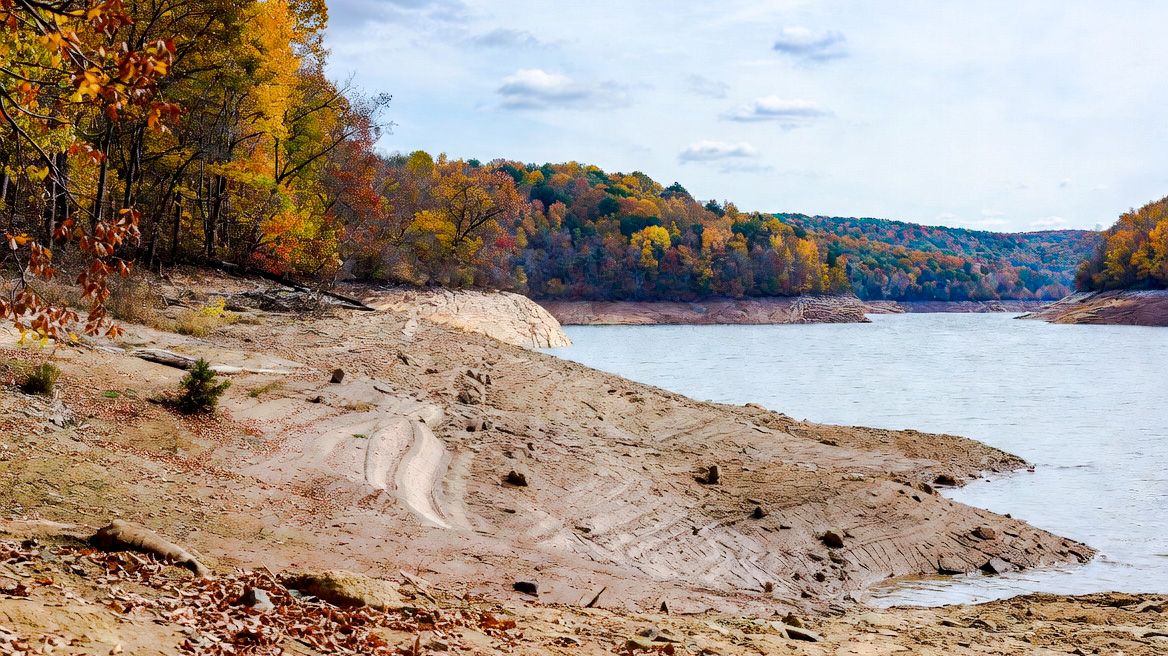
Historic Low Reservoir Levels in Maryland Reveal Flaws in Modern Stormwater Management
Environmental attorneys practicing in Maryland and advising clients throughout the Chesapeake Bay watershed spend a great deal of time discussing stormwater, erosion, nutrient runoff, and water regulatory compliance. But in recent months, another issue has become impossible to ignore: historically low water levels in Baltimore’s drinking water reservoirs.
Despite these low water levels, it is estimated that more than 15 trillion gallons of stormwater (.. yes, trillions with a “t”) are being dumped into the Chesapeake Bay each year; not a source of drinking water.
The irony is striking.
For more than 100 years, government policy across focused on moving the rain once it hits the ground or lands on a roof a/k/a stormwater, away from developed property as quickly as possible. That approach reduced localized flooding and supported suburban growth. That engineering paradigm, rooted in 19th and 20th century urban sanitation and flood control practices, has had the unintended consequence of reducing groundwater recharge, lowering base flows in streams, and in some areas contributing to potable water stress and diminished reservoir levels.
Today, much of that stormwater infrastructure is contributing to long term potable water supply stress.
The problem is not merely drought. It is that stormwater management fundamentally altered the natural hydrologic cycle. Rain water is a resource, not a source of pollution under some misguided regulatory scheme, and today a discussion of capture potential is of paramount import.
The 64,000 square mile Chesapeake Bay watershed receives, on average, 40 inches of rain per year. This equals roughly 70 trillion gallons of precipitation annually (.. watershed area times rainfall depth), such that the capture potential is huge.
Baltimore’s Reservoir System Depends on Watershed Hydrology
The Baltimore metropolitan area relies heavily on three principal reservoirs, the first of which dates to the 1880s:
- Loch Raven Reservoir
- Prettyboy Reservoir
- Liberty Reservoir
These reservoirs provide drinking water to more than 1.8 million Maryland residents and businesses. But the local governments in the Baltimore metropolitan district expend more effort on collecting customer water through the threatened tax sale of properties than on providing potable water to residents.
Most people assume reservoir levels are driven simply by rainfall totals. In reality, reservoir sustainability depends on something much more complicated:
- groundwater recharge,
- soil moisture retention,
- forest infiltration,
- stream baseflow,
- watershed storage capacity, and
- slow, sustained hydrologic release.
Historically, rainfall infiltrated into forests and soils throughout the watershed, replenishing groundwater aquifers that slowly fed streams and tributaries over time. That steady groundwater contribution maintained streamflow even during dry periods.
Modern stormwater regulation changed that equation.
The “Collect and Convey” Stormwater Model
Traditional American stormwater infrastructure was engineered around one central objective: rapid drainage. The system consists of curbs and gutters, storm drains, pipes, concrete channels, and detention basins, much of it oversized primarily for flood control.
In developed areas, rainfall that once infiltrated naturally is now rapidly collected and conveyed. From an engineering perspective, the system works exactly as designed.
But hydrologically, there is a cost. Instead of remaining within the watershed:
- less water infiltrates into aquifers,
- less groundwater is recharged,
- streams lose baseflow,
- runoff reaches rivers faster, and
- rain is effectively exported from the local landscape.
The result is a watershed that experiences both:
- more flooding during storms, and
- greater water scarcity during drought.
Why Reservoir Levels Can Decline Even After Heavy Rain
One of the most misunderstood aspects of water supply management is that old central Maryland partially stream fed reservoirs are certainly not sustained solely by storm events.
Short duration, high intensity storms often produce dramatic runoff spikes but relatively poor groundwater recharge. When stormwater systems rapidly move water out of the landscape, much of that water bypasses the slower hydrologic processes that support long term reservoir stability.
This is increasingly important because today we are experiencing larger episodic rain events, longer dry intervals, hotter temperatures, and higher evaporation rates.
In many highly regulated urbanized watersheds, including central Maryland, the land now behaves less like a sponge and more like a macadam parking lot. The USGS reports that in many eastern U.S. watersheds, infiltration rates have declined by 50% or more.
That means:
- streams rise rapidly after storms,
- water exits the system quickly,
- infiltration opportunities diminish, and
- reservoir inflows become less reliable over time.
The same infrastructure designed to reduce flooding is actually unintentionally reducing drought resilience.
Chesapeake Bay Regulations Were Partially Moving in the Right Direction
Interestingly, some of the most criticized stormwater regulations in the Chesapeake Bay region were, at least indirectly, attempting to address this hydrologic imbalance. Programs promoting environmental site design were not solely about nutrient reduction. They were also attempting to restore portions of the natural water cycle.
Practices such as:
- permeable hardscapes,
- bioswales,
- rain gardens,
- infiltration trenches, and
- regenerative stormwater conveyance
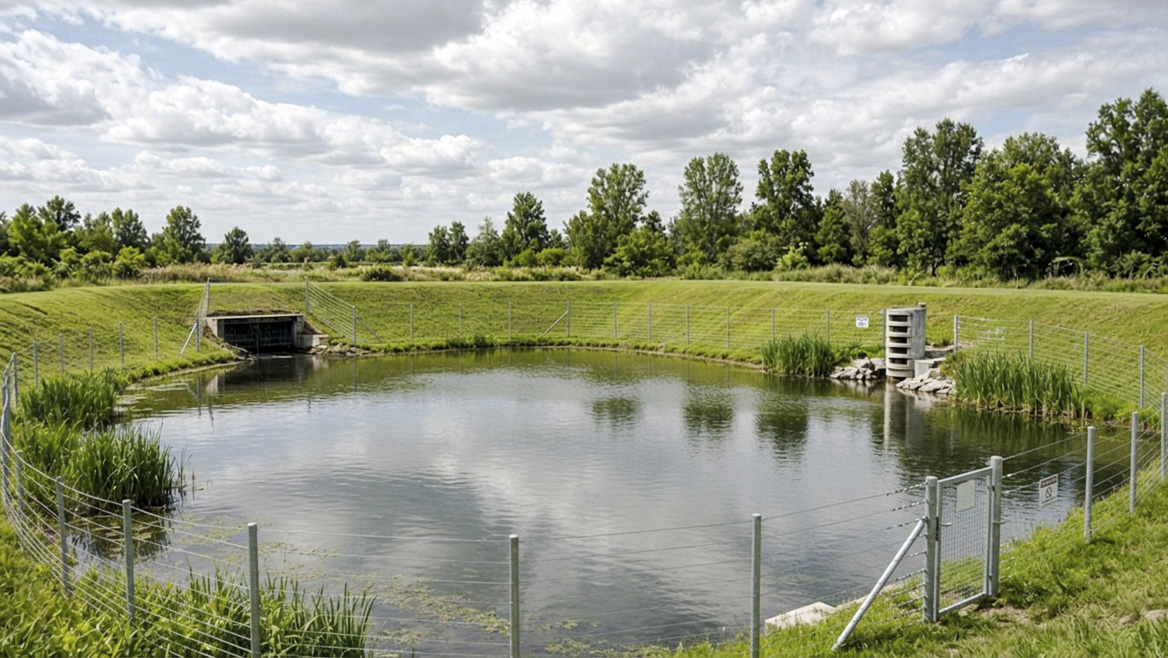
seek to slow runoff and increase groundwater recharge. In effect, they attempt to recreate the hydrology that existed before widespread stormwater management regulation. Unfortunately, those practices are often under designed to accomplish significant water capture.
We recently blogged about OMB’s May 2026 PFAS Rollback, including another unintended consequence that studies indicate Maryland’s waterways have among the highest or even the highest levels of PFAS, with stormwater management being the primary driver.
Stormwater as a Water Supply Asset
Western states have already begun reframing stormwater as a valuable water resource rather than merely a nuisance to be removed.
For example:
- Tucson’s Commercial Water Harvesting Ordinance.
- Denver and Boulder mandate rain gardens in parking lots.
- Los Angeles stormwater capture as part of long term potable water strategy.
- Houston’s roadway rainfall collection, storage, and treatment policy.
The Chesapeake Bay region needs to think similarly. In Maryland, rain is still viewed too narrowly as stormwater through a regulatory lens:
- flood control,
- sediment control,
- MS4 permit compliance,
- Chesapeake Bay nutrient reduction, and
- For government to tax (i.e., the rain tax) to do more stormwater management.
But low reservoir levels demonstrate that stormwater management is also a drinking water issue.
The Legal and Policy Implications
This emerging reality has significant implications for water allocation planning, something places like Maryland have little, if ever, considered.
Local governments and regulators must begin to cause stormwater infrastructure to maximize water retention rather than maximizing watershed conveyance efficiency. That shift could begin with banning traditional concrete curbs and gutters.
For businesses, developers, institutions, and property owners throughout Maryland, this means stormwater compliance, including state delegated application of the federal Clean Water Act amendments, increasingly intersects with broader potable water supply resilience issues.
The Core Paradox
Baltimore’s current historically low reservoir levels, even in the midst of a very rainy spring season, should serve as a warning that water scarcity in the eastern United States is not solely a function of insufficient rainfall.
The unintended consequence of stormwater management is that many urbanized areas now struggle to retain enough water to provide drinking water. This is not only a dry fire hydrants in the California Palisades problem.
Providing potable water is a core governmental function grounded in the state’s police power, the public trust doctrine, and statutory obligations under the Safe Drinking Water Act. Because local governments generally operate potable water systems as public utilities, residents have a legally protected expectation, if not a constitutional right, that drinking water will be safe, reliable, and nondiscriminatory.
With that in mind, the more than 70 trillion gallons of precipitation that fall annually in the Chesapeake Bay watershed make Maryland’s stormwater capture potential impossible to ignore, and the continued failure to harness this vast resource an increasingly indefensible missed opportunity.
The future of stormwater management in the Chesapeake Bay watershed likely depends on recognizing a simple but profound reality (paraphrasing the CalEPA secretary): The rain we rush away during storms will be the same water we later wish we still had.
About the Author: Stuart Kaplow