View by Topic
Recent Articles
-
 D.C. Circuit Upholds PFAS Hazardous Designation – Critical Implications for Real EstateSaturday, October 10th, 2026
 -
 TMDL Trump Executive Order – Why the Chesapeake Bay “Pollution Diet” Remains IntactSaturday, October 3rd, 2026
 -
 Maryland’s Packaging EPR Program Moves From Law to RealitySaturday, September 26th, 2026
 -
 Exposomics – The New Environmental Risk You Have Not Heard AboutSaturday, September 19th, 2026
 -
 Clean Water Isn’t a Constitutional Right? Fifth Circuit Says NoSaturday, September 12th, 2026
View by Month/Year
“Green Building Law Update” Headlines
Recent Articles & News from
Stuart Kaplow’s blog
at GreenBuildingLawUpdate.com
- Maryland’s New Recycling Tax? Packaging EPR Moves From Law to Reality September 27, 2026
- Exposomics – The New Environmental Risk That Will Change Real Estate September 20, 2026
- No Constitutional Right to Clean Drinking Water? Fifth Circuit Says Not So Fast September 13, 2026
- The Air We Share – Why Indoor Air Is Becoming a Real Estate Risk September 6, 2026
Subscribe to the Green Building Law Update!
Stuart Kaplow brings his expertise and extensive experience to the table with his unique digital publication, "Green Building Law Update". Subscribers receive regular updates to keep them informed about important issues surrounding Environmental Law, Green Building & Real Estate Law, as well as the emerging demand for Environmental Social Governance (ESG).
Get fresh content through the lense of Stuart Kaplow's cutting-edge expertise, innovative commentary and insider perspective. Don't miss another issue! Subscribe below.
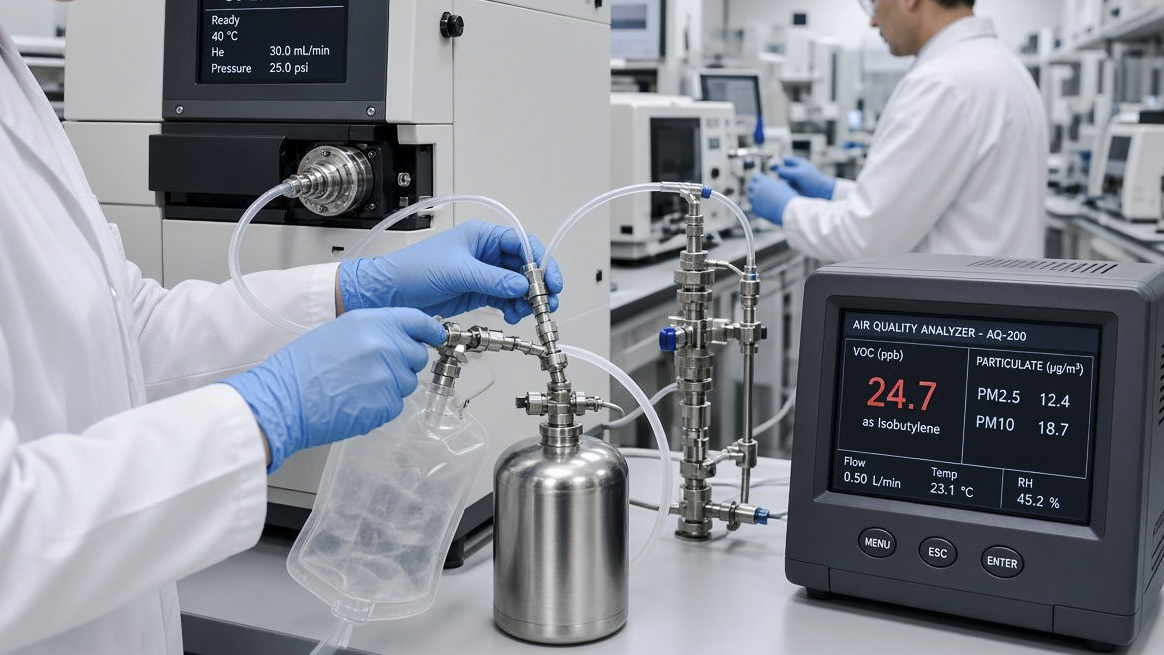
The Air We Breathe – Indoor Air Quality Is Becoming a Real Estate Issue
The most dangerous environmental threat is the one we breathe every day. Air pollution is the world’s largest environmental health risk, responsible for roughly 7 million premature deaths each year, according to the World Health Organization.
For real estate owners, however, the more surprising issue may be what happens inside the building.
A now widely quoted WHO assessment released this summer found that indoor “household air pollution was responsible for an estimated 2.9 million deaths per year ..” This is not only a low income country risk for public health and the environment.
This broader lesson applies to U.S. real estate, where people spend their time matters.
We Spend 90% of Our Time Indoors
The U.S. Environmental Protection Agency estimates that Americans spend approximately 90% of their time indoors, where concentrations of pollutants can be 2 to 5 times higher than ambient (outdoor) air. EPA identifies indoor air quality as an environmental risk factor that can affect respiratory conditions, cardiovascular disease, carcinogens, cognitive and mental function, as well as mortality.
Indoor pollutants can come from surprisingly many sources: radon, particulate matter, mold and other biological contaminants, VOCs from paints and furnishings, cleaning products, pesticides, combustion, cannabis smoke, building materials, and outdoor pollution that enters the building.
Radon deserves particular attention. We recently blogged that EPA estimates that radon causes approximately 21,000 lung cancer deaths each year in the United States and is the country’s second leading cause of lung cancer, and the leading cause among nonsmokers.
OSHA likewise identifies poor ventilation, humidity, remodeling and other building conditions as factors affecting indoor air quality, with poor IAQ associated with headaches, fatigue, difficulty concentrating and respiratory irritation. Some indoor exposures, including radon and asbestos, can produce serious disease years later.
For a property owner, this changes the question from “Does my building meet the code?” to “What is the building actually doing to the people inside it?”
The Energy Efficiency Paradox
There is an important tension between energy efficiency and indoor air quality.
Modern buildings are increasingly designed to reduce uncontrolled air infiltration. Tighter envelopes can reduce heating and cooling loads and improve energy performance. But reducing air exchange can create indoor air quality problems.
EPA itself recognizes that tighter building shells and reduced ventilation rates undertaken to save energy can contribute to IAQ problems.
The problem might be better phrased as energy efficiency without adequate ventilation, filtration, source control, and commissioning.
And simply opening a window is not a building management strategy (.. although it works). There is an argument that properly designed mechanical ventilation can provide better IAQ than uncontrolled natural ventilation because open windows can introduce outdoor contaminants, moisture, and other problems.
COVID Changed the Conversation
COVID-19 demonstrated something that building engineers had understood for years: ventilation and air cleaning are public health controls.
ASHRAE Standard 241, Control of Infectious Aerosols, now establishes a framework for reducing infectious-aerosol transmission through a combination of outdoor air ventilation, filtration, and air cleaning. It introduces an “equivalent clean airflow” concept, allowing building owners to achieve the desired level of clean air through different combinations of technologies.
That is significant for owners because it moves the discussion beyond simply asking how much outdoor air enters the building. The better question is how much clean air occupants actually receive.
Leases and Litigation
In 2026, it’s increasingly common for sophisticated landlords and tenants to set minimum indoor air quality standards, often tied to objective, measurable, and recognized benchmarks (e.g., ASHRAE or LEED) to avoid disputes and ensure enforceability.
And yes, there is increasing litigation in this space, not only in leasing, but also from occupants as the field of Exposomics becomes better understood and more people are concerned about life time exposures.
LEED v5 Is Moving From Design Intent to Measured Performance
The green building industry is responding.
LEED v5 places substantially greater emphasis on measured indoor air performance. Its new approaches include continuous monitoring and targeted air quality testing. Depending upon the rating system and pathway, monitored parameters can include carbon dioxide, PM2.5, total volatile organic compounds, temperature, and relative humidity.
For existing buildings, LEED v5’s Indoor Air Quality Performance credit can award up to 10 points for continuous indoor air monitoring.
LEED v5 also strengthens attention to filtration. Its operations and maintenance requirements call for identification of filtration levels and evaluation of improvements where filtration is below MERV 13 or an equivalent efficiency.
This represents an important philosophical shift: IAQ is becoming a performance metric rather than merely a design feature.
What Does This Mean for Real Estate Owners?
Owners should increasingly treat IAQ as part of asset management. That means considering:
- actual outdoor air delivery, rather than merely design specifications;
- filtration installation and efficiency;
- moisture and mildew prevention;
- radon testing, particularly in applicable geographic areas;
- low emitting materials for cleaning and during renovation;
- protection of occupied spaces during construction;
- emergency strategies for wildfire smoke and infectious disease events; and
- documenting the building’s IAQ performance.
There is also a legal and transactional dimension. Poor IAQ can create potential liability problems, and building owners increasingly should expect tenants, lenders, investors and occupants to ask questions about the health and performance of the buildings they occupy or acquire.
What About the Future?
There are no Federal environmental IAQ laws to speak of (c.f., there are OSHA requirements and other related mandates). Maryland, like many states, has some very limited IAQ regulatory requirements. For example, Maryland public school regulations require HVAC systems in specified classrooms to continuously move air and maintain carbon dioxide levels of no more than 1,200 ppm.
But Maryland does not have a single, comprehensive IAQ performance regime applicable across commercial, residential and public buildings. Requirements remain fragmented among building codes, particular building types and particular hazards. And the state is hyper focused on global warming and reducing energy use at nearly any cost.
That will change as the science, technology and expectations of building occupants evolve. Exposomics is fast evolving and more people are concerned about life time exposures.
The lesson for owners is straightforward: a building can be energy efficient, but it must have healthy air.
The next generation of high performance real estate will need to accomplish both objectives: use less energy while providing cleaner air.
There must be a better solution to indoor air quality than the ancient Sanskrit proverb, “For breath is life, so if you breathe well you will live long on earth.”
For modern real estate, the solution is not simply to open a window.
It is to design, operate, and maintain buildings so that the people inside them can breathe well.
___________________
Join us for the next in our webinar series at the Intersection of Business, Science, and Law, “Exposomics – The New Environmental Challenge And Opportunity You Have Not Heard About,” on Tues, October 13 15 at 9 am. The webinar is complimentary, but you must register here.
About the Author: Stuart Kaplow