View by Topic
Recent Articles
-
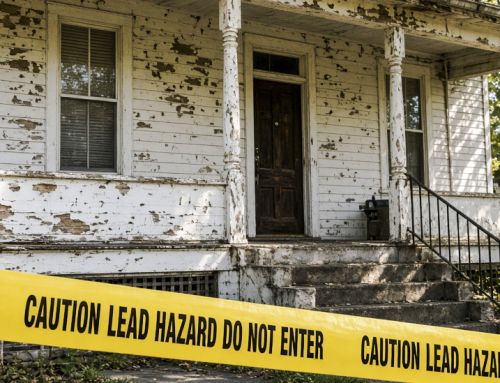
 The Lead Paint Legacy Real Estate Owners Must Take SeriouslySaturday, August 22nd, 2026
 -

-
 Puerto Rico’s Water Crisis – The Era of Potable Water Bankruptcy Has ArrivedSaturday, August 8th, 2026
 -
 Commercial Space Launch Reform – FAA Proposal Will Cut Years from Licensing ApprovalsSaturday, August 1st, 2026
 -
 Radon – Test and Decide for YourselfSaturday, July 25th, 2026
View by Month/Year
“Green Building Law Update” Headlines
Recent Articles & News from
Stuart Kaplow’s blog
at GreenBuildingLawUpdate.com
Subscribe to the Green Building Law Update!
Stuart Kaplow brings his expertise and extensive experience to the table with his unique digital publication, "Green Building Law Update". Subscribers receive regular updates to keep them informed about important issues surrounding Environmental Law, Green Building & Real Estate Law, as well as the emerging demand for Environmental Social Governance (ESG).
Get fresh content through the lense of Stuart Kaplow's cutting-edge expertise, innovative commentary and insider perspective. Don't miss another issue! Subscribe below.

Supreme Court Permits State Law Claims Against Superfund Property
In an instructive environmental law decision last week, the U.S. Supreme Court held that the federal Superfund statute (the Comprehensive Environmental Response, Compensation and Liability Act) does not preclude owners of adjacent contaminated land from pursuing state laws claims for money damages for nuisance, trespass and strict liability, but any cleanup of that land cannot be taken in the absence of EPA approval.
Among the reasons this is a significant decision is the impact on widely utilized state Brownfields programs.
For nearly a century, the Anaconda Copper Smelter in Butte, Montana contaminated an area of over 300 square miles with arsenic and lead. Over the past 35 years, EPA has worked with the current owner of the now-closed smelter, Atlantic Richfield Company, to implement a cleanup plan for a remediation expected to continue through 2025. EPA has managed an extensive cleanup at the site, working with Atlantic Richfield to remediate more than 800 residential and commercial properties; remove 10 million cubic yards of tailings, mine waste, and contaminated soil; cap in place 500 million cubic yards of waste over 5,000 acres; and reclaim 12,500 acres of land. More work remains.
A group of 98 landowners sued Atlantic Richfield in Montana state court for common law nuisance, trespass, and strict liability, seeking restoration damages, which Montana law requires to be spent on property rehabilitation. The landowners estimate that their cleanup would cost Atlantic Richfield $50 to $58 million.
Of note, the landowners’ proposed cleanup exceeds that found necessary to protect human health and the environment by EPA in the CERCLA cleanup agreed to in the settlement with Atlantic Richfield.
The Supreme Court, in a split decision with two opinions concurring in part and dissenting in part, held that CERCLA does not strip the Montana courts of jurisdiction over this lawsuit.
But the Montana Supreme Court erred in holding that the landowners were not potentially responsible parties under CERCLA §122(e)(6) and therefore did not need to seek EPA approval. The high court reasoned, because arsenic and lead are hazardous substances that have “come to be located” on the landowners’ properties, the landowners are PRPs, under the Section 107 definition of a “covered person” as an “owner” of a “facility” despite that the landowners argued they are no longer PRPs including because CERCLA’s six year limitations period for recovery of remedial costs has run, and they were not parties to the EPA action.
Montana law requires that “an award of restoration damages actually . . . be used to repair the damaged property.” But such action cannot be taken in the absence of EPA approval. That approval process, if pursued, could ameliorate the conflict, if any, between the landowners’ restoration plan and EPA’s Superfund cleanup. So, the judgment of the Montana Supreme Court was affirmed in part and vacated in part.
This decision impacts on landowners in widely utilized state Brownfields programs, including those who enter the program in advance to purchasing a contaminated property as a defense to being a PRP. That is, the Small Business Liability Relief and Brownfields Revitalization Act of 2001, amended CERCLA, restricting liability under federal law for the cleanup and redevelopment of a Brownfields property by a person complying with a state voluntary cleanup program. A key lesson to be learned here is that even a landowner determined to be an “inculpable person” under a state voluntary cleanup program is still subject to a state law claim by some other impacted third party property owner.
You can read the Supreme Court decision at Atlantic Richfield Co. v. Christian et al.
About the Author: Stuart Kaplow