View by Topic
Recent Articles
-
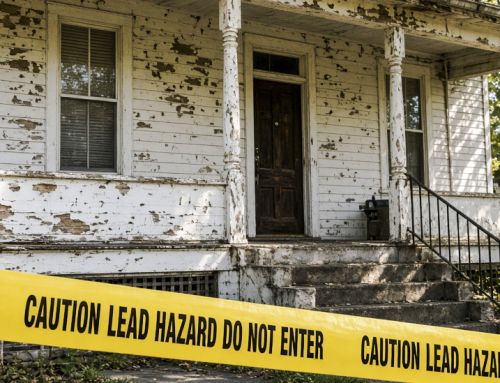
 The Lead Paint Legacy Real Estate Owners Must Take SeriouslySaturday, August 22nd, 2026
 -

-
 Puerto Rico’s Water Crisis – The Era of Potable Water Bankruptcy Has ArrivedSaturday, August 8th, 2026
 -
 Commercial Space Launch Reform – FAA Proposal Will Cut Years from Licensing ApprovalsSaturday, August 1st, 2026
 -
 Radon – Test and Decide for YourselfSaturday, July 25th, 2026
View by Month/Year
“Green Building Law Update” Headlines
Recent Articles & News from
Stuart Kaplow’s blog
at GreenBuildingLawUpdate.com
Subscribe to the Green Building Law Update!
Stuart Kaplow brings his expertise and extensive experience to the table with his unique digital publication, "Green Building Law Update". Subscribers receive regular updates to keep them informed about important issues surrounding Environmental Law, Green Building & Real Estate Law, as well as the emerging demand for Environmental Social Governance (ESG).
Get fresh content through the lense of Stuart Kaplow's cutting-edge expertise, innovative commentary and insider perspective. Don't miss another issue! Subscribe below.
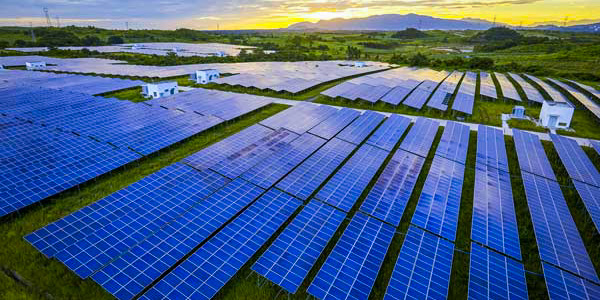
The State Not County has Authority to Regulate Solar Farms
At a time when solar panels are de riguere a recent decision by a Maryland appellate court limiting the authority of local governments to regulate the location and specifics of construction of a solar farm has broad implications far beyond this case.
Perennial Solar, LLC filed an application for a zoning special exception and variance to construct a solar panel farm in Washington County, Maryland. The Washington County Board of Zoning Appeals granted the relief requested. The Board of County Commissioners of Washington County and several aggrieved residents, appealed the decision to the Circuit Court. On a preliminary motion filed by Perennial, the court determined that the authority of the Board of Zoning Appeals and the circuit court to consider the application for special exception was preempted by state law and the court dismissed the appeal.
The question before the Maryland Court of Special Appeals was whether existing state law, which grants the Maryland Public Service Commission general regulatory powers over electric generating stations, including a “solar energy generating system,” preempts local zoning regulation regarding the location and construction of such a generating station.
Preemption of local law by state law can be express or implied or can occur when local law conflicts with state law. The appellate court found relevant to this case, preemption by implication occurs when a local law “deals with an area in which the [General Assembly] has acted with such force that an intent by the State to occupy the entire field must be implied.” Therefore, the inquiry was focused on “whether the General Assembly has manifested a purpose to occupy exclusively a particular field.”
With regard to generating stations, existing law “defines the nature and extent of the PSC’s regulatory powers and responsibilities.” And the courts have held in other cases, local government is impliedly preempted from regulating the location and construction of generating stations that require a Certificate of Public Convenience and Necessity from the PSC, as was the case here.
The court, at best gratuitously or at worst goading the state legislature to correct the law being interpreted, in dicta said, Washington County’s Zoning Ordinance and Comprehensive Plan are much less thorough than the PSC public review and approval process regarding the construction of generating stations.
Following existing law and as evident in the legislative intent of Senate Bill 887 in 2013 that created this PSC authority, the court here held in Board of County Commissioners of Washington County, et al. v. Perennial Solar, LLC, No. 1022, September Term 2016 “that the PSC preempts, by implication, local zoning regulation” and it affirmed the circuit court.
Significantly, originally this was an unpublished opinion (not able to be cited for precedent) but after lobbying by big solar and its lawyers, the opinion is now published.
We have no doubt about the correctness of this legal decision, but the larger issue may be if the law is good public policy? This is not the same as location of a utility scale power plant or transmission lines that benefit the greater public good. Onsite alternative energy generation and distributed small generation systems not only do not offer the same overwhelming good benefit, but often have unintended consequences that impact the quality of life on our planet. It is widely accepted that the legislature should correct this questionable energy public policy that usurps the near 100 year old historical convention of local land use control.
In context, this is the same legislature that made it the law that All Solar Panels are Pervious in Maryland, for the purposes of zoning, construction and stormwater; in a Solomonic public policy balancing act between water quality and energy, where the importance of onsite renewable energy won out.
That all observed this decision is instructive and an excellent guide to similar statutory schemes common across the country. And note a petition for certiorari seeking further review by Maryland’s highest court, the Maryland Court of Appeals, has been filed (but not yet acted on), so watch this blog to see if the sun ultimately sets on local government solar panel laws.
About the Author: Stuart Kaplow