View by Topic
Recent Articles
-
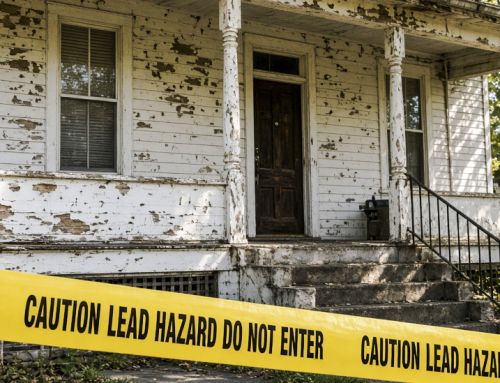
 The Lead Paint Legacy Real Estate Owners Must Take SeriouslySaturday, August 22nd, 2026
 -

-
 Puerto Rico’s Water Crisis – The Era of Potable Water Bankruptcy Has ArrivedSaturday, August 8th, 2026
 -
 Commercial Space Launch Reform – FAA Proposal Will Cut Years from Licensing ApprovalsSaturday, August 1st, 2026
 -
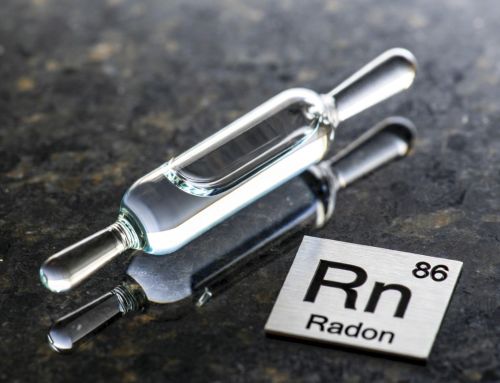
 Radon – Test and Decide for YourselfSaturday, July 25th, 2026
View by Month/Year
“Green Building Law Update” Headlines
Recent Articles & News from
Stuart Kaplow’s blog
at GreenBuildingLawUpdate.com
Subscribe to the Green Building Law Update!
Stuart Kaplow brings his expertise and extensive experience to the table with his unique digital publication, "Green Building Law Update". Subscribers receive regular updates to keep them informed about important issues surrounding Environmental Law, Green Building & Real Estate Law, as well as the emerging demand for Environmental Social Governance (ESG).
Get fresh content through the lense of Stuart Kaplow's cutting-edge expertise, innovative commentary and insider perspective. Don't miss another issue! Subscribe below.
International Green Construction Code (IgCC) Now Mandatory in Baltimore
This article first appeared on my Green Building Law Update blog. The Green Building Law Update blog is intended for the entire environmental industrial complex (not just lawyers).
Please sign up for notice of new blog posts via email, at Green Building Law Update blog.
Earlier this evening the Baltimore City Council adopted the International Green Construction Code 2012 as an overlay to the City’s building, fire and related codes.
Baltimore, the 26th most populous city in the country, was among the first jurisdictions, in 2007 to mandate that all “newly constructed, extensively modified non-residential buildings” .. “achieve a Silver rating in the appropriate LEED rating system or satisfy the Baltimore City Green Building Standard” (a LEED-like local enactment). That mandatory law had some efficacy with new construction but almost no market impact on renovations as building owners strived to avoid the enactment.
Council Bill 14-0413 repeals that existing law and commencing April 1, 2015 expands its scope and breadth with a new Baltimore Green Construction Code to apply to all new construction and “all repairs, additions, or alterations to a structure and all changes of occupancy” with very few exceptions (.. one or two family dwellings, etc.).
Significantly, the new Green Code does not apply to: structures that achieve a LEED Silver rating; residential and mixed use buildings of five stories or more that comply with the ICC 700 at the Silver performance level for energy and Bronze level for other categories; and, to structures that comply with ASHRAE standard 189.1. The new enactment allows the Code official to accept third party certification of compliance with these alternative compliance paths; and our law firm will provide those certifications.
There is an exemption process where the Code official may, in unusual circumstances and upon a showing of good cause, grant an exemption from any specific requirement of the Code.
Sensitive that the port of Baltimore, founded in 1729, is an already built-out older industrial city that has shifted to a service economy, the new Green Code alters the form IgCC with 32 pages of edits, including that it requires “at least 50% of the total building materials used” in a building of 25,000 square feet or greater, must be recycled, recyclable, bio-based or indigenous (within 500 miles), where the form code threshold is not less than 55% of buildings of all sizes.
And the enactment corrects some of the industry bias in the form IgCC when, in pursuit of heat island effect mitigation, Baltimore permits the use of “porous asphalt pavement” in addition to pervious concrete. The form code all but bans asphalt pavement in favor of concrete products (i.e., when the IgCC 2012 mandates heat island mitigation for not less than 50% of site hardscape with material as having a solar reflectance value of not less than 0.30 [.. think light colored concrete and not dark colored asphalt]).
In a first for any American city, buildings are now mandated to have renewable energy systems.
Both with the sunsetting of the Baltimore City Green Building Standard (the green standard that most residential projects pursued in recent years) and that this new Green Code applies to all repairs and renovations (not subject to the prior law), whichever compliance path a builder pursues, will be a sea-change.
While there are co-sponsors, the bill is all but the singular and Herculean effort of Councilman James Kraft. It is rare that a code enactment is not an executive branch bill. And the Councilman’s commitment to the environment is further evidenced by the fact that last evening the City Council also had before it his controversial bill to ban plastic bags.
As progressive as this bill is, it should not be lost that Baltimore is representative of a very limited number of jurisdictions mandating new construction and renovation of both private and public buildings must be green. After the 2014 mid-term elections, many of today’s newly elected conservatives believe that a voluntary, non-mandatory approach to environmental protection is the best hope for stewardship of our planet. It is that same belief that has led to the broad brand and wide market share acceptance of LEED as a voluntary green building rating system. But Baltimore has had a mandate on the books since 2007, so, while there are not 50 shades of green, with alternative compliance paths for achieving green building, this bill is being viewed favorably.
With no grandfathering and a short window until the April 1, 2015 effective date, we will be working property owners and builders to promptly evaluate the impact of the Baltimore Green Construction Code on their projects.
About the Author: Stuart Kaplow