View by Topic
Recent Articles
-
 The Lead Paint Legacy Real Estate Owners Must Take SeriouslySaturday, August 22nd, 2026
 -

-
 Puerto Rico’s Water Crisis – The Era of Potable Water Bankruptcy Has ArrivedSaturday, August 8th, 2026
 -
 Commercial Space Launch Reform – FAA Proposal Will Cut Years from Licensing ApprovalsSaturday, August 1st, 2026
 -
 Radon – Test and Decide for YourselfSaturday, July 25th, 2026
View by Month/Year
“Green Building Law Update” Headlines
Recent Articles & News from
Stuart Kaplow’s blog
at GreenBuildingLawUpdate.com
Subscribe to the Green Building Law Update!
Stuart Kaplow brings his expertise and extensive experience to the table with his unique digital publication, "Green Building Law Update". Subscribers receive regular updates to keep them informed about important issues surrounding Environmental Law, Green Building & Real Estate Law, as well as the emerging demand for Environmental Social Governance (ESG).
Get fresh content through the lense of Stuart Kaplow's cutting-edge expertise, innovative commentary and insider perspective. Don't miss another issue! Subscribe below.
State Law Trumps on Location of Solar Panels
“Here comes the sun, and I say, It’s all right” is how a new decision on solar energy generating stations by Maryland’s highest court begins, quoting The Beatles song, “Here Comes the Sun.”
This case is instructive beyond Maryland’s borders because it involves the intersection of states’ efforts to promote solar energy generation as part of its renewable energy policies, and county governments’ local planning and zoning prerogatives. The Maryland Court of Appeals found state environmental law preempts local zoning authority with respect to solar energy generating stations.
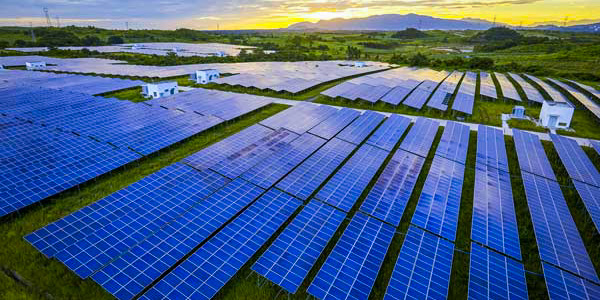
Perennial Solar, LLC filed an application in September, 2015 and was successful in obtaining a zoning special exception and variance to construct a solar panel farm on two contiguous rural agricultural properties totaling 86 acres.
While a petition for judicial review, filed by opponents of the solar generating station, was pending, Perennial filed a motion for pre appeal determination challenging the subject matter jurisdiction of the Circuit Court for Washington County on the ground of state law preemption by implication. After a hearing, the circuit court granted Perennial’s motion, holding that local zoning authority is preempted by state environmental law.
Washington County and the aggrieved landowners appealed the decision of the circuit court to the Court of Special Appeals. In a reported opinion, the intermediate appellate court applied Maryland case law outlining the applicable factors when considering the doctrine of implied preemption. Perennial Solar, 239 Md. App. 380. The Court of Special Appeals noted that “preemption by implication occurs when a local law ‘deals with an area in which the [General Assembly] has acted with such force that an intent by the State to occupy the entire field must be implied.’” Id. at 386
This appeal to Maryland’s highest court followed. That court has frequently explained that Maryland state law may preempt local law in one of three ways: (1) preemption by conflict; (2) express preemption; or (3) implied preemption.
In the instance, the state statute, Public Utility § 7-701, et seq., was originally enacted in 2004 to facilitate the State’s transition to renewable energy sources. That statute has been amended and altered several times, including to create and increase Maryland’s renewable portfolio standard.
Some who question this decision point out that the statute does not even define solar “generating station,” so how could it preempt such a solar panel installation?
But the Court in this 7 – 0 decision, applying the principles of implied preemption to PU § 7-207, found it is clear that the legislature intended to vest final authority with the State Public Service Commission for the siting and location of generating stations requiring a Certificate of Public Convenience and Necessity from that State body. The Court expressly held, the statute manifests the general legislative purpose to create an all-compassing statutory scheme of solar energy regulation.
Interesting the most important analysis of whether the General Assembly has acted with such a force in this field that local zoning authority over generating systems is impliedly preempted, is buried in the dicta in this 38 page opinion considering a secondary factor, that during the 2019 legislative session, the General Assembly once again considered this very matter. Specifically, the legislature considered H.B. 1227/S.B. 997, which would have amended PU § 7-207(e) to require that the PSC receive from local government “a written statement that the proposed generating station conforms with all applicable county or municipal zoning land use requirements” before the PSC could issue a CPCN for a solar photovoltaic system or wind system. Recognizing that HB 1227 would alter the PSC’s preemptive authority, the Fiscal and Policy Note associated with HB 1227 stated that “[i]n practical terms, the bill establishes local preemption authority for the siting of solar and wind facilities in the State.” Id. Notably, had HB 1227 been enacted, local zoning approval would have been required as a condition precedent to PSC approval and local zoning would have preempted the PSC’s approval on matters related to the siting or location of solar facilities. But with this appeal pending, HB 1227 was defeated in the 2019 session.
Despite being relegated to dicta in the opinion, that recent legislative history was arguably the most significant fact in terms of preemption analysis and the Court could have relied upon it. With full knowledge of this pending case, the legislature could have changed the law and it did not.
In context, this is the same legislature that some years ago made it the law that All Solar Panels are Pervious in Maryland, for the purposes of zoning, construction and stormwater; in a Solomonic public policy balancing act between water quality and energy, where the importance of onsite renewable energy won out.
It is clear that the high court reached the right legal conclusion, but the larger issue is that many see this as a bad law and terrible public policy? This is not the same as location of a utility scale power plant or transmission lines that benefit the greater public good. Onsite alternative energy generation and distributed small generation systems not only do not offer the same overwhelming good benefit, but often have unintended consequences when small power generating systems litter yards, small and large across the country, that impact quality of life. Many are surprised that the legislature did not act in the 2019 session to correct this questionable energy public policy that usurps the near 100 year old historical convention of local land use control.
Environmentalists are concerned that this very broad articulation of preemption went far further than was necessary to reach this result and will result in a county pesticide ban in Montgomery County, Maryland to be overturned when the case is heard by this court.
This state environmental law that trumps local zoning law is a horrible example of government choosing winners and losers in sources of energy generation. It is more than the state putting it thumb on the scale when the courts have no alternative but to back bad energy policy.
All of that observed, there is no doubt that existing PU § 7-207 preempts by implication local zoning authority approval for the siting and location of solar generating stations which require a certification from the state PSC. And the 38 page decision in Board of County Commissioners of Washington County v. Perennial Solar, LLC, the first opinion authored by Judge Brynja M. Booth since she joined the court in April, is an excellent treatise not only on preemption, but also renewable energy siting.
Here comes the sun across Maryland.
About the Author: Stuart Kaplow