View by Topic
Recent Articles
-
 The Lead Paint Legacy Real Estate Owners Must Take SeriouslySaturday, August 22nd, 2026
 -

-
 Puerto Rico’s Water Crisis – The Era of Potable Water Bankruptcy Has ArrivedSaturday, August 8th, 2026
 -
 Commercial Space Launch Reform – FAA Proposal Will Cut Years from Licensing ApprovalsSaturday, August 1st, 2026
 -
 Radon – Test and Decide for YourselfSaturday, July 25th, 2026
View by Month/Year
“Green Building Law Update” Headlines
Recent Articles & News from
Stuart Kaplow’s blog
at GreenBuildingLawUpdate.com
Subscribe to the Green Building Law Update!
Stuart Kaplow brings his expertise and extensive experience to the table with his unique digital publication, "Green Building Law Update". Subscribers receive regular updates to keep them informed about important issues surrounding Environmental Law, Green Building & Real Estate Law, as well as the emerging demand for Environmental Social Governance (ESG).
Get fresh content through the lense of Stuart Kaplow's cutting-edge expertise, innovative commentary and insider perspective. Don't miss another issue! Subscribe below.
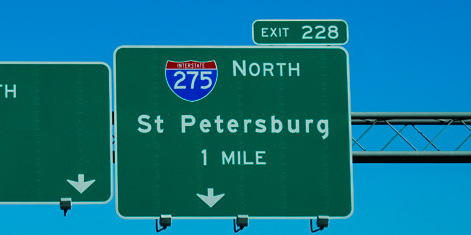
St. Petersburg is Bold in Mandating Envision
The City of St. Petersburg, Florida passed a progressive ordinance last week mandating that City infrastructure projects and newly constructed and renovated City building be third party certified as green.
The new Ordinance 359-H, passed by the St. Petersburg City Council on January 17, 2019 and awaiting the Mayor’s signature, supersedes the prior Executive Order 2017-01 Sustainable St. Petersburg, that laid the groundwork for these sustainable building practices.
The City Council Ordinance articulated “that the City has a responsibility to lead by example in its goals to become a more sustainable and resilient,” when it determined not to touch the third rail of mandating green building requirements on private sector building.
What is particularly noteworthy about this enactment is that it not only regulates the City’s green building (.. other governments have obviously self imposed LEED standards), but that St. Petersburg may be the first jurisdiction in the nation to also so regulate the City’s infrastructure, “It is the objective of the City that any new qualified City infrastructure project shall be designed and constructed to achieve the current Envision gold standard.” We know of no other government has gone as far in mandating Envision certification.
Envision is a LEED style framework that provides the guidance to initiate the planning, design and delivery of sustainable and resilient infrastructure. Envision provides sustainability metrics for all types and sizes of infrastructure to help measure the extent to which a project contributes to conditions of sustainability across a wide range of social, economic, and environmental indicators.
Of course other governments, from Los Angeles County to Miami-Dade County, have used Envision, in some capacity, most often as a guide. Today, there are 67 “verified” Envision infrastructure projects. There are 20 projects currently being verified and more than 100 registered.
So, the move by St. Petersburg is bold in mandating Envision certification. This is a 2019 wine flavored water moment versus last year’s Aperol spritz. That is, it portends a significant sector of future sustainability efforts.
Not to be lost is, at a time when green building has lost a bit of its viridescent luster, St. Petersburg is one of the few jurisdictions passing a new LEED mandate. “It is the objective of the City that any new qualified municipal building and the substantial modification of any existing qualified municipal building shall be designed and constructed to achieve the current LEED gold standard under the applicable LEED category.”
And lest there be any question about the level of commitment, the Ordinance further provides, “Any new City construction project that is not a qualified municipal building [.. new construction or a renovation of less than 5,000 sq. ft.] or qualified public infrastructure project [.. a project less than $2 M] shall, to the extent practicable, utilize LEED or Envision principles as guidance during the design and construction process.”
Also significant is that the Ordinance further provides the Mayor may approve a request that a municipal building or infrastructure project “be designed and constructed or substantially modified to achieve an alternative sustainable development certification that maintains the overall intent of this division.” And alternative sustainable development certification means any accredited certification system designed to rate green building criteria, including, but not limited to WELL Communities, WELL Buildings, Living Building Challenge, Florida Green Building Coalition, and Green Globes.
St. Petersburg is leading by example in its goal to become a more sustainable and resilient with this lodestar ordinance. It is an example other governments might wish to emulate.
About the Author: Stuart Kaplow