View by Topic
Recent Articles
-
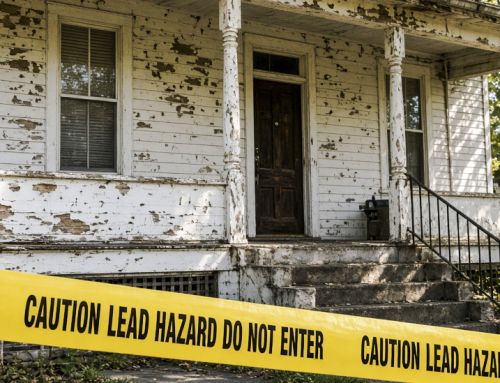
 The Lead Paint Legacy Real Estate Owners Must Take SeriouslySaturday, August 22nd, 2026
 -

-
 Puerto Rico’s Water Crisis – The Era of Potable Water Bankruptcy Has ArrivedSaturday, August 8th, 2026
 -
 Commercial Space Launch Reform – FAA Proposal Will Cut Years from Licensing ApprovalsSaturday, August 1st, 2026
 -
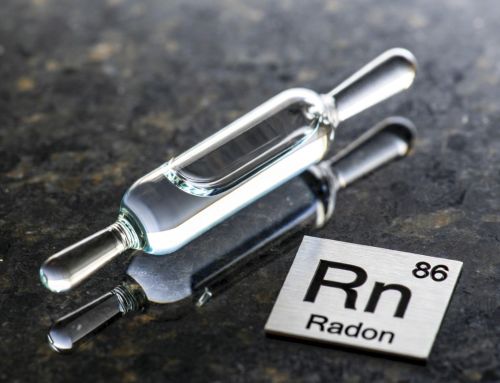
 Radon – Test and Decide for YourselfSaturday, July 25th, 2026
View by Month/Year
“Green Building Law Update” Headlines
Recent Articles & News from
Stuart Kaplow’s blog
at GreenBuildingLawUpdate.com
Subscribe to the Green Building Law Update!
Stuart Kaplow brings his expertise and extensive experience to the table with his unique digital publication, "Green Building Law Update". Subscribers receive regular updates to keep them informed about important issues surrounding Environmental Law, Green Building & Real Estate Law, as well as the emerging demand for Environmental Social Governance (ESG).
Get fresh content through the lense of Stuart Kaplow's cutting-edge expertise, innovative commentary and insider perspective. Don't miss another issue! Subscribe below.
Zika Virus and LEED Buildings – Redux
Given the large number of inquiries we have responded to about Zika, including about liability for building owners, this is a repost of an updated version of my February blog post on the subject.
Owners of LEED buildings should evaluate the need to apply pesticides, killing mosquitoes to protect occupants from the Zika virus.
Zika virus has swept through South and Central America, with more than a million suspected cases during the past few months, along with a substantial increase in reporting of infants born with microcephaly.
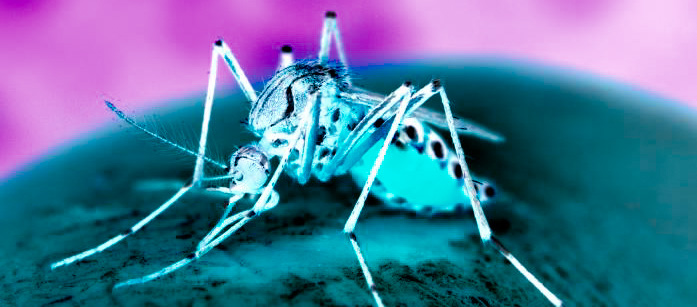
Although there needs to be a good deal of research to define critical aspects of infection, Zika is spread mostly by the bite of an infected aedes species mosquito. Unfortunately, mosquito control efforts have failed to curtail the spread of many similar pathogens, including dengue and chikungunya viruses, which are carried by the same aedes species and are spreading in the same countries currently affected by the Zika virus.
As of August 3, 2016, the Centers for Disease Control and Prevention advises there are only 6 confirmed “locally acquired mosquito born cases” of Zika, 16 sexually transmitted cases, and 1,818 travel associated cases in the continental U.S., there are 5,460 locally acquired cases in Puerto Rico, and those numbers will grow significantly because the mosquitoes that can carry Zika are found in increasing areas of the U.S. This public health crisis is not limited to the Wynwood neighborhood in Miami.
While removing standing water is useful and window screens have some limited productiveness, the only truly efficacious control of the deadliest creatures on the planet is the application of mosquito killing pesticides. My recent blog post, Wipe Out Zika Virus Carrying Mosquitoes with Pesticides describes three categories of pesticides for mosquito control in the curtilage of buildings.
With respect to the likelihood of legal liability associated with the application of pesticides or failure to apply, it is the failure to act properly that may have the greater likelihood for landlord liability. Admittedly the proximate cause related to a recognizable infection tying a particular mosquito bite to a specific building is remote. But where a building has an insect management plan, the negligent implementation of a plan may arguably give rise to liability. The law varies from state to state, but in an analogous situation most jurisdictions can find liability against a residential landlord in the event of a dog bite where there is a ‘no dog’ policy at the premises that is not enforced by that landlord. Similarly landlords are being increasingly held liable for injury arising from bedbug infestations.
Many LEED buildings have insect management plans (.. while most non LEED buildings do not). In fact, 53% of LEED EBOM-2009 certified existing buildings have achieved the SSc3: Integrated Pest Management, Erosion Control, and Landscape Management credit. Those 1595 of the 2971 LEED existing building certified projects in that rating system achieved this credit that requires a written plan to manage insects.
The intent of the LEED credit is “to preserve ecological integrity, enhance natural diversity and protect wildlife ..”.
The credit requires outdoor Integrated Pest Management (IPM), defined as “managing outdoor pests (plants, fungi, insects, and/or animals) in a way that protects human health and the surrounding environment and that improves economic returns through the most effective, least-risk option. IPM calls for the use of least toxic chemical pesticides, minimum use of the chemicals, use only in targeted locations, and use only for targeted species.”
The text of the LEED credit requires universal notification to all building occupants not less than 72 hours before a pesticide is applied in a building or on surrounding grounds under normal conditions, and within 24 hours after application of a pesticide in emergency conditions.
It is not that a LEED certified building has an increased likelihood of liability arising from Zika, but rather it is that any building owner with an announced insect management plan may trigger liability.
Across most of U.S., building owners with insect management plans can mitigate risk by making certain those plans are appropriate and correctly implemented given what we know about Zika and other mosquito borne illnesses, considering the application of insecticides, including applying pesticides to kill mosquitoes.
Moreover, when even E. O. Wilson, the well known evolutionary biologist and a champion of biodiversity, argues that the aedes mosquito should be targeted, its DNA preserved and the species wiped out, building owners should do the right thing in protecting their occupants by applying mosquito killing pesticides.
About the Author: Stuart Kaplow