View by Topic
Recent Articles
-
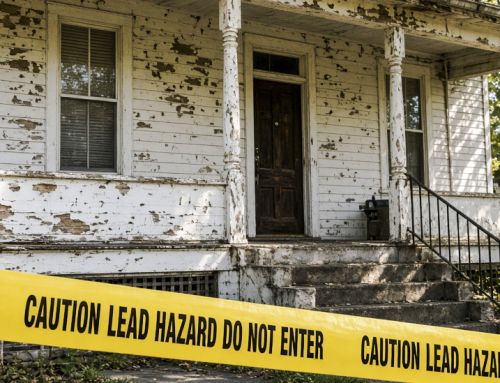
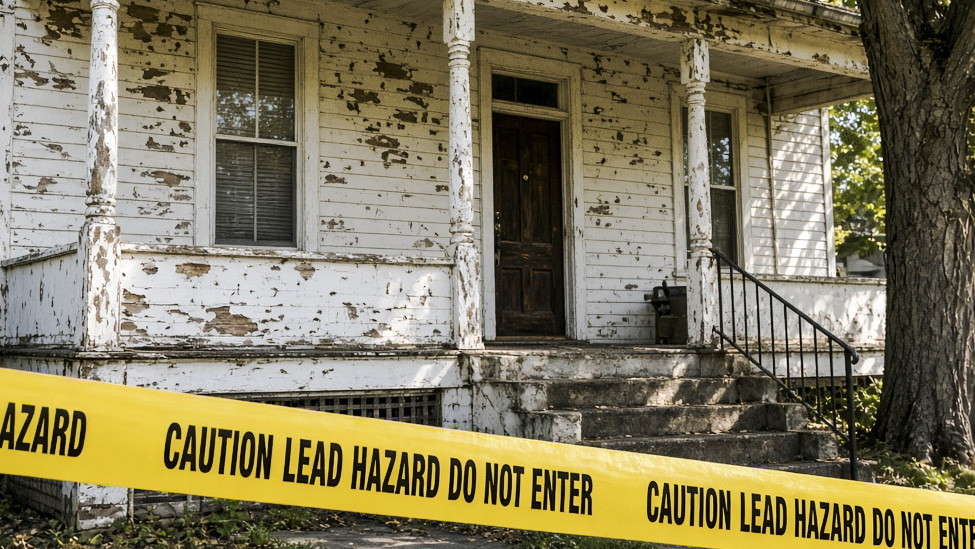
 The Lead Paint Legacy Real Estate Owners Must Take SeriouslySaturday, August 22nd, 2026
 -

-
 Puerto Rico’s Water Crisis – The Era of Potable Water Bankruptcy Has ArrivedSaturday, August 8th, 2026
 -
 Commercial Space Launch Reform – FAA Proposal Will Cut Years from Licensing ApprovalsSaturday, August 1st, 2026
 -
 Radon – Test and Decide for YourselfSaturday, July 25th, 2026
View by Month/Year
“Green Building Law Update” Headlines
Recent Articles & News from
Stuart Kaplow’s blog
at GreenBuildingLawUpdate.com
Subscribe to the Green Building Law Update!
Stuart Kaplow brings his expertise and extensive experience to the table with his unique digital publication, "Green Building Law Update". Subscribers receive regular updates to keep them informed about important issues surrounding Environmental Law, Green Building & Real Estate Law, as well as the emerging demand for Environmental Social Governance (ESG).
Get fresh content through the lense of Stuart Kaplow's cutting-edge expertise, innovative commentary and insider perspective. Don't miss another issue! Subscribe below.
All Solar Panels are Pervious in Maryland
Forget what you know about earth sciences and think law. By statute all solar panels are pervious in Maryland.
Of course that doesn’t mean that rain actually passes through the solar panels or that in Maryland the panels are constructed to be any more permeable than elsewhere. Maryland is not trying to alter the laws of science, but rather seeking through public policy to prioritize environmental stewardship.
Chapter 702 of the Session Laws of 2012 makes law that,
For the purposes of issuing a permit or variance relating to zoning, construction, or stormwater for a project to install a solar panel, any calculation relating to the impervious surface of the project required by the State or local governing authority issuing the permit or variance may include only the foundation or base supporting the solar panel.
This is significant because regulating impervious surface on a property, either by establishing a maximum allowable area or a ratio of impervious surface to the total lot area, is a common zoning performance standard used by local governments in Maryland and elsewhere. Also, with respect to stormwater management, counties and municipalities in Maryland are required to cause stormwater to be managed, for quantity and quality, based on the area of impervious surface that will result from development. And Maryland imposes annual stormwater remediation taxes on land owners, implemented by suburban counties and municipalities and levied on a per square foot calculation of impervious area on a lot.
The result is obvious if installing a ground mounted solar array in a field. But the benefit of the law is redoubled when the solar panels are rack mounted above an off street parking lot or on the roof of a building. By way of example, the areas under the rack mounted panels over parking spaces reduce the amount of impervious area that must be calculated for zoning, for stormwater management, and for stormwater taxes.
And before the inner geek in anyone becomes concerned about what happens to all that ‘stormwater’ remember it was just rain falling onto the ground before an earlier law began regulating and taxing rain as stormwater.
Unfortunately, the law to date has had little, if any, effect in Maryland. Most counties and municipalities have been slow if not downright reluctant to implement the state mandate.
Maryland has a Renewable Portfolio Standard with 20% target for renewable energy by 2020, including at least 2% from solar. While Maryland straddles the Chesapeake Bay, North America’s largest estuary, and as such regulation of water quality is among the strictest in the nation, the state has balanced environmental impacts of power generation and determined that onsite renewable energy is worthy of advantaging.
After an analysis circulated that included utilizing the EPA TRACI tool that took into account impact categories of ozone depletion, global warming, acidification, cancer, non-cancer, human criteria, eutrophication, smog formation, ecotoxicity, fossil fuel use, land use and water use, this legislation passed both houses of the legislature unanimously.
The law is not unique to Maryland. In 2010 New Jersey enacted a similar law exempting solar panels from zoning limitations on impervious cover and, anecdotally, that law has been embraced in a state that is second in the nation in the total number of homes and businesses which have solar panels installed.
Other states must follow this lead if we are to save the planet. Not only does encouraging solar panels make sense from an environmental risk a management perspective, but more broadly we should be advocating for other sophisticated laws and regulations (not simply tax credits and the like) that incentivize sustainable technologies.
About the Author: Stuart Kaplow