View by Topic
Recent Articles
-
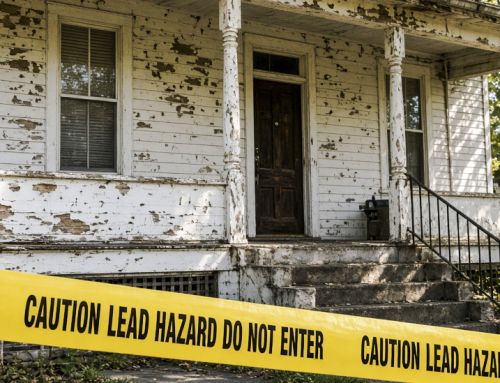
 The Lead Paint Legacy Real Estate Owners Must Take SeriouslySaturday, August 22nd, 2026
 -

-
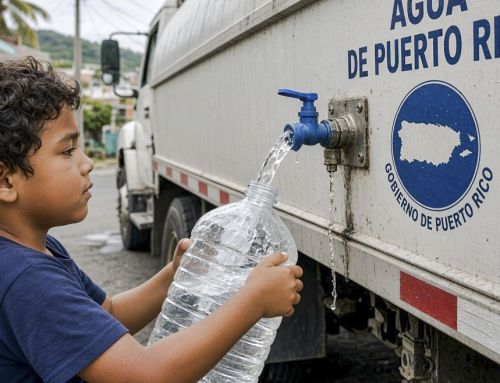
 Puerto Rico’s Water Crisis – The Era of Potable Water Bankruptcy Has ArrivedSaturday, August 8th, 2026
 -
 Commercial Space Launch Reform – FAA Proposal Will Cut Years from Licensing ApprovalsSaturday, August 1st, 2026
 -
 Radon – Test and Decide for YourselfSaturday, July 25th, 2026
View by Month/Year
“Green Building Law Update” Headlines
Recent Articles & News from
Stuart Kaplow’s blog
at GreenBuildingLawUpdate.com
Subscribe to the Green Building Law Update!
Stuart Kaplow brings his expertise and extensive experience to the table with his unique digital publication, "Green Building Law Update". Subscribers receive regular updates to keep them informed about important issues surrounding Environmental Law, Green Building & Real Estate Law, as well as the emerging demand for Environmental Social Governance (ESG).
Get fresh content through the lense of Stuart Kaplow's cutting-edge expertise, innovative commentary and insider perspective. Don't miss another issue! Subscribe below.
LEED is the Tool to Restrict Water Use in This Town
While much attention was given last week to California Governor Jerry Brown’s executive order, in response to that state’s long running drought, seeking to reduce overall water use by 25%, there may be more to be learned from how the small Town of Hampstead in Maryland responded to its own water crisis in 2008.
Despite that the U.S. uses less water than it did in 1980, availability of potable water is increasingly an issue. According to the EPA, at least 36 states are anticipating local, regional, or statewide water shortages this year.
In 2008, the 6,323 people residing in the Town of Hampstead, for the first time since it was incorporated in 1888, were experiencing severe water stress and sought to restrict water use and faced a moratorium on all building. The Town Commissioners sought a proven response that was both easily articulable and could be readily and quickly implemented.
With the Town water system running out of water, the Town created a Groundwater Conservation District “encouraging environmentally sensitive and sustainable ‘green’ design and construction methods, minimizing impervious surface, maximizing groundwater recharge and protecting the aquifer.” Within that District outdoor watering and irrigation was strictly prohibited. Washing of cars, boats, campers, windows, and the like, was prohibited except by a hose equipped with a flow-restricting device.
Cognizant that every 6 days, U.S. water utilities lose an entire day’s water from leaking pipes, the Town started an aggressive program of locating and fixing leaks, including offered a bounty of up to a $9,000 credit on water bills to customers for self locating a water leak on their property.
And by ordinance 2008-449, Hampstead Town Code 135-150 was amended to provide:
Any new building or structure shall comply with the Leadership in Energy and Environmental Design (LEED) standards for silver certification or a standard deemed equivalent by the Commission. The developer shall be responsible for the cost of the Town hiring a consultant to certify that the site plans and construction drawings conform to the LEED or other approved environmental standard. The Commission may establish a higher standard if deemed appropriate by the Commission.
The ordinance was tied to LEED 2009 NC which included for the first time as a prerequisite, WEp1 that all projects must reduce water use by at least 20%. And by requiring that projects be certifiable at the Silver level, land owners were encouraged to pursue credit WEc2, where a 30% reduction in water use garners two points, with up to four points available for a 40% reduction. Owners were also advised to pursue credit WEc1 which is available for a 50% reduction in potable water use for irrigation.
Using LEED as a tool to restrict water use obviated the need to create some new regulatory scheme from scratch. The ordinance met with little, if any, negative comment because most accepted government has a proper role in responding to a crisis and, in part, because the plumbing industry was familiar with LEED. And that projects need only be LEED ‘certifiable’ and not actually certified ameliorated the concern that LEED voluntary third party rating system was being misused.
The LEED water reduction prerequisite and credits provide an ideal tool for reducing water use. Carefully drafted, LEED can provide the standards, in an ordinance, for restricting water use. More simply put, LEED can be the ideal liquidity strategy.
About the Author: Stuart Kaplow