
View by Topic
Recent Articles
-
 TMDL Trump Executive Order – Why the Chesapeake Bay “Pollution Diet” Remains IntactSaturday, October 3rd, 2026
 -
 Maryland’s Packaging EPR Program Moves From Law to RealitySaturday, September 26th, 2026
 -
 Exposomics – The New Environmental Risk You Have Not Heard AboutSaturday, September 19th, 2026
 -
 Clean Water Isn’t a Constitutional Right? Fifth Circuit Says NoSaturday, September 12th, 2026
 -
 The Air We Breathe – Indoor Air Quality Is Becoming a Real Estate IssueSaturday, September 5th, 2026
View by Month/Year
“Green Building Law Update” Headlines
Recent Articles & News from
Stuart Kaplow’s blog
at GreenBuildingLawUpdate.com
Subscribe to the Green Building Law Update!
Stuart Kaplow brings his expertise and extensive experience to the table with his unique digital publication, "Green Building Law Update". Subscribers receive regular updates to keep them informed about important issues surrounding Environmental Law, Green Building & Real Estate Law, as well as the emerging demand for Environmental Social Governance (ESG).
Get fresh content through the lense of Stuart Kaplow's cutting-edge expertise, innovative commentary and insider perspective. Don't miss another issue! Subscribe below.
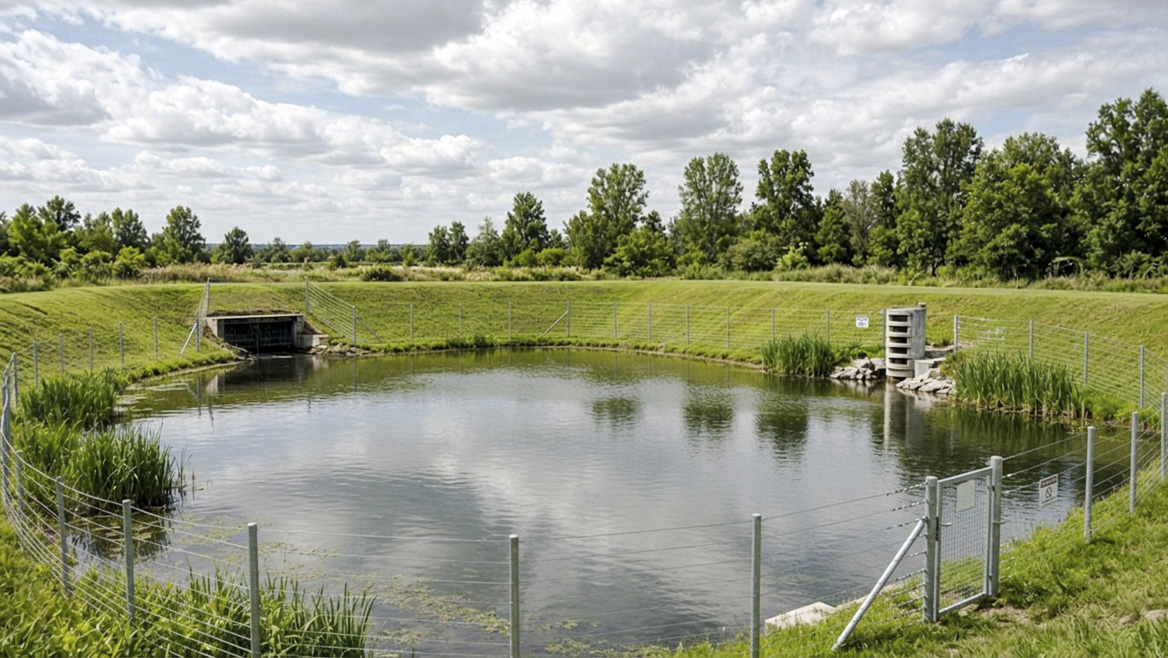
TMDL Trump Executive Order – Why the Chesapeake Bay “Pollution Diet” Remains Intact
On September 16, 2026, President Trump issued Executive Order 14428, revoking President Obama’s 2009 Chesapeake Bay Executive Order (EO 13508) and directly taking aim at what Mid-Atlantic lawmakers have long derided as the “rain tax.” However, before commercial real estate owners celebrate the death of local stormwater fees, they should take a hard look at the regulatory mechanics. The federal policy framework has shifted, but real estate owners should not expect their stormwater bills to disappear.
What Executive Order 14428 Actually Changed (and What Didn’t)
The core impact of Executive Order 14428 is clear: it removes the federal mandate that municipalities once cited as justification for imposing stormwater fees. This is a significant shift in federal policy and rhetoric. However, it is crucial to understand what the order did not do. It did not eliminate local stormwater fees. It did not dismantle stormwater utilities. And critically, it did not absolve states or municipalities of their legal obligations under the Clean Water Act.
This nuance is paramount. Many counties, like Baltimore County, Howard County, Montgomery County, and Prince George’s County, use this revenue to fund their CWA Municipal Separate Storm Sewer System (MS4) permit obligations. The White House stripped away the federal excuse for the fee, but the underlying statutory liability remains fully intact.
Maryland’s Enduring Stormwater Obligations of SB 863, TMDLs, and MS4 Permits
To truly understand the landscape, we must also look to Maryland state law. In 2015, Senate Bill 863, a compromise under the prior Governor Hogan, already eliminated the statewide mandate to charge a stormwater fee. However, SB 863 explicitly did not eliminate stormwater obligations. Under this state law, each jurisdiction must still:
- Demonstrate adequate funding to meet Chesapeake Bay Total Maximum Daily Load (TMDL) and MS4 requirements.
- Maintain a dedicated fund, financed either by a fee or other revenues (e.g., general fund, utility charges).
This means Maryland’s special purpose tax to fund stormwater management (c.f., this is not how we fund clean air?) was designed to ensure continued government stormwater management efforts, even without a federal or state level fee mandate. The Chesapeake Bay TMDL, established by the U.S. Environmental Protection Agency in 2010, remains a legally binding “pollution diet” that dictates specific reductions in nitrogen, phosphorus, and sediment. EO 14428 did not seek to rescind this foundational regulatory requirement.
Maryland Counties: A Varied Approach to Stormwater Funding
The practical outcome for businesses is a patchwork of local approaches.
- Continuing Fees: Baltimore City, Baltimore County (“Stormwater Remediation Fee”), Howard County (“Watershed Protection Fee”), Montgomery County (“Water Quality Protection Charge”), Prince George’s County (“Clean Water Act Fee”), and Anne Arundel County all continue to operate stormwater utilities and charge fees.
- Varied Structures: These fees are structured differently, ranging from tiered systems based on housing type or impervious area (e.g., Montgomery County with seven impervious area tiers) to flat residential fees.
- Alternative Funding: Counties like Carroll County (no general fee) and Harford County (no separate fee) address their MS4/TMDL obligations through other revenue sources, demonstrating that while the funding mechanism changes, the financial commitment does not vanish. Frederick County, historically with a symbolic fee, now applies it to some non-municipal properties. Charles County utilizes a fee/utility structure, with details set locally.
These funding approaches address compliance costs, but none addresses the potential to capture stormwater for future use.
A Shift in Federal Strategy: Focusing on ‘Impactful Water Quality Improvements’
Of import, while the environmental industrial complex rushed to criticize the new executive order, the text describes only a refocusing of federal efforts. EO 14428 calls on federal agencies to direct resources to “more direct on the ground projects in areas of highest need that would result in the most impactful water quality improvements.”
This signals a federal preference for “getting more bang for the buck” in environmental restoration, potentially moving away from what was perceived as a widespread tax that burdened homeowners and small businesses without demonstrating clear efficacy. This shift could lead to a future where federal funds are deployed more strategically, potentially leading to more efficient, targeted infrastructure projects, including those that capture drinking water, rather than blanket regulatory requirements.
Beyond Fees: Where Does the Rainwater Go?
There is an underappreciated connection between stormwater policy and drinking water supply. Far more residents are concerned about Historic Low Levels at Reservoirs Reveal Flaws in Modern Maryland Stormwater Management. That recent blog post highlights the complex, interconnected nature of environmental regulations; something not appreciated in most modern stormwater regulatory schemes.
The future of stormwater management in the Chesapeake Bay watershed likely depends on recognizing a simple but profound reality (paraphrasing the CalEPA secretary): The rain we rush away during storms will be the same water we later wish we still had to drink.
Strategic Implications for Commercial Real Estate and Business Professionals
For commercial real estate owners and businesses in Maryland, the federal shift toward “impactful water quality improvements” may open avenues for more cost effective, performance based solutions that demonstrate tangible environmental benefits, potentially fostering innovation in stormwater infrastructure, including considering the capture potential of the rain.
What Should Maryland Businesses Do?
Do not assume the President’s executive order eliminates your stormwater bill. It does not.
The practical takeaway is simple: The White House order changes the federal policy direction, not local stormwater bills. Maryland businesses should use this moment to demand more than another government fee. They should seek a demonstrable connection between stormwater spending, quantities of potable water captured, and water quality results achieved.
____________________________________________________
Join us for the next in our webinar series at the Intersection of Business, Science, and Law, “Exposomics – The New Environmental Challenge And Opportunity You Have Not Heard About,” on Tues, October 13 15 at 9 am. The webinar is complimentary, but you must register here.
About the Author: Stuart Kaplow