View by Topic
Recent Articles
-
 Clean Water Isn’t a Constitutional Right? Fifth Circuit Says NoSaturday, September 12th, 2026
 -
 The Air We Breathe – Indoor Air Quality Is Becoming a Real Estate IssueSaturday, September 5th, 2026
 -
 The Land Isn’t Moving, But Its Coordinates Are – What the 2026 GPS Modernization Means for Real EstateSaturday, August 29th, 2026
 -
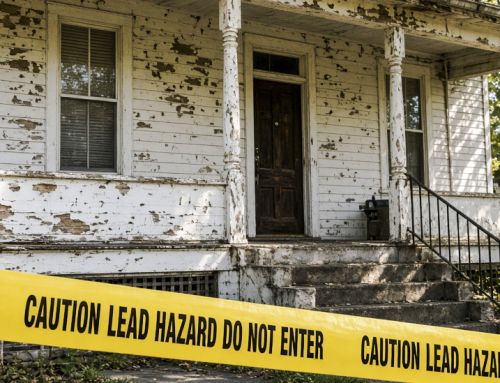
 The Lead Paint Legacy Real Estate Owners Must Take SeriouslySaturday, August 22nd, 2026
 -

View by Month/Year
“Green Building Law Update” Headlines
Recent Articles & News from
Stuart Kaplow’s blog
at GreenBuildingLawUpdate.com
Subscribe to the Green Building Law Update!
Stuart Kaplow brings his expertise and extensive experience to the table with his unique digital publication, "Green Building Law Update". Subscribers receive regular updates to keep them informed about important issues surrounding Environmental Law, Green Building & Real Estate Law, as well as the emerging demand for Environmental Social Governance (ESG).
Get fresh content through the lense of Stuart Kaplow's cutting-edge expertise, innovative commentary and insider perspective. Don't miss another issue! Subscribe below.

Roll Back of Endangered Species Habitat Regulation by Rescinding the Definition of “Harm”
For decades, federal agencies interpreted a single word in the 1973 Endangered Species Act, “harm” far beyond its ordinary meaning. On July 14, 2026, the U.S. Fish and Wildlife Service and National Marine Fisheries Service corrected that course by rescinding the regulatory definition that had treated significant habitat modification or degradation as a prohibited “harm” when it resulted in injury or death to protected wildlife.
Predictably, environmental groups immediately challenged the final rule, effective September 14, 2026, in federal court, arguing that it weakens wildlife protections.
From the perspective of many business owners, developers, farmers, manufacturers, and property owners, however, the agencies made the right decision.
Nearly all in the know agree that biodiversity degradation is an existential crisis affecting planetary and human health, but the Endangered Species Act, as it has been administered, falls short. It is widely accepted that in the five decades the law has been in effect, populations of mammals, birds, amphibians, and fish have dropped a shocking 68 percent, despite the fact that the ESA has trampled on private property rights. Something’s gotta give.
Returning to the Statute Congress Actually Wrote
The ESA prohibits the unauthorized “take” of listed species and defines “take” to include actions such as to “harass, harm, pursue, hunt, shoot, wound, kill, trap, capture, or collect.” Congress did not separately prohibit habitat modification.
Beginning in the early 1980s, federal agencies (.. not Congress) expanded the definition of “harm” through regulation to include significant habitat modification that indirectly killed or injured wildlife. That interpretation dramatically broadened the reach of the ESA beyond direct actions against animals and into routine land use decisions.
The July 14, 2026, final rule removes that regulatory definition, leaving the statute’s Congressionally enacted text to govern. The agencies concluded that the prior regulation could not be reconciled with the “single, best meaning” of the statute, particularly after the Supreme Court’s decision in Loper Bright Enterprises v. Raimondo, which rejected judicial deference to expansive agency interpretations of ambiguous statutes.
A Win for Regulatory Certainty
For business owners, one of the greatest costs of environmental regulation is uncertainty.
Under the former rule, a landowner could face years of permitting, biological studies, mitigation demands, and litigation over whether altering habitat might someday indirectly injure a protected species. Those determinations were often subjective, expensive, and difficult to predict.
The rescission does not eliminate ESA protections. Directly killing or injuring endangered wildlife remains unlawful, and federal agencies continue to regulate endangered species through consultation requirements, critical habitat designations, incidental take permits, and numerous other provisions of the ESA. Existing permits also remain valid.
What changes is that businesses are less likely to encounter expansive enforcement based on indirect theories of habitat effects untethered from the statutory text.
Respecting Private Property
Property rights have long been at the center of ESA debates. The prior regulatory definition frequently transformed otherwise lawful uses of private land into federally regulated activities, even when no protected animal was ever directly affected.
Whether one favors broader conservation policy or not, those policy judgments belong to Congress. Federal agencies cannot simply rewrite statutes to accomplish environmental objectives that Congress itself chose not to enact. If habitat modification should independently violate the ESA, Congress has the authority to amend the statute accordingly.
Until then, agencies should administer the law as written, not as bureaucrats wish it had been written.
Conservation Does Not Depend on One Regulation
Opponents characterize the rescission as the end of endangered species protection. That claim overstates both the legal and practical effect of the rule.
The ESA continues to provide some of the strongest wildlife protections in the world. Federal agencies still designate critical habitat, regulate federal actions affecting listed species, review permits, prepare biological opinions, enforce prohibitions against unlawful takes, and administer recovery plans.
We blogged about this last year when this now final rule was proposed, Déjà Vu Again: Federal Agencies Move to Restore Clarity in Endangered Species Regulations.
State wildlife laws
State wildlife laws remain fully applicable.
For example, for businesses that operate in Maryland, the implications are more nuanced than in most other states. Maryland’s own environmental laws already regulate habitat impacts in ways that partially fill the gap left by the federal rollback. Maryland’s Nongame and Endangered Species Conservation Act defines “take” to include “harm,” and Maryland’s Department of Natural Resources has long interpreted “harm” to include habitat modification that contributes to injury or death of state listed species. The smartest move for Maryland business owners is to treat habitat protection as a state compliance issue, not just a federal one, and accept that, as reported in the CNBC 20th annual report, in 2026, the state economy ranks 49th and ranks 44th in cost of doing business, driven by commercial real estate rates principally impacted by environmental and land use laws like this.
“I have not yet begun to fight”
At least 10 environmental organizations have already sued, led by Earth Justice with a complaint filed in Seattle, Washington, relying in part on the Supreme Court’s 1995 decision in Babbitt v. Sweet Home Chapter of Communities for a Great Oregon, which upheld the earlier regulatory definition of “harm.”
The federal government, however, is advancing a different legal theory than was before the Court in 1995. Rather than defending the old regulation, the agencies now argue that the prior definition exceeded the statutory text and should never have existed. They also rely on the Supreme Court’s more recent administrative-law jurisprudence, including Loper Bright, emphasizing that agencies cannot expand statutes through creative interpretation.
Whether the courts ultimately agree remains to be seen.
The Bottom Line
There are significant positive implications for business. By way of practical example, those seeking incidental take permits will no longer need to address habitat modification in their conservation plans.
Businesses should also view the July 2026 rule as part of a broader shift toward textual statutory interpretation and more predictable environmental regulation.
For decades, the regulatory definition of “harm” allowed federal agencies to extend the ESA well beyond direct impacts to protected species and into broad questions of land use and habitat management. The rescission restores the focus to the words Congress enacted while preserving the Act’s core prohibition against actually injuring or killing endangered wildlife.
Environmental protection and economic development need not be mutually exclusive. Clear statutes, faithfully administered, benefit both. Businesses deserve regulatory certainty, and when Congress wishes to expand environmental obligations, it, not federal agencies, should be the institution that makes that policy choice.
________________
Join us for the next in our webinar series at the Intersection of Business, Science, and Law, “Radon Risk and Opportunity in Real Estate” on Tues, August 4 at 9 am. The webinar is complimentary, but you must register here.
About the Author: Stuart Kaplow