
View by Topic
Recent Articles
-
 Maryland’s Packaging EPR Program Moves From Law to RealitySaturday, September 26th, 2026
 -
 Exposomics – The New Environmental Risk You Have Not Heard AboutSaturday, September 19th, 2026
 -
 Clean Water Isn’t a Constitutional Right? Fifth Circuit Says NoSaturday, September 12th, 2026
 -
 The Air We Breathe – Indoor Air Quality Is Becoming a Real Estate IssueSaturday, September 5th, 2026
 -
 The Land Isn’t Moving, But Its Coordinates Are – What the 2026 GPS Modernization Means for Real EstateSaturday, August 29th, 2026
View by Month/Year
“Green Building Law Update” Headlines
Recent Articles & News from
Stuart Kaplow’s blog
at GreenBuildingLawUpdate.com
Subscribe to the Green Building Law Update!
Stuart Kaplow brings his expertise and extensive experience to the table with his unique digital publication, "Green Building Law Update". Subscribers receive regular updates to keep them informed about important issues surrounding Environmental Law, Green Building & Real Estate Law, as well as the emerging demand for Environmental Social Governance (ESG).
Get fresh content through the lense of Stuart Kaplow's cutting-edge expertise, innovative commentary and insider perspective. Don't miss another issue! Subscribe below.
Fourth Circuit Blocks Key Portion of Maryland’s Electricity Greenwashing Law
Maryland’s effort to police “greenwashing” marketing claims in the electricity sector just hit a major constitutional roadblock.
In a decision last month, the U.S. Court of Appeals for the Fourth Circuit ordered a preliminary injunction against a 2024 Maryland law’s core speech restriction on describing renewable electricity, and sent the remainder of the case back to the District Court for further review.
The offending law “prohibits certain suppliers from marketing their electricity as clean, green, eco-friendly, environmentally friendly or responsible, carbon-free, 100% renewable, 100% wind, 100% hydro, 100% solar, 100% emission-free, or similar claims unless the electricity offered by the supplier is at least 51% renewable or backed by RECs derived from within the PJM region,” despite that such is true and correct.
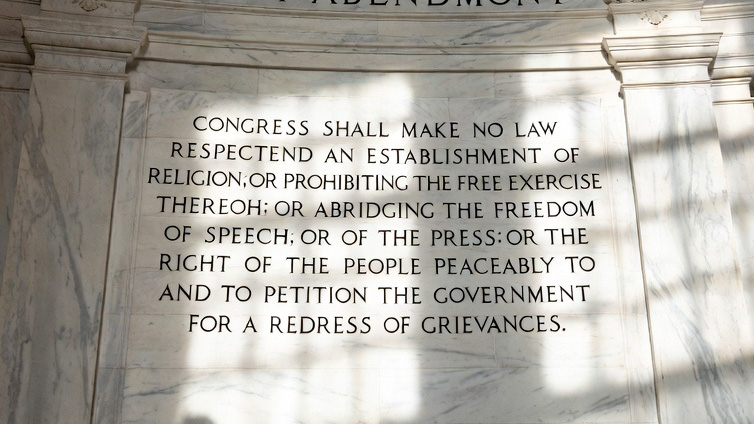
The decision in Retail Energy Advancement League & Green Mountain Energy Co. v. Brown is more about the First Amendment than a matter of environmental law. It is a profound condemnation of Maryland’s policymaking process that public officials would attempt to restrict and compel speech about climate change on the premise that the perceived importance of the issue outweighs the public’s interest in the free expression of truthful information.
This is not a surprise. We blogged in 2024 when this law was enacted, “while much of the world has moved on from catastrophizing climate change, Maryland political leaders remain consumed with those ideological battles over the practical governance of environmental matters.”
Why Maryland Passed Senate Bill 1 in 2024
Electrons on the electricity power grid are indistinguishable; suppliers rely on renewable energy certificates (RECs), providing verifiable proof, worldwide, that one megawatt hour (MWh) of electricity was produced from renewable sources.
Under the guise of concern about consumer confusion, but clearly more about command and control, the appellate federal court found violated Constitutional free speech protections, in 2024 the Maryland General Assembly’s enactment of SB 1, which prohibited electricity suppliers from using terms like clean, green, eco‑friendly, or 100% renewable, to describe RECs unless:
- At least 51% of the electricity was generated from renewable sources or
- The RECs were sourced from within the PJM Interconnection region.
The law also required suppliers to include state mandated disclosures explaining how RECs work and what consumers are buying.
The Fourth Circuit’s Core Holding: The Speech Ban Fails
The District Court denied a preliminary injunction. The Fourth Circuit reversed.
Interesting to students of the U.S. Constitution, the appellate court did not decide whether the “strict scrutiny” standard applies, because Maryland’s law fails even under intermediate scrutiny.
- The speech is not inherently misleading
Maryland argued that terms like “green” or “100% wind” mislead consumers when describing RECs. The court rejected this:
- RECs are a legitimate, federally recognized mechanism for tracking renewable generation.
- Suppliers can use these terms truthfully when backed by RECs.
- Maryland offered no evidence of actual consumer deception.
- Maryland’s asserted interests don’t justify the restriction
The State’s consumer protection rationale could be real, but this law’s design undermines it:
- The statute bans “green” claims backed by RECs from outside PJM ..
- .. yet allows identical claims backed by RECs from anywhere within PJM, even if the generation is hundreds of miles away and has no Maryland specific environmental benefit.
This geographic distinction, the court held, does not meaningfully reduce confusion.
- The law is more extensive than necessary
The statute is both underinclusive and poorly tailored. Maryland could have pursued less restrictive alternatives, such as clearer disclosures, without banning entire categories of truthful speech.
Result: The court ordered a preliminary injunction against § 7‑707(c) of the Public Utility Code, the speech restriction.
Compelled Disclosures: A To Be Continued Story
The court took a different approach to the disclosure requirements.
After the District Court ruled, the Maryland Public Service Commission issued new mandatory disclosure language, replacing the statutory “model” language. Because the District Court never evaluated the new version, the Fourth Circuit:
- Vacated the District Court’s ruling on disclosures
- Remanded for a fresh analysis under Zauderer (.. a case that held a mandatory 29 word disclosure threatened to drown out a two word statement on a billboard)
This portion of the case will shape how far Maryland can go in mandating explanatory language about green power.
Why This Case Matters for Businesses
- States face limits on regulating business claims
The opinion reinforces a growing judicial skepticism toward state level attempts to tightly control business marketing, especially when the state’s rationale is thin or its tailoring is sloppy.
- RECs remain legally recognized instruments
The court’s treatment of RECs as legitimate, non misleading substantiation for renewable claims is significant. It aligns with federal policy, including the longstanding FTC Green Guides, and undercuts arguments that REC backed claims are inherently deceptive.
- Government required disclosures must be factual and balanced
The remand signals that government disclosure requirements must be:
- Accurate
- Neutral
- Not so lengthy or complex that they drown out the speaker’s own message
This is a critical boundary for states experimenting with politically charged, environmentally related consumer protection laws.
- Expect ripple effects across the country
This decision will influence legislative drafting and litigation strategies across the country.
- More supply
In a state that imports more than 40% of its electricity, SB 1 had the effect of driving retail electricity suppliers and aggregators out of Maryland. Possibly, the effect of this court decision will create more suppliers and reduce electricity rates.
Bottom Line
The Fourth Circuit’s decision is an alarming condemnation of Maryland government that public officials would seek to regulate speech about climate change, believing the subject’s significance is sufficient to override the fundamental principle that truthful speech should not be censored or compelled by the state.
Additionally, the public reaction to the 2024 law is yet another example of people not believing that their government institutions are protecting or serving them. While much of the world has moved on from climate doomism, the Maryland government remains consumed with ideological battles over practical governance.
The next phase, evaluating the PSC’s newly mandated disclosure language, will reveal how Maryland policymakers reconcile environmental objectives with constitutionally protected free speech rights.
About the Author: Stuart Kaplow