View by Topic
Recent Articles
-
 Tokenization of Real Estate – The Maldives Eco Friendly Resort OfferingSaturday, February 28th, 2026
 -
 The Right to Bee – an Ordinance in Peru Gives Rights to Stingless BeesSaturday, February 21st, 2026
 -
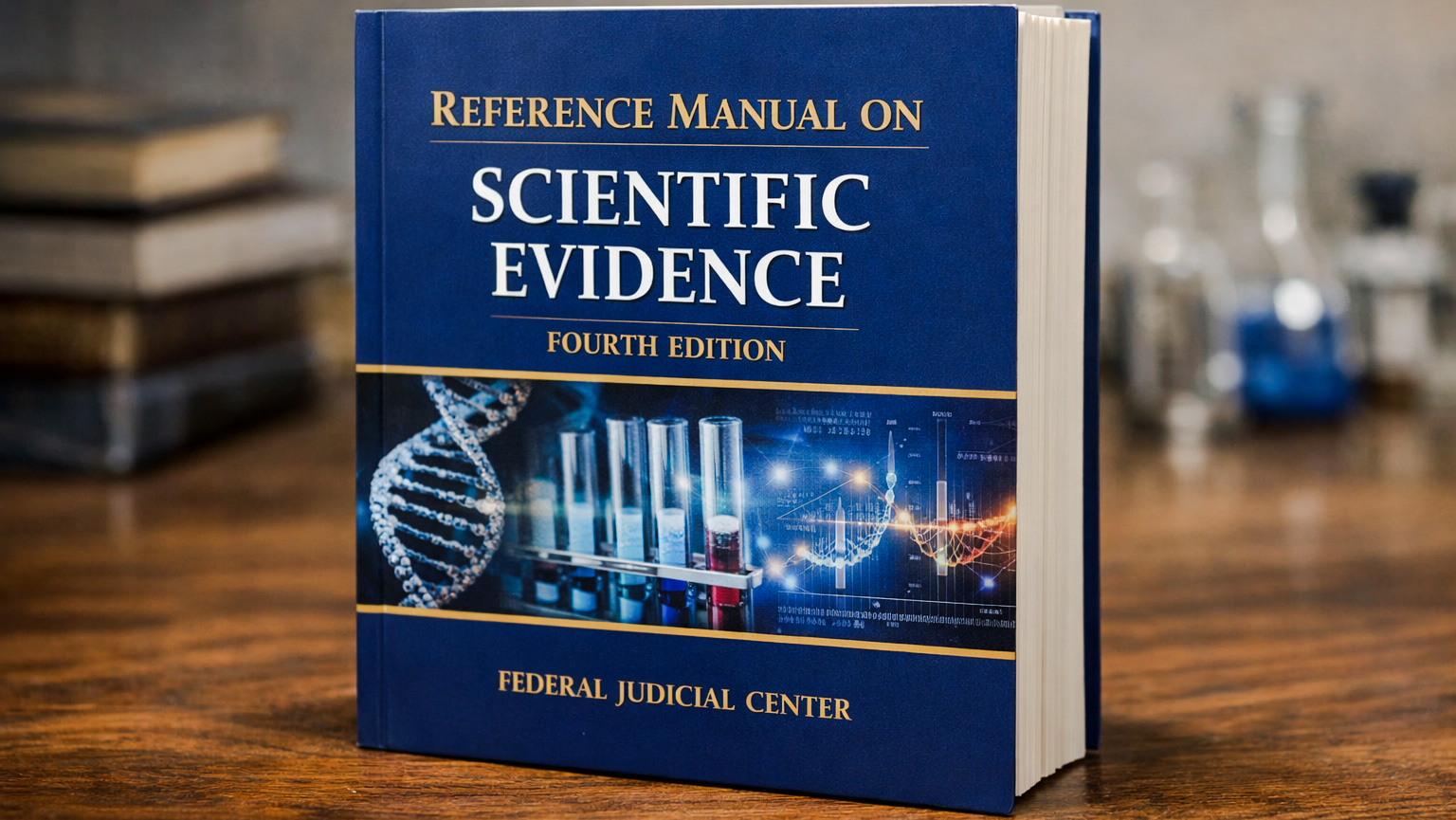
 Climate Change Chapter Omitted from Federal Courts Reference Manual on Scientific EvidenceSaturday, February 14th, 2026
 -
 Why Land Subsidence Matters More Than Sea Level RiseSaturday, February 7th, 2026
 -
 A More Efficacious Way to Measure Greenhouse Gas EmissionsSaturday, January 31st, 2026
View by Month/Year
“Green Building Law Update” Headlines
Recent Articles & News from
Stuart Kaplow’s blog
at GreenBuildingLawUpdate.com
- United States Sues Morgan Hill and Petaluma over All Electric Building Laws January 25, 2026
- WARNING: This Product Contains an Ingredient Not Recommended for Human Consumption … January 18, 2026
- Microplastics – The Next Environmental Crisis We Can No Longer Ignore January 11, 2026
- Why Electricity Will Be the Number One Environmental Issue of 2026 January 4, 2026
Subscribe to the Green Building Law Update!
Stuart Kaplow brings his expertise and extensive experience to the table with his unique digital publication, "Green Building Law Update". Subscribers receive regular updates to keep them informed about important issues surrounding Environmental Law, Green Building & Real Estate Law, as well as the emerging demand for Environmental Social Governance (ESG).
Get fresh content through the lense of Stuart Kaplow's cutting-edge expertise, innovative commentary and insider perspective. Don't miss another issue! Subscribe below.

Stablecoin: The GENIUS Act Ushers in a New Era including Green Building Finance
On July 18, 2025, the President of the United States, Donald J. Trump, signed into law the much anticipated Guiding and Establishing National Innovation for U.S. Stablecoins Act, that is the GENIUS Act, a sweeping piece of legislation that provides a legal framework for U.S. dollar backed stablecoins. While the bill has been touted as a landmark moment in the evolution of financial technology, what may be less appreciated, but no less transformative, is how the GENIUS Act could unlock long awaited capital for voluntary green building and energy efficient upgrades in commercial real estate.
The Greatest Revolution Since “the Birth of the Internet”
During the signing ceremony, President Trump declared that the dollar backed stablecoin authorized under the GENIUS Act could be “the greatest revolution in financial technology since the birth of the Internet.” That may sound hyperbolic, but for those of us working at the intersection of environmental law, real estate, and finance, the potential for this new asset class is real and long overdue. “The entire ancient system will be eligible for the 21st century upgrade using state-of-the-art crypto technology.”
The Financing Problem Plaguing Green Building
For decades, voluntary green building standards, like LEED, Green Globes, and ENERGY STAR, have promised reduced environmental impacts and long term operating savings. Yet, adoption has lagged. Why? One word: capital.
Programs like PACE (Property Assessed Clean Energy) once held promise. These programs allow property owners to finance improvements like HVAC upgrades, solar panels, and insulation through local government collected property tax assessments. But PACE was not frictionless, to the contrary, it never truly overcame the cost barriers for property owners.
Similarly, the green bond market, designed to offer investment grade debt tied to environmentally beneficial projects, has been tepid. Investors have hesitated due to inconsistent standards, questionable “green” credentials, and a lack of transparency. Despite good intentions, green bonds simply haven’t gained traction.
And in recent days, the federal government has taken steps to curtail and roll back incentives for solar and wind energy, as well as other alternative energy technologies in commercial and residential real estate.
Stablecoin: A Transparent, Liquid, and Secure Solution
Enter the GENIUS Act and its transformative stablecoin framework.
For the uninitiated, stablecoins are cryptocurrencies that maintain a fixed value, in this instance pegging the value to the U.S. dollar. Unlike other leading crypto assets like Bitcoin and Ethereum, stablecoins are less prone to price volatility.
Under the new law, issuers of stablecoins must fully back their digital tokens with U.S. dollars or short term U.S. Treasuries, subject to monthly audits and federal oversight. Prior to this authorizing law there have been stablecoins tied to the US dollar like Tether (arguably the first dollar backed stablecoin created in 2014) and Global Dollar, which regularly publish audits of the assets held in reserve. What’s been missing is regulatory certainty (the last Treasury Secretary referred to it as “illicit finance”) and market trust (where there had been different rules in every country, if there were rules at all). The GENIUS Act delivers both.
This is where green building comes back into the picture.
With stablecoins now government regulated, they can serve as a near frictionless funding mechanism including for commercial energy upgrades. Their real time transparency, thanks to blockchain, allows building owners, lenders, and regulators to see exactly how funds are used, building trust and reducing compliance costs.
Tokenizing Green Improvements: A New Asset Class
Consider this: A building owner replaces an outdated HVAC system with a high efficiency model. Using funds issued via a GENIUS Act compliant stablecoin, that transaction is not only verified and auditable, but the efficiency gain itself can be tokenized.
What does that mean? That HVAC upgrade could become a tradeable green token, verified on chain and tied to measurable environmental benefits. These tokens could form the basis of market-driven incentives, from environmental offsets to energy credits and energy rebates, all without high administrative overhead.
The result? A self reinforcing financial loop:
- Verified energy improvements
- Tokenized green credits
- Secondary market incentives
- Lower cost of capital
- More green building voluntary upgrades.
A Pathway to Mass Adoption
A stablecoin like device is already Africa’s leading mobile money service, so there is proof of concept. We have some experience in this space.
Just last month China’s central bank governor Pan Gongsheng made clear his vision to globalize the yuan with a more multipolar monetary system, included Beijing implementing stablecoins (.. and that is already happening in Hong Kong, although at modest capital amounts in what appears more like a China offshore market testing?).
The U.S. has lagged behind in constructing green buildings and converting existing buildings to green, largely because the financial ecosystem didn’t reward sustainability. The GENIUS Act flips that script. It creates a pathway where financial stability supports environmental sustainability, aligning incentives across markets.
For the first time, green building upgrades are not just relying on government handouts to be environmentally prudent; they are now economically smart.
Looking Forward
We are witnessing the dawn of a new financial era, one in which the blockchain’s transparency, stablecoin’s liquidity, and green building’s promise converge. This moment doesn’t belong only to fintech or to climate policy; it’s a hybrid solution to hybrid problems for every person with a roof over their head.
With this new law, America can lead in both clean technology and financial innovation. For building owners, developers, investors, and green entrepreneurs, the message is clear: Sustainability is no longer a sunk cost; it’s a frictionless tradable asset.
The GENIUS Act may live up to its name after all.
Note, the content above has been generated by an artificial intelligence language model transcribing and combining my comments as a guest on a podcast yesterday. My words may not be entirely error free, and should you have questions, please reach out to me or seek advice from an appropriate professional.
About the Author: Stuart Kaplow