View by Topic
Recent Articles
-
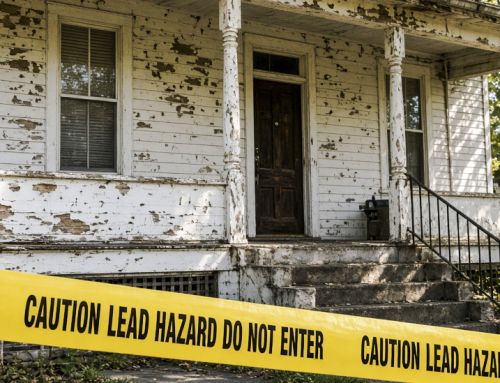
 The Lead Paint Legacy Real Estate Owners Must Take SeriouslySaturday, August 22nd, 2026
 -

-
 Puerto Rico’s Water Crisis – The Era of Potable Water Bankruptcy Has ArrivedSaturday, August 8th, 2026
 -
 Commercial Space Launch Reform – FAA Proposal Will Cut Years from Licensing ApprovalsSaturday, August 1st, 2026
 -
 Radon – Test and Decide for YourselfSaturday, July 25th, 2026
View by Month/Year
“Green Building Law Update” Headlines
Recent Articles & News from
Stuart Kaplow’s blog
at GreenBuildingLawUpdate.com
Subscribe to the Green Building Law Update!
Stuart Kaplow brings his expertise and extensive experience to the table with his unique digital publication, "Green Building Law Update". Subscribers receive regular updates to keep them informed about important issues surrounding Environmental Law, Green Building & Real Estate Law, as well as the emerging demand for Environmental Social Governance (ESG).
Get fresh content through the lense of Stuart Kaplow's cutting-edge expertise, innovative commentary and insider perspective. Don't miss another issue! Subscribe below.

The Birds: Migratory Bird Treaty Act redux without Tippi Hedren
Three weeks ago the U.S. Fish and Wildlife Service proposed a regulation to finally resolve and codify the legal principal that an incidental bird take resulting from an otherwise lawful activity, for example a sparrows flies into a solar panel, is not prohibited under the Migratory Bird Treaty Act.
The Fish and Wildlife Service is the federal agency delegated the primary responsibility for managing migratory birds consistent with four international migratory bird treaties (between the United States and Canada, Mexico, Japan, and Russia) and the implementing the MBTA enacted in 1918. The goal of the MBTA was to stop the unregulated killing of migratory birds at the federal level. The MBTA makes it unlawful to, among other things, take individual birds of most species found in the United States, unless that taking is authorized by regulation. “Take” is defined by regulation as “to pursue, hunt, shoot, wound, kill, trap, capture, collect, or attempt to hunt, shoot, wound, kill, trap, capture, or collect.”
Federal courts have adopted different views on whether the MBTA prohibits the “incidental take” of a migratory bird. Incidental take of a migratory bird is a take that results from an activity, but is not the purpose of that activity (also sometimes referred to as accidental, unintentional, or non-purposeful taking). The saga, now covering 1,093 species of birds, has played out more than a century, literally.
Earlier this year I wrote a bog post, Migratory Bird Treaty Act Will Apply Only to Intentional Takes, in response to a February 3, 2020, FWS move to codify a 2017 Department of the Interior Opinion M–37050, which determined the MBTA only applies to the intentional take of migratory birds and not an incidental take, saying,
“Interpreting the MBTA to apply to incidental or accidental actions hangs the sword of Damocles over a host of otherwise lawful and productive actions, threatening up to six months in jail and a $15,000 penalty for each and every bird injured or killed.”
In a parallel but not directly related action, on August 11, 2020, Judge Valerie Caproni, of the U.S. District Court for the Southern District of New York, struck down that Interior legal opinion, “It is not only a sin to kill a mockingbird, it is also a crime,” paraphrasing Harper Lee. “That has been the letter of the law for the past century.” The decision has been appealed. But that case did not involve the February notice of rulemaking (that yes, also relied on the same Interior legal opinion that Her Honor struck down).
Which takes the saga to three weeks ago and the FWS proposal to develop a regulation that interprets the scope of the MBTA decriminalizing the incidental take of migratory birds.
All of this is against the backdrop of a widely discussed study in the journal Science last year that found “cumulative loss of nearly three billion birds since 1970, across most North American biomes.” But that study concluded that building collisions, driven by the increased use of glass building facades, are second to cats as the greatest threat to birds. Criminal fines of housecat owners do not make a good public policy, but owners of glass buildings should breathe a sigh of relief. Far down on the list are industrial “incidental takings” resulting in, on average 57 investigations for migratory bird deaths each year (the largest number of which were by contact with an electric power line) resulting in $178.8 Million in criminal fines and civil penalties over the past decade.
This newly proposed rule has already sparked a fiery debate, pitting members of the environmental industrial complex against one another and in opposition to business scale renewable energy, but I suggest this rule strikes a reasonable balance between the 1918 era MBTA law and unintended take, including deaths associated with modern wind turbines and solar panels.
About the Author: Stuart Kaplow