View by Topic
Recent Articles
-
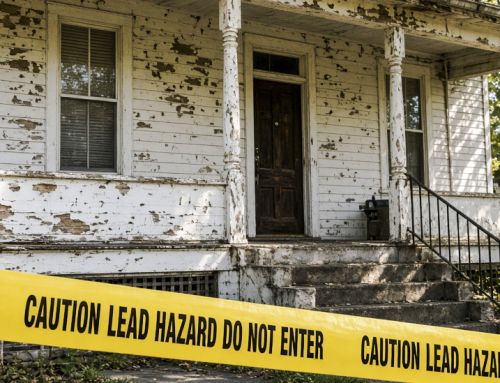
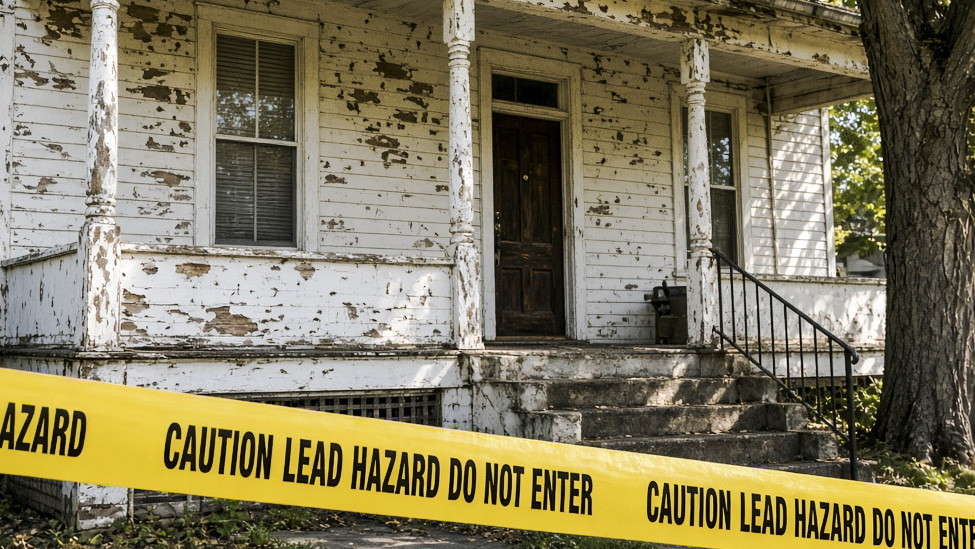
 The Lead Paint Legacy Real Estate Owners Must Take SeriouslySaturday, August 22nd, 2026
 -

-
 Puerto Rico’s Water Crisis – The Era of Potable Water Bankruptcy Has ArrivedSaturday, August 8th, 2026
 -
 Commercial Space Launch Reform – FAA Proposal Will Cut Years from Licensing ApprovalsSaturday, August 1st, 2026
 -
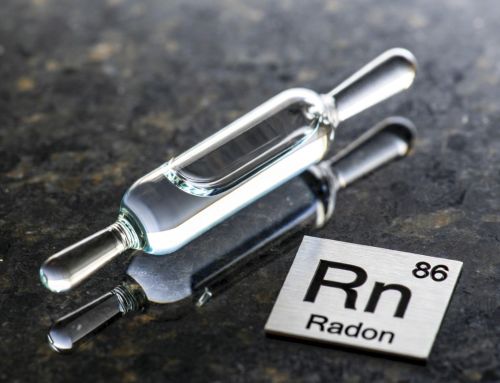
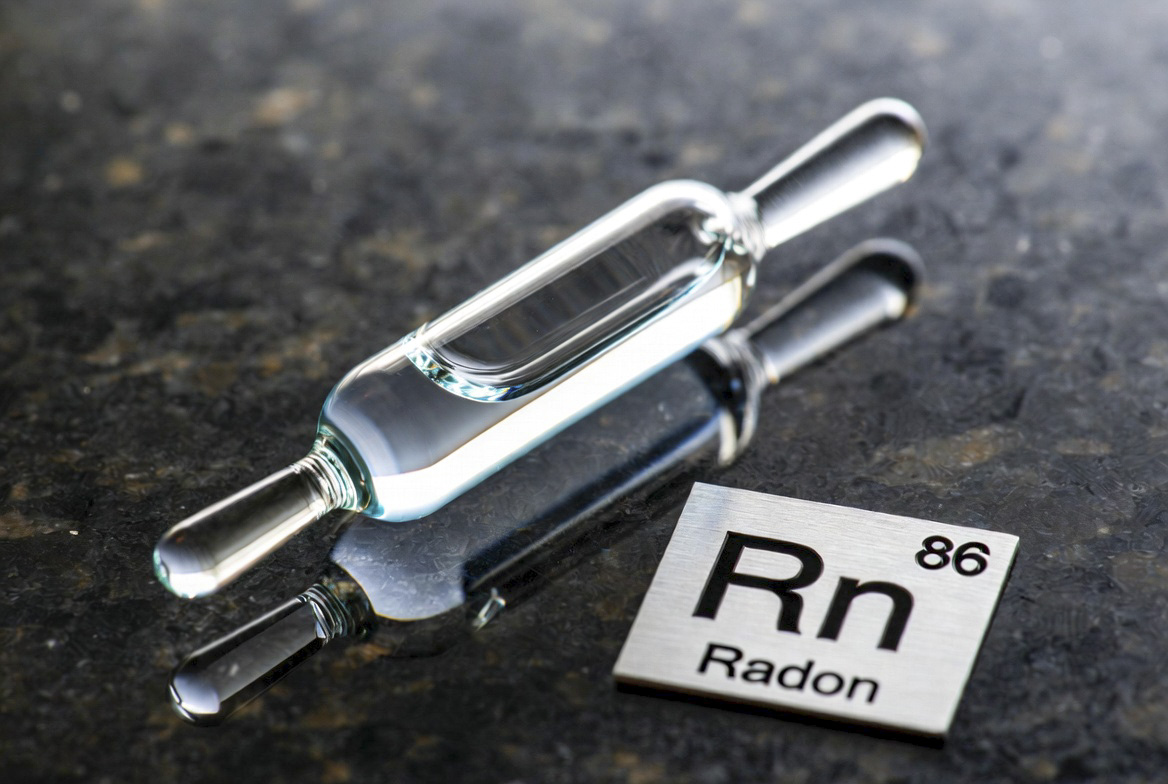
 Radon – Test and Decide for YourselfSaturday, July 25th, 2026
View by Month/Year
“Green Building Law Update” Headlines
Recent Articles & News from
Stuart Kaplow’s blog
at GreenBuildingLawUpdate.com
Subscribe to the Green Building Law Update!
Stuart Kaplow brings his expertise and extensive experience to the table with his unique digital publication, "Green Building Law Update". Subscribers receive regular updates to keep them informed about important issues surrounding Environmental Law, Green Building & Real Estate Law, as well as the emerging demand for Environmental Social Governance (ESG).
Get fresh content through the lense of Stuart Kaplow's cutting-edge expertise, innovative commentary and insider perspective. Don't miss another issue! Subscribe below.
The Real Dirt On Brownfields
A new era in both environmental regulation and urban revitalization came upon us in early 1997. That new era is the movement to redevelop Maryland’s Brownfields, the name for abandoned or under used commercial and industrial sites where redevelopment is hampered by contamination, whether real or perceived.
Background
The Environmental Protection Agency estimated in 1995 there may be as many as 450,000 Brownfields sites nationwide. The Maryland Department of the Environment has identified 400 potential Brownfields sites in the state.
The benefits of cleaning up these sites are obvious, including: a cleaner environment, a larger property tax base, creation of jobs, revitalization of older communities, preventing urban sprawl, and more …
The idea behind Brownfields redevelopment is to solve the problems that make these sites unattractive to businesses in the first place: the too stringent standards that make clean up more expensive than necessary, the open ended expenses associated with liability, and the inability to obtain financing due to potential lender liability.
The most controversial feature of the Brownfields initiative is not that of liability reforms, but of lowering the standards for clean up. The object is not necessarily to restore the land to a pristine state, but to make the risks of toxicity consistent with its future use. If a site is going to be used as a steel mill, it would not have to be cleaned up to the same level required for residential use. This feature may allow the expense of many clean ups to be moderated.
The law adopts a tiered set of clean up standards that in their simplest form link the amount of investigation of a site’s toxicity to the applicable standards. Uniform numeric risk based standards are being developed, but if a developer undertakes “site specific risk assessments,” lower standards for clean up may be approved by regulators which may substantially reduce the expense of clean up.
Both the EPA and Congress have worked to limit the scope of possible lender liability for environmental clean ups. Concerns about liability under the Comprehensive Environmental Response, Compensation and Liability Act (known as Superfund) emanate from U.S. v. Fleet Factors, Corp., 901 F.2d 1550 (1990), in which the 11th U.S. Circuit Court of Appeals held that lenders could be held liable for environmental liability on a property on which they hold a mortgage if they participated in a borrower company’s management.
In 1992, the EPA attempted to provide guidance on what amount of participation was necessary for liability, but was judged in 1994 by the U.S. Court of Appeals for the Federal Circuit in Washington, D.C., to have exceeded its authority. Later, EPA took a different tack by issuing a joint memorandum with the Department of Justice, but that memorandum became moot with passage of the 1996 Lender liability Law.
Among other things, Maryland’s Brownfields law ratifies the EPA’s position and expands the “safe harbor” for lenders from environmental clean up liability under both this program and the oil (Title 4) program protecting lenders from virtually any environmental liability for a property on which they hold a mortgage.
The Maryland Brownfields Law
On February 25, 1997, the Governor signed Senate Bill 340 creating a Voluntary Cleanup Program within MDE and a Brownfields Revitalization Incentive Program within the Department of Business and Economic Development.
The Voluntary Cleanup Program creates a new process to clean up eligible properties that are, or are perceived to be, contaminated by hazardous waste. In addition to providing a streamlined review and approval process, the legislation changed the liability scheme for certain prospective owners of eligible properties in the Program to encourage the sale of properties, and clarifies liability to the state. The changes are intended to provide a higher degree of certainty not only as to future liability, but also with respect to clean up costs and time frames.
The Brownfields Revitalization Incentive Program provides financial incentives for redevelopment of Brownfields. This Program targets loans, grants, and property tax credits to properties contaminated by hazardous waste or oil, where clean up will have economic development and revitalization benefit, making clean up fiscally viable for the private sector.
Voluntary Cleanup Program
Eligible applicants may be either “responsible persons” or prospective owners who do not and have not previously owned the property, and did not cause or contribute to contamination of the property (parties who knowingly or willfully violated laws or regulations concerning hazardous waste are not eligible).
Eligible properties are those contaminated or perceived to be contaminated by hazardous substances. Sites on the National Priorities List, under active enforcement by MDE, subject to a state issued controlled hazardous substances permit, or contaminated after October 1, 1997, and owned or operated by a responsible person are not eligible.
An eligible party applies by submitting the requisite application, including a Phase I and Phase II environmental site assessment, known environmental information, and the $6,000 application fee. MDE determines, within 60 days, whether the applicant is eligible, whether the applicant is admitted into the Program as an “inculpable person” (usually a prospective owner) or “responsible person” and whether any clean up is required. If no clean up is required, MDE, at that time, will issue a “no further requirements” determination stating that there are no further requirements related to the investigation or clean up of hazardous waste at the property.
If clean up is required, once a “response action plan” is submitted to MDE for approval, MDE must review the proposed plan within 120 days. When the plan is approved, MDE will issue a “response action plan approval letter” which states no further action will be required to accomplish the plan objectives other than those included. Once the clean up is complete, within 30 days of approval by MDE, MDE must issue a “certificate of completion” to the participant stating that: the requirements of the response action plan have been completed, implementation of the plan achieved the clean up criteria, and MDE may not bring an enforcement action against the participant at the property. The participant is released from further liability to the state for remediation of the property for contamination identified in the environmental site assessment, and the participant is not subject to a contribution action.
For each of the liability limitations: the “no further action” determination, response action plan approval letter, and certificate of completion, there are “reopeners” or specific circumstances under which the participant may be required to take further action. These reopeners are broader for participants designated as responsible persons than for those who are designated as inculpable persons.
As of the time of preparing this article, twenty properties have been accepted into the Voluntary Cleanup Program. Nine of those sites received no further requirements determinations and two sites received certificates of completion. And applications for thirteen other sites are being reviewed.
Regulations To Be Issued
Accepting that the program is up and running, MDE is in the process of drafting regulations that will further streamline and standardize the application and remediation approval process. Regulations establishing uniform numeric clean up standards are being developed, but it may be some time before they are promulgated.
EPA Memorandum Of Understanding
A Memorandum Of Understanding was signed on February 25, 1997 by MDE and Region III of the EPA to address the potential federal liability of a participant in the Maryland Brownfields program. The MOU provides that EPA “will consider sites [in Maryland’s program] of no interest.” Eligible properties in Maryland’s program will fall under the MOU once a “no further requirements” determination or “certificate of completion” has been issued by MDE. Limited circumstances under which the MOU would not apply are described.
Revitalization Incentive Program
DBED has developed a package of financial incentives, including low interest loans and grants for Brownfields applicants from within the Department’s existing programs. A new nonlapsing, revolving Brownfields Revitalization Incentive Fund has also been created.
To be eligible for a financial incentive a property owner must have applied to the MDE Voluntary Cleanup Program or be cleaning up an oil contaminated site through a corrective action plan. The property must be located within a local government jurisdiction that has elected to participate in the program. Baltimore County has made such an election. Property that is owned or operated by a responsible person does not qualify for financial incentives.
DBED must notify an applicant within 30 days if the applicant is eligible for financial incentives. DBED will be promulgating regulations, however, the Department may consider criteria such as the feasibility of redevelopment, the public benefit of redevelopment, the existing threat posed by the site, the potential to attract employers, and the absence of responsible persons. DBED must consult with MDE, community groups, and public health experts.
As of the time of preparation of this article, no property has been awarded a financial incentive under these programs.
Property Tax Credits
If a local government elects to participate, for each of the five taxable years following redevelopment of the property, the jurisdiction must grant a property tax credit of 50% of the property tax attributable to the increase in assessment (including improvements on the site), and must contribute 30% of the property tax attributable to the increase in assessment to the Brownfields Revitalization Incentive Fund. The local government may grant a property tax credit up to an additional 20% of the remaining property tax attributable to the increase.
The tax credit may be extended an additional five years if the site is located within a designated Enterprise Zone.
Local governments may also grant a property tax abatement against overdue county or municipal property taxes.
Site Assessment Initiative
MDE is continuing the Brownfields Site Assessment Initiative. Through federal funding, MDE had in the past been able to conduct site assessments at no cost to property owners. The Site Assessment Initiative eligibility requirements are now different and only publicly owned sites are eligible.
Baltimore County has federal funding to conduct site assessments on a limited number of private properties.
(Any improvements made in an Enterprise Zone already receive tax credits against local property taxes. These credits are for 80% of the increase in value for the first five years, 70% for year six, 60% for year seven, 50% for year eight, 40% for year nine, and 30% for year ten. The amount of increased assessment that would be eligible for this credit and available for the Brownfields Revitalization Incentive Fund could be minimal for these properties.)
About the Author: Stuart Kaplow