View by Topic
Recent Articles
-
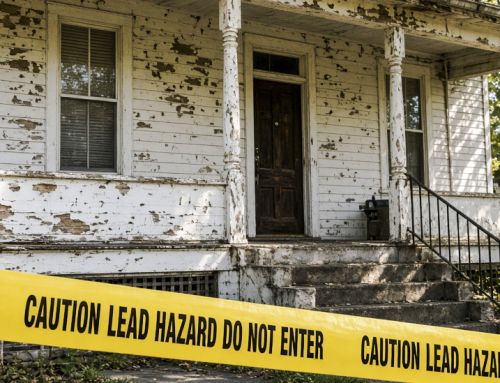
 The Lead Paint Legacy Real Estate Owners Must Take SeriouslySaturday, August 22nd, 2026
 -

-
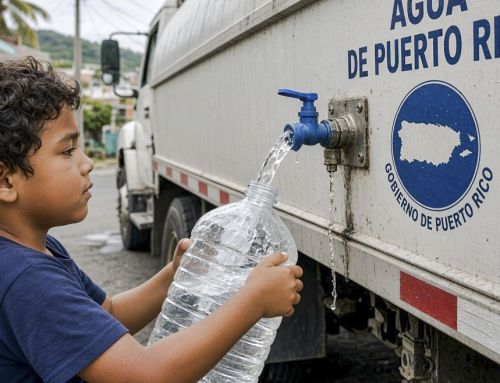
 Puerto Rico’s Water Crisis – The Era of Potable Water Bankruptcy Has ArrivedSaturday, August 8th, 2026
 -
 Commercial Space Launch Reform – FAA Proposal Will Cut Years from Licensing ApprovalsSaturday, August 1st, 2026
 -
 Radon – Test and Decide for YourselfSaturday, July 25th, 2026
View by Month/Year
“Green Building Law Update” Headlines
Recent Articles & News from
Stuart Kaplow’s blog
at GreenBuildingLawUpdate.com
Subscribe to the Green Building Law Update!
Stuart Kaplow brings his expertise and extensive experience to the table with his unique digital publication, "Green Building Law Update". Subscribers receive regular updates to keep them informed about important issues surrounding Environmental Law, Green Building & Real Estate Law, as well as the emerging demand for Environmental Social Governance (ESG).
Get fresh content through the lense of Stuart Kaplow's cutting-edge expertise, innovative commentary and insider perspective. Don't miss another issue! Subscribe below.
Proposed Standards For “All Appropriate Inquiries” In Environmental Site Assessments
The Environmental Protection Agency has issued a proposed regulation setting federal standards and practices for the conduct of “all appropriate inquiries” necessary to qualify for certain landowner liability protections under the Superfund law.
The Innocent Landowner Defense To Superfund
If promulgated as proposed, this regulation will affect all purchasers of commercial property who may, after purchasing the property, seek to claim protection from theComprehensive Environmental Response, Compensation, and Liability Act (the Superfund law or CERCLA) liability for releases or threatened releases of hazardous substances.
On January 11, 2002, President Bush signed what is known as the “Brownfields Amendments” to CERCLA. The Amendments propose new standards and practices for the conduct of “all appropriate inquiries” clarifying the requirements necessary to establish the innocent landowner defense. And significantly, the Brownfields Amendments add protections from CERCLA liability for “bona fide prospective purchasers” and “contiguous property owners” who meet certain requirements.
Each of the CERCLA liability provisions for innocent landowners, bona fide prospective purchasers, and contiguous property owners, requires that, among other requirements, persons claiming the liability protections conduct all appropriate inquiries into the prior ownership and use of a property prior to the time a person acquires the property. The law requires EPA to develop regulations establishing how to conduct all appropriate inquiries.
What Does “All Appropriate Inquiries” Mean?
Under CERCLA, persons may be held strictly liable for cleaning up hazardous substances at properties they either own or operate or owned or operated in the past (e.g., liability for environmental contamination could be assigned based solely on property ownership).
The 1986 amendments to CERCLA created an “innocent landowner” defense to CERCLA liability for those who could demonstrate, among other requirements, that they “did not know and had no reason to know” prior to purchasing a property that any hazardous substance that is the subject of a release or threatened release was disposed of on, in, or at the property. To demonstrate they had “no reason to know” such persons must have undertaken “all appropriate inquiries” into the previous ownership and uses of the property. The 2002 Brownfields Amendments added potential liability protections for “contiguous property owners” and “bona fide prospective purchasers” who must also demonstrate they conducted all appropriate inquiries.
Accordingly, an essential step in real estate transactions is evaluating a property for potential environmental contamination and assessing potential liability for contamination present at the property, often by way of an environmental site assessment.
Note that today, lenders are shielded from liability for hazardous substances by the Secured Creditor Exemption added to CERCLA, provided the mortgage holder does not participte in management of a facility.
The Current Standards
Prior to 2002, what level of inquiry rose to “all appropriate inquiries” was subject to speculation. As part of the Brownfields Amendments, Congress established interim standards for the conduct of all appropriate inquiries. In the case of properties purchased after May 31, 1997, the interim standards describe a Phase 1 Environmental Site Assessmentfollowing the procedure described in ASTM E1527-97 (or the later issued ASTM E1527-2000).
Properties purchased before May 31, 1997 must demonstrate that they carried out all appropriate inquiries in accordance with generally accepted good commercial and customary practices.
The interim standards are in effect today and remain until the proposed regulation becomes final.
The New Regulation
The new regulation proposes “all appropriate inquiries” pursuant to CERCLA “are intended to result in the identification of conditions indicative of releases or threatened releases of hazardous substances on, at, in, or to the subject property.”
The inquiry must be conducted by an environmental professional (as expressly defined and exceeding the ASTM education requirement) and include the collection of commonly known or reasonably ascertainable information about the property from: “interviews with past and present owners, operators and occupants” (ASTM only requires interviews with current representatives); reviews of historical sources; searches of government records; visual inspections of the property and of adjoining properties (inspection of adjoining properties is problematic and not required by ASTM); and, taking into account both the specialized knowledge of the purchaser, and the relationship of the purchase price to the value of the property, if the property was not contaminated; expressly seeking to identify:
“(i) Current and past property uses and occupancies; (ii) Current and past uses of hazardous substances [including pollutants, contaminants, petroleum and petroleum products, and controlled substances]; (iii) Waste management and disposal activities that could have caused releases or threatened releases of hazardous substances; (iv) Current and past corrective actions and response activities undertaken to address past and on-going releases of hazardous substances; (v) Engineering controls; (vi) Institutional controls; and (vii) Properties adjoining or located nearby the subject property that have environmental conditions that could have resulted in conditions indicative of releases or threatened releases of hazardous substances to the subject property.”
The inquiry may include information gathered in previous assessments collected or updated within one year prior.
If the inquiry identifies “data gaps” in the information gathered, the environmental professional must comment on the importance of that missing information and such may well lead to many more Phase II assessments to resolve possible environmental conditions.
Conclusion
The proposed EPA standards and practices will not radically alter the Phase 1 environmental site assessment process (at least for those today using assessments conducted with ASTM protocols), and the new regulation will be a marked improvement in that it provides certainty as to what is meant by all appropriate inquiries. But assessments under the proposed regulation will cost significantly more.
Most, if not all, prospective purchasers of commercial property should wait and see what standard is finally promulgated (not likely before January, 2006) before ordering other than an assessment following the procedure prescribed by ASTM.
The complete 39 page proposed rule is available by request from Stuart D. Kaplow.
About the Author: Stuart Kaplow