View by Topic
Recent Articles
-
 The Lead Paint Legacy Real Estate Owners Must Take SeriouslySaturday, August 22nd, 2026
 -

-
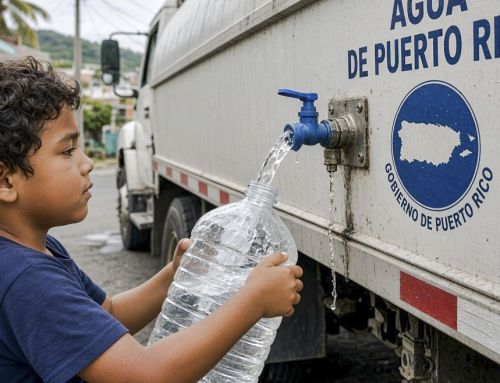
 Puerto Rico’s Water Crisis – The Era of Potable Water Bankruptcy Has ArrivedSaturday, August 8th, 2026
 -
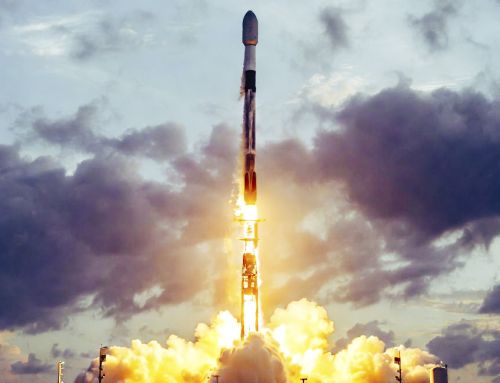
 Commercial Space Launch Reform – FAA Proposal Will Cut Years from Licensing ApprovalsSaturday, August 1st, 2026
 -
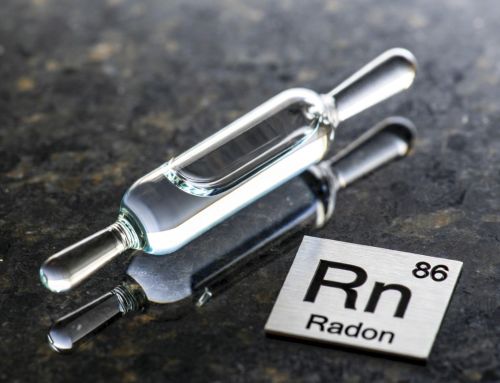
 Radon – Test and Decide for YourselfSaturday, July 25th, 2026
View by Month/Year
“Green Building Law Update” Headlines
Recent Articles & News from
Stuart Kaplow’s blog
at GreenBuildingLawUpdate.com
Subscribe to the Green Building Law Update!
Stuart Kaplow brings his expertise and extensive experience to the table with his unique digital publication, "Green Building Law Update". Subscribers receive regular updates to keep them informed about important issues surrounding Environmental Law, Green Building & Real Estate Law, as well as the emerging demand for Environmental Social Governance (ESG).
Get fresh content through the lense of Stuart Kaplow's cutting-edge expertise, innovative commentary and insider perspective. Don't miss another issue! Subscribe below.
U.S. Supreme Court Finds Global Warming Exists
“A well-documented rise in global temperatures has coincided with a significant increase in the concentration of carbon dioxide in the atmosphere. Respected scientists believe the two trends are related. For when carbon dioxide is released into the atmosphere, it acts like the ceiling of a greenhouse, trapping solar energy and retarding the escape of reflected heat. It is therefore a species – the most important species – of a ‘greenhouse gas.’”
“Calling global warming ‘the most pressing environmental challenge of our time,’ a group of States, local governments, and private organizations, alleged in a petition for certiorari that the Environmental Protection Agency (EPA) has abdicated its responsibility under the Clean Air Act to regulate the emissions of four greenhouse gases, including carbon dioxide.”
The two quoted paragraphs above are not the writing of some environmental activist, but rather are the introductory paragraphs of the syllabus of the U.S. Supreme Court decision delivered by Justice John Paul Stevens this past week in Massachusetts, et al. v. EPA, et al. 549 U.S. ____; 127 S.Ct. 1438 (2007).
The decision of the Supreme Court is important if only because for the first time in a decision, the highest court in the land strung together the words, ‘global’ and ‘warming.’ That word choice, in an of itself, is significant because the Court went much farther than required to narrowly decide the issues before it, including recognizing that Global Warming exists (something the Executive Branch has to this date been reluctant to do).
The decision identifies, approvingly, the work of the UN Intergovernmental Panel on Climate Change, the world’s authoritative voice on Global Warming, that some weeks before the decision, first concluded with “90 percent certainty” that humans had caused the rise in atmospheric temperatures over the last half-century. And after the Court’s ruling, last week that Panel further warned that failure to contain these greenhouse gases will have disastrous environmental effects, especially in poorer countries, which are least able to defend themselves and their people against the consequences of climate change.
The decision may well be the turning point in the debate over climate change and will usher in two significant areas of change in law. First, the federal government will now all but certainly begin to regulate greenhouse gases across varied sectors of the economy, including auto manufacturing, electricity production, real estate, etc. And second, the broadened test for who as a plaintiff has “standing” to sue in environmental cases, will allow a host of other climate change law suits to go forward.
With respect to the regulation of greenhouse gases, a group of private organizations, later joined by several states and local government, including Baltimore City, petitioned the EPA to begin regulating the emissions of four such gases, including carbon dioxide, under §202(a)(1) of the Clean Air Act, which requires that the EPA “shall by regulation prescribe . . . standards applicable to the emission of any air pollutant . . . which in [the EPA Administrator’s] judgment cause[s], or contribute[s] to, air pollution . . . reasonably . . . anticipated to endanger public health or welfare,” 42 USC §7521(a)(1). The Act defines “air pollutant” to include “any air pollution agent . . . , including any physical, chemical . . . substance . . . emitted into . . . the ambient air.” §7602(g).
EPA denied the petition declining to regulate greenhouse gases as an air pollutant, reasoning that: the Clean Air Act does not authorize it to issue mandatory regulations to address global climate change; and, even if it had the authority to set greenhouse gas emission standards, it would have been unwise to do so at that time because a causal link between greenhouse gases and the increase in global surface air temperatures was not unequivocally established. The agency further characterized any EPA regulation of motor-vehicle emissions as a piecemeal approach to climate change that would conflict with the President’s comprehensive approach involving additional support for technological innovation, the creation of nonregulatory programs to encourage voluntary private-sector reductions in greenhouse gas emissions, and further research on climate change, and might hamper the President’s ability to persuade key developing nations to reduce emissions.
The Supreme Court, with Justice Stephens joined by Justices Anthony M. Kennedy, David Souter, Ruth Bader Ginsburg and Stephen G. Breyer, easily rejected EPA’s “laundry list of reasons not to regulate.”
The High Court observed, “EPA does not dispute the existence of a causal connection between man-made greenhouse gas emissions and global warming.” The Court went on to rule that “the statutory text forecloses EPA’s reading,” and hold that “greenhouse gases fit well within the Clean Air Act’s capacious definition of air pollutant.”
The Court stopped short of ordering EPA to regulate “tailpipe emissions” from cars and trucks, “which account for about one-fourth of the country’s total emissions of heat-trapping gases,” but commanded EPA to either offer a “reasoned explanation for its refusal to decide whether greenhouse gases cause or contribute to climate change” in compliance with the Clean Air Act or to regulate the offending air pollutants. This will certainly result in regulation of far more than only the auto manufacturing sector (and is likely to include electricity production, real estate and more).
Additional and other regulation will also flow from the second reason this decision is so significant. This Court ruling broadened test of who has “standing” as a plaintiff to sue in environmental cases, and will allow a host of other ‘climate change’ law suits to go forward, including the pending, People of the State of California v. General Motors Corporation, et al. (a federal public nuisance case brought by the California Attorney General against the auto manufacturers for Global Warming).
The majority rejected the dissenting opinion of Chief Justice John G. Roberts, Jr., who argued that this case improperly expanded “the role of the courts in a democratic society” and that none of the states, cities or individual plaintiffs had standing to challenge EPA’s decision not to regulate greenhouse gases. Legal commentators have observed that Chief Judge Roberts may have been the big looser in the case (even bigger than the Bush Administration EPA).
The majority held that it was only necessary for one of several plaintiffs to meet the three part test of standing: that it had suffered a “concrete and particularized injury,” that the injury was “fairly traceable to the defendant” and that a favorable decision would be likely to “redress that injury.” Finding that Massachusetts, as a state, was due special deference in its claim, it satisfied the three part standing test. Court observers have noted this ‘special deference’ for a sovereign state likely was key to Justice Kennedy (a strong state’s rights advocate) voting with the majority.
It is difficult to predict the wide breadth of impacts from such an important environmental decision.
An immediate impact, one day after the Supreme Court ruling, was that EPA reopened California’s stalled 2005 petition for a waiver from the Clean Air Act seeking to control greenhouse gases by becoming the first state to cut tailpipe emissions from cars, light trucks and sport-utility vehicles.
Longer term, industries are lobbying EPA and Congress over regulations being drafted that would impose mandatory emission controls across broad sectors of the economy. Business leaders are weighing the impact of future EPA regulation versus the promised legislation from House Energy and Commerce’s subcommittee on air quality as they vie for ‘seats at the table.’ In recent days, that key committee has already proposed a cutoff of mortgage interest tax deductions for all houses with more than 3,000 square feet and a broader “carbon tax” with the aim of reducing carbon emissions.
Business needs to appreciate the import of this Supreme Court decision and warm to regulation of climate change.
About the Author: Stuart Kaplow