View by Topic
Recent Articles
-
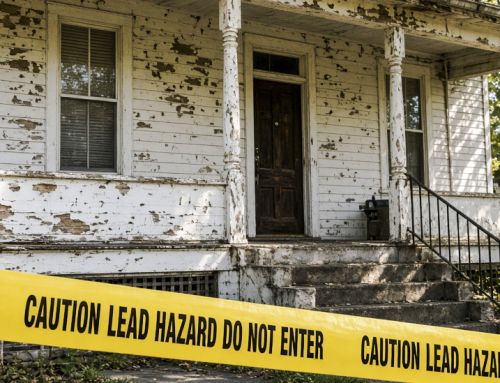
 The Lead Paint Legacy Real Estate Owners Must Take SeriouslySaturday, August 22nd, 2026
 -

-
 Puerto Rico’s Water Crisis – The Era of Potable Water Bankruptcy Has ArrivedSaturday, August 8th, 2026
 -
 Commercial Space Launch Reform – FAA Proposal Will Cut Years from Licensing ApprovalsSaturday, August 1st, 2026
 -
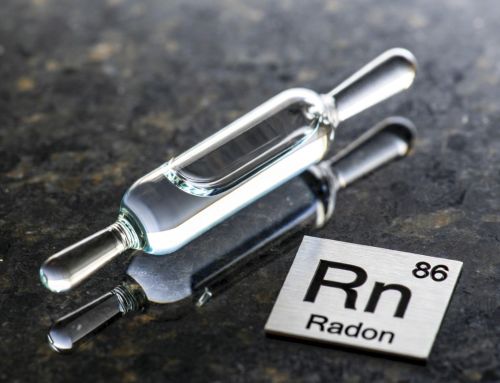
 Radon – Test and Decide for YourselfSaturday, July 25th, 2026
View by Month/Year
“Green Building Law Update” Headlines
Recent Articles & News from
Stuart Kaplow’s blog
at GreenBuildingLawUpdate.com
Subscribe to the Green Building Law Update!
Stuart Kaplow brings his expertise and extensive experience to the table with his unique digital publication, "Green Building Law Update". Subscribers receive regular updates to keep them informed about important issues surrounding Environmental Law, Green Building & Real Estate Law, as well as the emerging demand for Environmental Social Governance (ESG).
Get fresh content through the lense of Stuart Kaplow's cutting-edge expertise, innovative commentary and insider perspective. Don't miss another issue! Subscribe below.
Solar Energy and Geothermal Grants Shine Brighter in Maryland
When the 2008 session of the Maryland General Assembly came to a close on April 7th, among the 747 bills enacted was relatively little Green or environmental legislation. Among the enactments was House Bill 377, an Administration bill increasing grant amounts under the existing Solar Energy and Geothermal Heat Pump Program, exempting the sale of solar energy and geothermal equipment from the State sales and use tax; and, exempting solar energy equipment from State and local real property taxes.
The bill takes effect July 1, 2008 and the property tax-related provisions of the bill are applicable to taxable years beginning after June 30, 2008.
Grant Awards Increased
Specifically, while the grant award amounts for photovoltaic equipment installed on residential property under the prior existing program were $3,000 or 20% of the total installed cost, the new increased grant awards may be the lesser of $10,000 or $2,500 per Kilowatts of installed electricity generation capacity. (Be aware, a typical residential, 2 kW system costs roughly $20,000 installed.)
What qualifies as photovoltaic equipment under the law has been expanded from the definition under the prior law to mean all solar energy equipment with an installed electricity generation capacity of 20 kW that uses a solar photovoltaic process to generate electricity (as now defined in State Government Article, Section 9-2007). Note, photovoltaic is simply the scientific process of converting the energy of sunlight into electricity.
The prior grant award limits for photovoltaic equipment installed on non residential property were $5,000 or 20% of the total installed cost, the new grant awards, while still very modest for most commercial properties, may be the lesser of $10,000 or $2,500 per kW of installed electricity generation capacity.
Solar water heating equipment grants had been limited to $2,000 or 20% of the total installed cost and may now be the lesser of $3,000 or 30% of the total installed cost.
The prior grant award limits for geothermal equipment installed on residential property were $1,000, the new grant awards may be the lesser of $3,000 or $1,000 per ton.
Prior grant award limits for geothermal equipment installed on non residential property were $1,000, the new grant awards may be the lesser of $10,000 or $1,000 per ton.
The bill gives the Maryland Energy Administration discretion to adjust the grant amounts, within the prescribed award limits, to reflect market conditions and prevailing prices.
Tax Incentives
In 2007, Maryland established a State property tax exemption for a solar energy device installed to heat or cool a principal residence or generate electricity used in the dwelling, or to provide hot water used in that dwelling.
Additionally, local governments are authorized to grant, by State law, a tax credit against the county or municipal property tax imposed on a structure if the structure uses a solar energy device, a geothermal energy device, or a qualifying energy conservation device to heat or cool the structure, generate electricity to be used in the structure, or provide hot water for use in the structure. Howard County, Anne Arundel County and Harford County all offer government credits and Montgomery County is initiating a credit.
And during the 2007 special session, an annual tax-free weekend prior to and including the third Monday in February was established, beginning in calendar 2011, during which the sales and use tax will not apply to the sale of any solar water heater and specified Energy Star products.
This new legislation expands those tax incentives providing that “the sales and use tax does not apply to a sale of geothermal equipment or solar energy equipment”.
Property Tax Assessments
There are also new and expanded property tax benefits. Solar equipment installed in real property is not subject to the State property tax if the equipment is “a solar energy device installed to heat or cool a dwelling, generate electricity to be used in the dwelling, or provide hot water for use in the dwelling.”
Additionally, if no conventional heating and cooling system exists in a building, a solar energy or geothermal heating and cooling system is now to be assessed at not more than the value of a conventional system. And if a solar energy or geothermal heating and cooling system is installed in addition to a conventional system in a building, the combined system is capped at not more than the value of the conventional system.
Federal Tax Credits
While beyond the scope of this article, be aware that the Federal government offers a 30% personal tax credit for up to $2,000 for purchase and installation of residential solar electric or solar water heating property and up to $500 per 0.5 kW for fuel cells (for systems installed between January 1, 2006 and December 31, 2008). This dovetails the similar Federal 30% corporate tax credit for renewable energy property including photovoltaic and solar water heating property (credits decrease January 1, 2009).
Related Solar Legislation
The 2008 Maryland General Assembly also enacted HB 117 prohibiting a “restriction on use,” be that restriction a covenant, condition contained in a deed, a declaration, bylaws or rules of a condominium or homeowners association, or the like, from imposing an “unreasonable limitation” on the installation of a “solar collector system” on the roof or exterior walls of improvements, provided that the property owner owns or has the right to exclusive use of the roof or exterior walls.
That bill also “allows” property owners who have installed or intend to install solar collector systems to negotiate to obtain a solar easement from another land owner. Some have observed this ‘feel good’ bill, which passed both houses unanimously, is of very limited efficacy, yet heralds Maryland’s support for solar equipment.
Conclusion
Solar energy is simply power from the Sun in the form of radiated heat and light. From the time of the early Chinese, people have warmed their buildings by orienting them toward the Sun.
In this era of concern over foreign fossil fuel supplies and Global Warming, it is only prudent that businesses take advantage of government provided energy incentives as green-tech entrepreneurs harness solar energy technologies. Moreover, as building code provisions mandating Green building become effective in the coming months in Baltimore City, Howard County and elsewhere in Maryland, these voluntary incentives offered by government will partially ameliorate the impact of the increased costs associated with the mandatory LEED Silver building.
If you have questions about qualifying for the increased grant awards or if we can be of assistance with Green building issues, generally, please feel free to contact Stuart Kaplow.
About the Author: Stuart Kaplow