View by Topic
Recent Articles
-
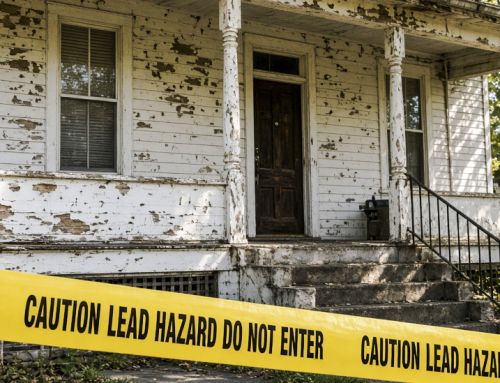
 The Lead Paint Legacy Real Estate Owners Must Take SeriouslySaturday, August 22nd, 2026
 -

-
 Puerto Rico’s Water Crisis – The Era of Potable Water Bankruptcy Has ArrivedSaturday, August 8th, 2026
 -
 Commercial Space Launch Reform – FAA Proposal Will Cut Years from Licensing ApprovalsSaturday, August 1st, 2026
 -
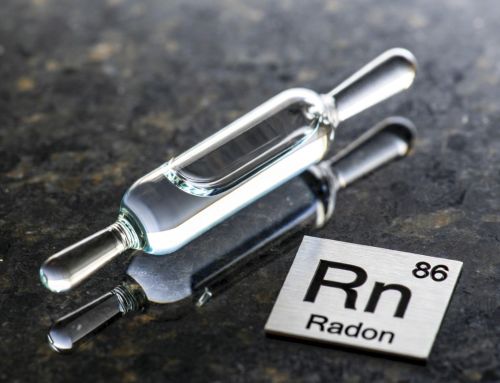
 Radon – Test and Decide for YourselfSaturday, July 25th, 2026
View by Month/Year
“Green Building Law Update” Headlines
Recent Articles & News from
Stuart Kaplow’s blog
at GreenBuildingLawUpdate.com
Subscribe to the Green Building Law Update!
Stuart Kaplow brings his expertise and extensive experience to the table with his unique digital publication, "Green Building Law Update". Subscribers receive regular updates to keep them informed about important issues surrounding Environmental Law, Green Building & Real Estate Law, as well as the emerging demand for Environmental Social Governance (ESG).
Get fresh content through the lense of Stuart Kaplow's cutting-edge expertise, innovative commentary and insider perspective. Don't miss another issue! Subscribe below.
What Makes a Building Green?
In a week when The New York Times Sunday edition carried a front page story describing the “new trophy home” in America as being a Green building, equating a Michelin three star rating to a LEED Platinum rating, a frequently asked question is ‘what is a Green building?’
There is no single accepted definition of Green building.
Government does not define Green
The U.S. Environmental Protection Agency “defines Green building as the practice of creating structures and using processes that are environmentally responsible and resource efficient throughout a building’s life cycle from siting to design, construction, operation, maintenance, renovation and deconstruction. This practice expands and complements the classical building design concerns of economy, utility, durability, and comfort. Green building is also known as a sustainable or high performance building.”
On the federal government level, the Energy Policy Act of 2005 and the Energy Independence and Security Act of 2007included energy efficiency and sustainable design requirements for federal buildings. Additionally, there have been a series of Executive Orders and agency specific rules promoting Green building since the early 1990s and the federal government has instituted sustainable practices at many of its buildings. But none of that rises to the level of providing a uniform definition of Green building.
The State of Maryland also does not have a single definition for Green building, but as early as 2001, Maryland Annotated Code, Tax General Article § 10-722, provided, “by regulation, the [Maryland Energy] Administration shall adopt standards for a building to qualify as a green base building eligible for the tax credits under this section that are consistent with the criteria for green base buildings set forth by the United States Green Building Council or other similar criteria.” Maryland was one of the first states to offer a voluntary incentive of a Green building tax credit against a taxpayer’s personal or corporate income tax and the definition created for that program was similar to that enacted by many states across the country.
Hundreds of local governments across the nation have enacted some type of Green building legislation in the first half of 2008, but as is only to be expected in such a broad breadth of unrelated enactments, there is no single definition of Green building. Baltimore City approved a relatively simple and fairly typical definition, in § 3702.1 of the Baltimore City Building Code, as part of among the strictest mandatory Green building laws in the country. The defined term is simply a “[t]he building must achieve .. a Certified – level rating in the appropriate LEED rating system, as certified by The Green Building Council, or energy and environmental design standards that the Building Official identifies as equivalent to a Certified – level rating in the LEED rating system.”
Carroll County, Maryland selected a much broader definition in its property tax credit incentive, defining Green building as “.. environmentally friendly or ‘green’ technologies .. including, conserving water, incorporating recycled or recyclable materials, and incorporating renewable and energy efficient power generation.” That language in Tax Property Article § 9-308, authorizes the County to enact a local ordinance implementing the new tax credit.
Energy Star
Governments in the U.S. do not have Green building certification programs nor do they otherwise approve buildings as Green.
The exception to that precept is the federal government’s Energy Star program. While many people are familiar with Energy Star appliances, a newly constructed house may earn the Energy Star meeting strict guidelines for energy efficiency set by the U.S. EPA. These “qualified” houses must be least 15% more energy efficient than homes built to the 2004 International Residential Code, and include additional energy-saving features that typically make them 20 – 30% more efficient than standard homes. There are nearly 100 approved Energy Star home builders in Maryland over 5,400 nationwide.
Green Certification
There are a variety of private and non-profit Green building certification programs in the marketplace, including Green Globes, BREEAM, and LEED.
Green Globes
The Green Globes system was introduced in the U.S. in 2004. It was adapted from a Canadian protocol of the same name and is the basis for the Building Owners and Managers Association (BOMA) of Canada’s energy and environmental program for existing buildings.
Green Globes for Design/New Construction was originally conceived as a way to help local home builder associations develop Green building programs modeled after the National Association of Home Builders’ (NAHB) Model Green Home Building Guidelines. Green Globes is administered by a non-profit known as GBI, the Green Building Initiative, and while essentially a self-administered rating process, it added a site inspection component for those building owners desiring an independently verified rating of one, two, three or four Green Globes.
Green Globes can be used with any size building. However, because of its ease in application to smaller, lower budget buildings, including individual houses, smaller building owners, at times, find Green Globes an ideal rating system.
BREEAM
BREEAM bills itself as “the world’s most widely used environmental assessment method for buildings”. While not in wide use in the U.S., the United Kingdom based BREEAM Buildings program can be used “to assess the environmental performance of any type of building” (new and existing). BREEAM assesses buildings against a set criteria and provides an overall score which will fall within a band providing either a PASS, GOOD, VERY GOOD or EXCELLENT rating.
BREEAM usage can be expected to expand greatly as a result of The International Council of Shopping Centers (ICSC) April, 2008 venture with BREEAM to adapt its sustainability standard for ICSC members working in the European Union. That venture includes a vision of a future International program by ICSC that will include the U.S. Moreover, should the U.S. move to a ‘carbon cap and trade’ program, BREEAM’s experience with the EU’s Kyoto based carbon trading, will no doubt give it a leg up on valuing Green building in the U.S.
LEED
With over 15,000 members, by far the most widely accepted not for profit Green building certification program in the U.S., since its founding in 1993, is the U.S. Green Building Council’s Leadership In Energy and Environmental Design (LEED) program.
LEED is a third party certification program and the now nationally accepted benchmark for the design, construction and operation of high performance Green buildings. LEED promotes a whole building approach to sustainability by recognizing performance in “five key areas of human and environmental health: sustainable site development, water savings, energy efficiency, materials selection and indoor environmental quality”.
LEED is a point based system where buildings earn points for satisfying specific Green building criteria. The number of points determines the level of certification. Points are available in four progressive levels from Certified for 26 to 32 points, Silver for 33 to 38 points, through Gold for 39 to 51 points, and Platinum for 52 to 69 points.
LEED Rating Systems exist in specific categories. The LEED for New Construction (LEED NC) Rating System is designed to guide and distinguish high performance commercial and institutional projects, including office buildings, high rise residential buildings, government buildings, recreational facilities, manufacturing plants and laboratories.
The LEED for Existing Buildings (LEED EB) Rating System helps building owners and operators measure operations, improvements and maintenance on a consistent scale, with the goal of maximizing operational efficiency while minimizing environmental impacts. LEED EB addresses whole building cleaning and maintenance issues (including chemical use), recycling programs, exterior maintenance programs, and systems upgrades.
LEED for Commercial Interiors (LEED CI) is the Green target for the tenant improvement market. It is a system for certifying high performance interiors that are healthy, productive places to work; are less costly to operate and maintain; and have a reduced environmental footprint. LEED CI gives the power to make sustainable choices to tenants, who do not always have control over whole building operations.
LEED for Core & Shell (LEED CS) is a Green building rating system for builders, developers and new building owners who want to address sustainable design for new core and shell construction. Core and shell covers base building elements such as structure, envelope and the HVAC system. LEED CS is designed to be complementary to the LEED CI rating system, as both rating systems establish Green building criteria for developers, owners and tenants. The LEED CS acknowledges the limitations of developers in a speculatively developed building and encourages the implementation of Green design and construction practices in areas over which the developer has control.
LEED for Schools recognizes the unique nature of the design and construction of K – 12 schools and addresses the specific needs of school spaces. LEED for Retail recognizes the unique nature of retail design and construction projects and addresses the specific needs of retail spaces. LEED for Healthcare promotes sustainable planning, design and construction for high performance healthcare facilities. LEED for Homes promotes the design and construction of high performance Green single family and multi unit houses. LEED for Neighborhood Development (currently still a pilot program, but in use in Howard County, Maryland) integrates the principles of smart growth, urbanism and green building into a program for subdivision and neighborhood design.
In May, 2008, the USGBC posted the draft of LEED 2009 for public comment. LEED 2009, to be LEED v3, increases the rating system’s emphasis on a building’s environmental, economic and social impact. Other key changes include the addition of bonus points for addressing regional environmental conditions, and a methodology for reallocating points within the scoring system to give greater weight to greenhouse gas emissions and energy efficiencies. The scale will also switch to 100 points from the current 69.
While today there are 24 LEED certified buildings in Maryland (14 are in the Baltimore area), there are now more than 245 projects registered and in the LEED pipeline!
Conclusion
There is little question that Green building involves matters of site development, water savings, energy efficiencies, materials selection and indoor environmental quality. And in a time of increased concern about rising energy costs and climate changes that list is not static, as the LEED 2009 makes clear with its increased emphasis on energy efficiencies.
That front page New York Times article described above, calling a Green house the “new trophy home”, concluded by noting that all things claiming to be Green building should “be vetted in a credible way.” And while Green Globes and BREEAM may in the future offer that vetting, today “a LEED certificate is the hot designer label” for Green building.
About the Author: Stuart Kaplow