View by Topic
Recent Articles
-
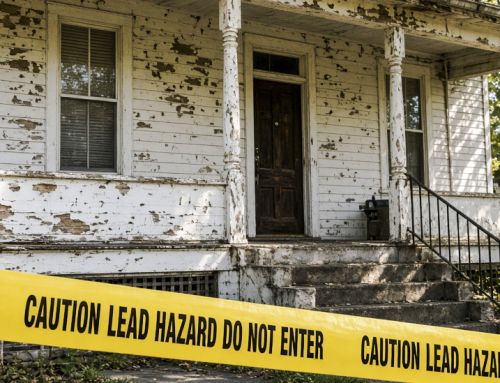
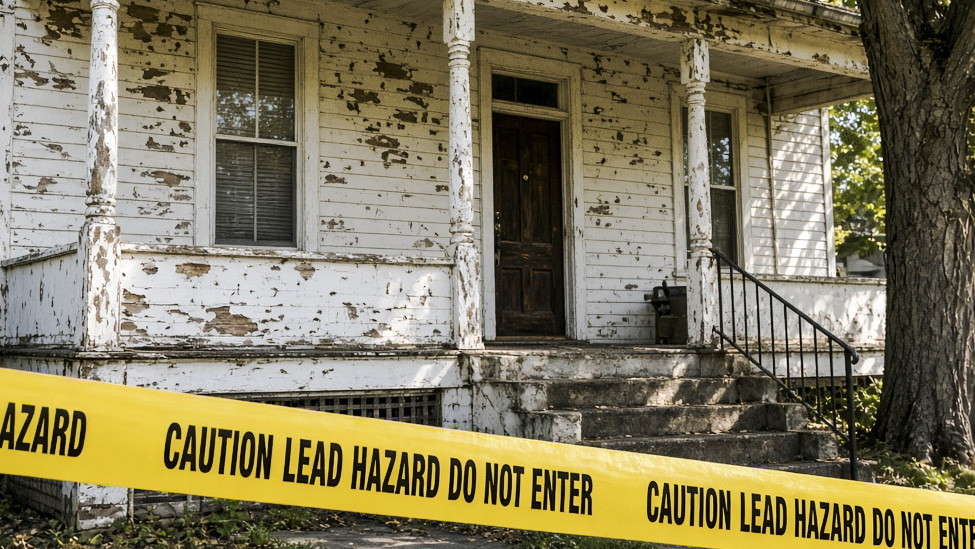
 The Lead Paint Legacy Real Estate Owners Must Take SeriouslySaturday, August 22nd, 2026
 -

-
 Puerto Rico’s Water Crisis – The Era of Potable Water Bankruptcy Has ArrivedSaturday, August 8th, 2026
 -
 Commercial Space Launch Reform – FAA Proposal Will Cut Years from Licensing ApprovalsSaturday, August 1st, 2026
 -
 Radon – Test and Decide for YourselfSaturday, July 25th, 2026
View by Month/Year
“Green Building Law Update” Headlines
Recent Articles & News from
Stuart Kaplow’s blog
at GreenBuildingLawUpdate.com
Subscribe to the Green Building Law Update!
Stuart Kaplow brings his expertise and extensive experience to the table with his unique digital publication, "Green Building Law Update". Subscribers receive regular updates to keep them informed about important issues surrounding Environmental Law, Green Building & Real Estate Law, as well as the emerging demand for Environmental Social Governance (ESG).
Get fresh content through the lense of Stuart Kaplow's cutting-edge expertise, innovative commentary and insider perspective. Don't miss another issue! Subscribe below.
Green Buildings Do NOT Have To Cost More To Construct
There is no statistically significant difference in construction cost between LEED® and non LEED projects.
That statement will surprise some. It is not the puffery of some global warming activist, but rather a penultimate conclusion of a major study of 107 actual projects in New York City. Read on to be shocked as to what that study found about LEED Commercial Interiors project costs ..
The convergence of heightened public demand, increasing government initiatives, and unprecedented advancements in innovation, has caused green building to be ever more prominent in commercial real estate. Building green is, however, perceived to be more expensive – but is that perception accurate?
Transparent and objective studies
Buildings with green credentials are still relatively scarce with the result that the evidence base on cost is small, although growing. The non homogenous nature of buildings also makes it difficult to accurately comment on the construction costs of building green. And that there is no single, widely accepted definition of what is a green building, contributes to the infancy of economics on the cost of producing green buildings.
But today, in early 2010, there are enough studies to look transparently and objectively at the cost of green building.
The results of several large national studies make clear there is no significant difference in construction cost per square foot between green and non green buildings.
Of course dollars may be expended differently and cost may vary depending upon an owner’s goal, be it to satisfy a local government mandate that all new building be LEED Silver certified, to meet the GSA requirements of a green tenant premises for all federal government leases, to develop a green real estate product that is marketable, or to lower energy consumption costs by at least 40% (a tangent on energy, .. the new Mission Street, San Francisco federal building consumes one-third the energy of a typical California office building, at the same first cost, with utility bill savings of more than $500,00 a year).
Cost studies
In a study that gathered data from 107 recent projects in New York City, of which 63 were pursuing LEED certification, LEED certified projects cost $440 per square foot compared with $436 per square foot for non LEED. The cost differential of less than one percent is not statistically significant. “The Cost of Green in NYC” a Fall 2009 study by the Urban Green Council.
That same study found on commercial interiors projects, the cost of $191 per square foot for LEED CI construction was actually 6% lower than the $204 per square foot for non LEED.
The study further quantified that “soft costs associated with LEED certification were not substantial in terms of overall project costs.” The median cost of LEED design fees was $0.56 per square foot and the median cost of LEED documentation was $0.30 per square foot.
In a widely quoted 2006 study of 221 buildings of which 83 were pursuing LEED certification (a study built on the work undertaken in the earlier “Costing Green: A Comprehensive Cost Database and Budget Methodology” released in 2004), Davis Langdon’s concluded, “there is no significant difference in average costs for green buildings as compared to non-green buildings.”
A May 2009 study, “High Performance Green Building What Is It Worth?” by Cushman & Wakefield, provided a detailed LEED credit by credit review of a mixed use new construction project in Seattle and concluded, the dollars expended “do not reflect a premium for strategies, components, or construction costs specifically attributed to high performance green elements.”
And in a January 14, 2010 interview in The New York Times,Jonathan F. P. Rose, one the largest sustainable developers in the nation, managing $1.5 billion of work, reported, “we spend about 1% more to make a building between LEED silver and gold .. we typically reduce energy use by about 30%”.
Early innovators paid more
The cost of building green has dropped in the recent years as the number of green buildings has risen. No doubt early innovators paid more to build green.
The trend of declining costs associated with increased experience in green building construction has been experienced across the country, and a review of Portland’s completed LEED Silver buildings is compelling. The buildings incurred cost premiums of 2% for Portland’s first completed LEED Silver building, 1% for a building 2 years later and 0% for a building completed 5 years after the first building. Of note this review of Portland green building first cost, is contained within “Green Building Costs and Financial Benefits” study by Greg Kats of Capital E Analytics that looked at the post occupancy benefits (including energy savings and occupant productivity) in 33 office and school buildings, and additionally found an “average green cost premium” for LEED Certified buildings in that study of 0.66%.
Costs are potentially very different in a LEED new construction project when compared with a LEED core & shell project. And a LEED Platinum project will have higher first cost than a lesser level of certification, although the Platinum project will all but certainly have significantly reduced operating costs.
Higher rent
Beyond the issues of first cost, “buildings with LEED certification or the government’s Energy Star label averaged higher occupancy levels, lease rates and sales prices than non green buildings.” This conclusion by the Burnham-Moores Center for Real Estate, University of San Diego, “Do Green Building Make Dollars and Sense” 2008 study is further supported by other studies.
A study released in November 2009, conducted by that same university in conjunction with CB Richard Ellis showed “green buildings have 3.5% lower vacancy rates and 13% higher rental rates than the market.” (That ‘effective’ rental rate is extrapolated from the faster absorption rate, but does not include the benefits of tax credits and other government incentives.)
According to a 2008 CoStar Group study considering over 1,300 green buildings (representing about 351 million square feet of the roughly 44 billion square feet in the CoStar database), LEED buildings commanded effective rental rate premiums of $11.33 per square foot over non-LEED buildings, with LEED buildings having 4.1% higher occupancy than non-LEED buildings. LEED buildings commanded a remarkable $171 more per square foot sale price (i.e., $438 per square foot for LEED-rated buildings, versus $267 per square foot for non-LEED buildings).
Conclusion
Although early innovators paid more to build green, today there is no significant difference in construction cost per square foot between LEED and non LEED buildings. Dollars, may however be expended differently.
How dollars are expended in any building project is a function of the owner’s goals, including balancing first cost with reduced operating cost. Maximizing dollars, today, requires assembling the very best creative team experienced in the innovation and application of new concepts and techniques in green building.
If you are paying too much to build green, or if we can otherwise be of assistance to you in matters of green building or sustainable business, give Stuart Kaplow a call.
About the Author: Stuart Kaplow