View by Topic
Recent Articles
-
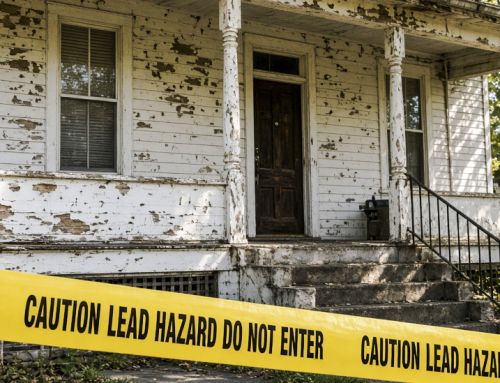
 The Lead Paint Legacy Real Estate Owners Must Take SeriouslySaturday, August 22nd, 2026
 -

-
 Puerto Rico’s Water Crisis – The Era of Potable Water Bankruptcy Has ArrivedSaturday, August 8th, 2026
 -
 Commercial Space Launch Reform – FAA Proposal Will Cut Years from Licensing ApprovalsSaturday, August 1st, 2026
 -
 Radon – Test and Decide for YourselfSaturday, July 25th, 2026
View by Month/Year
“Green Building Law Update” Headlines
Recent Articles & News from
Stuart Kaplow’s blog
at GreenBuildingLawUpdate.com
Subscribe to the Green Building Law Update!
Stuart Kaplow brings his expertise and extensive experience to the table with his unique digital publication, "Green Building Law Update". Subscribers receive regular updates to keep them informed about important issues surrounding Environmental Law, Green Building & Real Estate Law, as well as the emerging demand for Environmental Social Governance (ESG).
Get fresh content through the lense of Stuart Kaplow's cutting-edge expertise, innovative commentary and insider perspective. Don't miss another issue! Subscribe below.
LEED Regional Priority Credits are Free and Easy Bonus Points
Regional Priority Credits were introduced into the U.S. Green Building Council’s LEED® 2009 rating standards. A year after their roll-out as a major enhancement of the larger LEED v3 system, Regional Priority Credits (Regional Credits) are little utilized and arguably, little understood.
The stated intent of Regional Credits is “to incentivize the achievement of credits that address geographically specific environmental priorities.”
While LEED project checklists are static, with Regional Credits the possible points vary from one locale to another. Stormwater quality is a common priority for projects adjacent to rivers or other water bodies. Water efficient landscaping is assigned to many regions in the West. And alternative commuting is commonly assigned as a priority for urban sites.
Four free points
Regional Credits are not additional or new LEED credits, but rather are existing credits on the USGBC project checklist. The incentive to achieve these designated credits is bonus points. If a Regional Credit is earned, then a point is awarded and bonus point is also awarded to the project’s total points. A project may earn up to four bonus points as a result of earning Regional Credits, one bonus point earned per Regional Credit. Those four points are significant because they are ten percent of the forty point minimum for LEED certification of a project.
ZIP codes are the key
Regional Credits are assigned by ZIP code. Each ZIP code has six possible Regional Credits assigned per rating system.
When a new project is registered, LEED Online automatically identifies a project’s Regional Credits based on the ZIP code for the project street address. You don’t have to do anything to attempt them. If the project earns a Regional Credit, it will be assigned an associated bonus point. If a project earns more than four Regional Credits, the owner can choose the credits from which the bonus points will be earned.
The LEED Online registration process requires that project teams enter a single ZIP code. The ZIP code selected by the project team during registration will be the one used to determine the associated Regional Credits.
New ZIP codes are regularly created and some ZIP codes have been erroneously left off of USGBC’s state spreadsheet. If this is the instance, USGBC advises project teams to refer to ZIP codes that are adjacent or closest to the one in question (often offering the project team an option). For the purposes of registering a project in LEED Online, a project’s Regional Credits will be manually added GBCI staff if the project’s ZIP code does not appear on the public lists or the Regional Credits that are initially, automatically assigned upon registration do not match the correct, publicly posted Regional Credits. Project teams are advised to use the LEED Online Feedback tool to correct Regional Credits.
International projects are not eligible to earn bonus points via Regional Credits (e.g., they don’t have ZIP Codes).
Regional Credits are exclusive to LEED 2009 and only projects registered to pursue certification under a LEED 2009 rating system are eligible to earn the bonus points. Projects registered under earlier versions (i.e., LEED NC v2.2) are not eligible.
Where to find your regional credits
The USGBC web site contains the state by state lists of Regional Credits. www.usgbc.org/LEED2009
Reading the online spreadsheets is not for the faint of heart (e.g., the database is very large). The spreadsheets contain the ZIP codes in every state and the six Regional Credits for each ZIP code. Each spreadsheet contains one tab for each of the six LEED 2009 Rating Systems: New Construction, Schools, Core and Shell, Commercial Interiors, Existing Buildings: Operations and Maintenance, and Neighborhood Development. Users will find downloading the spreadsheet results in it being more manageable and can use the sort function and increase column widths to view the information. The ZIP codes are listed in ascending numeric order, but users may also use the find function to locate a particular ZIP code. The columns to the right of each ZIP code (numbered one through six) indicate the six Regional Credits for each ZIP code.
Some Regional Credits are “multi-threshold credits” and contain percentage notations (i.e., “75%” or “1%”). In each instance, the bonus point is awarded only when a specific threshold is met. For example, WEc3, Water Use Reduction (in LEED for New Construction, Schools, and Core and Shell), includes three thresholds ranging from 30% water savings to 40% water savings. If a spreadsheet indicates WEc3 (40%), a project must achieve the 40% threshold in order to earn the bonus point.
The system is not perfect
The Regional Credit system has flaws. There are agriculturally zoned locales in Maryland with a ZIP Code assigned Regional Credit of ‘cooling tower water quality management’ where no buildings with a cooling tower could be erected, such that the Regional Credit is nonsensical? And similarly there are rural locales in Maryland where alternative commuting is likewise a nonsensical Regional Credit, when there is no mass transit or reasonable alternative transportation available? The intent of incentivizing geographically specific environmental priorities is good. A major problem is that specific Regional Credits were identified by USGBC Regional Councils and without the usual USGBC Technical Committee vetting process, a small coterie of volunteers with little or no expertise of knowledge or a locale, assigned Regional Credits. Unfortunately, it is not uncommon that a Regional Credit can simply not be achieved within an assigned ZIP Code.
A philosophical flaw is that with disparate individuals from Regional Councils across the country assigning Regional Credits, their interpretations of the intention of identifying “environmental priorities” can at best be described as inconsistent and at worst wrong (e.g., no new building, green or otherwise, is an environmental priority in some locales). Some have suggested the process of selecting LEED ND Regional Credits ‘ran amuck’ as evidenced by the Regional Credits available in much of Montgomery and Prince George’s County, Maryland, where the result appears to be the best new green building in those counties would be built somewhere in Ohio?
An unscientific review of ten checklists from LEED 2009 certified projects reveals that none achieved the maximum four bonus points for Regional Credits. In fact six of the ten projects achieved only one bonus point. And three of the remaining for projects achieved only two credits. The sample was small, but only a modest number of LEED 2009 projects are already certified, so while few projects are achieving significant Regional Credits (that owners should covet because they are at no additional dollar cost) speaks for itself, further analysis is required.
How best to proceed
With respect to how best to proceed with a project, during an initial consideration of the possibility of LEED certification, the project team should identify the Regional Credits. Those credits that can be achieved should be priorities because they obviously represent a bonus point toward certification at no additional cost.
Regional Credits are from an environmental perspective a good idea. Regional Credits are from an environmental perspective a good idea. Incentivizing a project achieving credits that address geographically specific environmental priorities is an ideal that should be pursued and improved upon by USGBC for LEED 2009 as quarterly addenda are released and the entire credit identification process revamped as LEED 2012 is finalized. On a project basis, Regional Credits are free, automatic points toward certification and should be pursued.
Much of the information above is from USGBC materials. Thank you for access to that information.
About the Author: Stuart Kaplow