View by Topic
Recent Articles
-
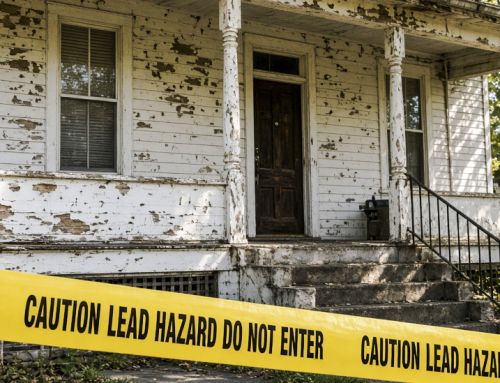
 The Lead Paint Legacy Real Estate Owners Must Take SeriouslySaturday, August 22nd, 2026
 -

-
 Puerto Rico’s Water Crisis – The Era of Potable Water Bankruptcy Has ArrivedSaturday, August 8th, 2026
 -
 Commercial Space Launch Reform – FAA Proposal Will Cut Years from Licensing ApprovalsSaturday, August 1st, 2026
 -
 Radon – Test and Decide for YourselfSaturday, July 25th, 2026
View by Month/Year
“Green Building Law Update” Headlines
Recent Articles & News from
Stuart Kaplow’s blog
at GreenBuildingLawUpdate.com
Subscribe to the Green Building Law Update!
Stuart Kaplow brings his expertise and extensive experience to the table with his unique digital publication, "Green Building Law Update". Subscribers receive regular updates to keep them informed about important issues surrounding Environmental Law, Green Building & Real Estate Law, as well as the emerging demand for Environmental Social Governance (ESG).
Get fresh content through the lense of Stuart Kaplow's cutting-edge expertise, innovative commentary and insider perspective. Don't miss another issue! Subscribe below.
Green Buildings are Not Limited to New Construction: LEED Existing Buildings
When considering the subject of Green buildings most observers limit their thinking to the construction of new Green buildings. However, buildings that already exist have a surprisingly large impact on the natural environment.
The Environmental Impacts of Existing Buildings
Existing buildings in the United States contribute 38.1% of the nation’s total carbon dioxide emissions. In contrast, cars and light trucks together produce only 20.5% of U.S. carbon dioxide pollution. Buildings are also tremendous consumers of electricity accounting for 72.0% of total U.S. electricity consumption which is 38.9% of the country’s total overall energy consumption. And occupants of already constructed buildings use 13.6% of the total water consumed in the United States each day or 15 trillion gallons per year.
Beyond concerns of the environmental impacts of buildings, of the resultant matters of climate change and of global competition for energy, a dollars and sense case exists that now justifies Green buildings.
The Sustainability Dividend
Owners that Green existing buildings will be huge winners in the Obama Administration’s $825 Billion stimulus package that offers new spending and tax relief for federal building efficiencies, building weatherization, a host of renewable energy programs, and much more that will be finalized with Congress in the coming days.
Well positioned and proactive owners of commercial real estate can reap the rewards of buildings that are more resource efficient and environmentally responsible, have lower operating costs and increased asset values, and enhanced occupant comfort and health, with a Sustainability Dividend for Green buildings that perform well above the asset class as a whole.
Moreover, buildings that are not Green risk becoming obsolete. “As the market shift gathers even greater momentum in coming years, standard buildings will become the real estate industry’s version of the buggy whip”, the now famous quote from Charles Lockwood in Barron’s. Recall the rapid obsolescence of commercial buildings that did not have central air conditioning in the early 1960s and the resultant massive decline in values as tenants sought out buildings with that innovation. Already today in most major markets for a new building to be Class A it must be Green and that market shift portends the Greening of existing buildings.
In the suburban Maryland markets where the federal government and its contractors are among the largest tenants, be aware with few exceptions, the federal government is mandated to only occupy Green buildings with, at a minimum, Energy Star designations starting in 2010.
Third Party Certification as Green
While in most instances there is no requirement that a Green building owner obtain a certification that the building is indeed Green, third party certifications may be required to qualify for government leases, for tax credits and the like, or in the limited number of jurisdictions that mandate a certification that the building is Green (including in Maryland, Baltimore City, Howard County, and Montgomery County).
Third party environmental certification programs have emerged as a guide for Green building, aiding owners, operators and others by providing a framework, if not literally an actual checklist for Green building efforts, including documenting sustainable performance and costs. There are several private and non-profit Green building certification programs in the marketplace, including Green Globes, BREEAM, and LEED.
With over 15,000 members, the U.S. Green Building Council’s Leadership In Energy and Environmental Design (LEED) program is by far been the most widely accepted not-for-profit Green building certification program in the U.S., since its founding in 1993.
LEED is the third party certification program that is arguably the nationally accepted benchmark for high performance Green buildings. LEED promotes a whole building approach to sustainability by recognizing performance in “five key areas of human and environmental health: sustainable site development, water savings, energy efficiency, materials selection and indoor environmental quality.”
LEED Existing Building
LEED rating systems exist in specific categories. The LEED for New Construction rating system is the cornerstone of the LEED program and sets standards for high performance commercial and institutional new construction and major renovation projects.
The LEED for Existing Buildings: Operations & Maintenance (LEED EB) rating system encourages owners and operators of existing buildings to implement sustainable operations and maintenance practices and to reduce the environmental impact of their buildings over their functional life cycles. Specifically the rating system addresses exterior building site management programs, water and energy use, environmentally preferred products and practices for cleaning and alterations, sustainable purchasing policies, waste stream management, and ongoing indoor environmental quality, and is different from other LEED systems in that is does not necessarily involve new construction.
The recently approved LEED 2009 is not a wholesale overhaul, but rather a refinement and credit realignment of the existing LEED EB and the other LEED programs. The number of available points has risen from 69 under LEED v2 to 110 (actually a 100 point scale plus 10 bonus points) under LEED v3. More points are now needed to reach each level of certification. Reaching LEED Certified will now be 40 points or more (versus 26 points under v2), Silver is 50 points (versus the prior 33 points), Gold is 60 (versus 39 points) and Platinum is 80 points (versus 52 points). LEED 2009 will be launched in May 2009.
Low Cost or No Cost
The cost of implementing LEED EB does not have to be significant for many existing buildings. For example, with the increase in availability of low mercury light bulbs with mercury content information on packaging, the LEED EB prerequisite of having a Sustainable Purchasing Policy for the building, which policy may satisfy a credit for Toxic Material Source Reduction by reducing mercury in lamps in the building, can be implemented at low cost or no cost.
Many building owners report they can actually reduce operating costs when satisfying the LEED credit of having in place over the performance period a Building Exterior and Hardscape Management Plan that addresses chemicals, snow and ice removal, exterior building paints and sealants, and sidewalk and pavement cleaning and maintenance.
The most comprehensive study to date, completed in October 2008 by the Leonardo Academy, concluded, “the overall cost of LEED-EB implementation and certification ranges from $0.02 to $5.01 per square foot of floor space, with an average of $1.61 per square foot.” Among the significant costs of LEED EB is building commissioning, with a median cost for commissioning the existing building studied of $0.27 per square foot; however, commissioning resulted in energy savings of 15 percent and a corresponding payback of 0.7 years!
That same October 2008 study found that total operating cost are lower for LEED EB certified buildings versus the control BOMA data. Operating costs varied greatly, likely as a result of the non homogenous nature of buildings (even where all had a significant office component), in a “range from $4.94 to $15.59 per square foot of floor space, with an average of $6.68 and a median of $6.07.”
That data buttresses a 2006 U.S. Green Building Council study that reported office building operators can save $0.90 a square foot, annually, on average, on operating expenses in LEED EB certified buildings. Additionally, several local governments in Maryland, including Baltimore County, offer property tax credits as incentives for LEED EB certification.
According to a 2008 CoStar study, LEED buildings command rental rate premiums of $11.24 per square foot on average over their non LEED peers and have 3.8 percent higher occupancy.
There are a limited number of minimum requirements to pursue LEED EB certification, including that buildings must be at least two years old before certifying, although buildings occupied (vacant tenant space must not exceed 25 percent of the building floor area) for at least 12 months can begin pursuing certification. Three months of operational data is necessary to pursue initial certification. Recertification is required at least once every 5 years.
Lease Language for All Buildings
Given that leases for commercial buildings are long lived agreements, both landlords and tenants should now, incorporate language in all new leases and renewals (for existing buildings that are not Green, but that might in the future seek LEED EB certification) to include verbiage such as, “.. the tenant will cooperate, join in, and pay its proportionate share of costs for developing a plan for, and modifying and operating the building to achieve Leadership in Energy and Environmental Design for Existing Building: Operations and Management, or equivalent, certification.” Without this concept incorporated into each lease for a building with more than one tenant, the owner of an existing building may not easily (or at least not at a reasonable cost) make application for LEED EB certification.
Greening Existing Buildings
With more than 60 billion square feet of already constructed building stock in this country, Greening those 4.5 million existing commercial buildings can make a significant contribution.
And given the large number of existing buildings versus new Green buildings being erected, particularly in this period of economic uncertainty where tight credit is slowing new construction and the Obama Administration’s stimulus package is advantaging Greening existing buildings, it is all but certain that LEED EB buildings will drive the commercial real estate market in 2009 and beyond.
In today’s marketplace when Green is the new Black, Green buildings are sought after, including by prospective tenants. And with LEED EB, Green buildings are not limited to new construction.
Building owners and operators should act now to Green their building, taking advantage of the operating cost savings in these uncertain economic times, including working with their attorneys to assemble a team of professionals to determine if their existing building is a viable candidate for LEED EB certification.
About the Author: Stuart Kaplow