View by Topic
Recent Articles
-
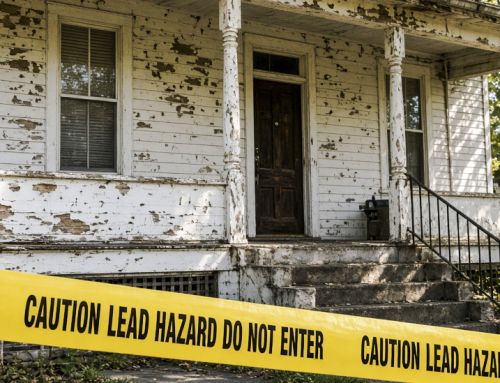
 The Lead Paint Legacy Real Estate Owners Must Take SeriouslySaturday, August 22nd, 2026
 -

-
 Puerto Rico’s Water Crisis – The Era of Potable Water Bankruptcy Has ArrivedSaturday, August 8th, 2026
 -
 Commercial Space Launch Reform – FAA Proposal Will Cut Years from Licensing ApprovalsSaturday, August 1st, 2026
 -
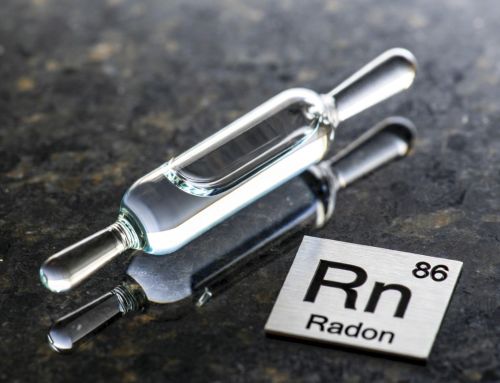
 Radon – Test and Decide for YourselfSaturday, July 25th, 2026
View by Month/Year
“Green Building Law Update” Headlines
Recent Articles & News from
Stuart Kaplow’s blog
at GreenBuildingLawUpdate.com
Subscribe to the Green Building Law Update!
Stuart Kaplow brings his expertise and extensive experience to the table with his unique digital publication, "Green Building Law Update". Subscribers receive regular updates to keep them informed about important issues surrounding Environmental Law, Green Building & Real Estate Law, as well as the emerging demand for Environmental Social Governance (ESG).
Get fresh content through the lense of Stuart Kaplow's cutting-edge expertise, innovative commentary and insider perspective. Don't miss another issue! Subscribe below.
It Is A Big Deal When LEED Is Changed, So Comment Now
The second public comment period on LEED® 2012, the next version of the U.S. Green Building Council’s rating systems, is open through September 14th.
LEED is so widely accepted in our lexicon it is hard to believe LEED celebrated only its 11th anniversary earlier this year. LEED gave us the words and the terms to articulate what a green building is.
The USGBC’s LEED voluntary third party rating system is by far the most widely utilized standard for green building in this country and arguably the now nationally accepted benchmark, if not the dominant green building program in the world.
So it is a big deal when LEED is changed.
Having already changed the culture of the real estate industry, those directly involved in designing and constructing green buildings as well as those in professions ancillary to commercial real estate, all need be aware that LEED is evolving. This brief article is not attempt at summarizing the more than 1,000 pages that are the second comment draft documents, such would be a Sisyphean task, but rather an effort at identifying key directions in the new LEED 2012 draft.
LEED 2012 is projected to launch in November 2012.
With every new version LEED reaches further and sets the bar higher which creates a certain creative tension as USGBC attempts to balance the market (including the many government programs tied to LEED) and environmental urgency in a process of continuous improvement.
This version of LEED is being developed at a time when green building codes, including the International Green Construction Code are gaining market acceptance. The environmental industrial complex makes the case that it’s not a choice between green building codes or voluntary green building rating systems, but rather that the IgCC establishes the floor of what green building is, while LEED is at the ceiling, with the freedom to go further and raise that ceiling higher, blazing new trails toward net zero energy building and onto a truly regenerative built environment.
Continuous improvement
A dry, but necessary, and the largest part of the process of continuous improvement is credit refinement, fixing broken credits and further alignment of the technical content and credit language across all rating systems.
A dramatic change proposed are Project Type Adaptations, where new compliance paths have been added to existing credits to better address specific markets and project types, as opposed to creating new rating systems for data centers, warehouse and distribution centers, hospitality, EB for schools, EB for retail, and Homes mid-rise.
And key to continuous improvement are revised Impact Categories upon which points have been weighted and allocated. The Impact Categories and weight answer, “what do we want LEED projects to accomplish?”
Reverse Contribution to Global Climate Change; Enhance Human Health, Wellbeing, and Vitality; Protect and Restore Water Resources; Protect, Restore, and Enhance Biodiversity and Ecosystem Services; Conserve and Renew Natural Resources; Build a Greener Economy; and Enhance Community: Social Equity, Environmental Justice, and Quality of Life.
The second public comment period
This second public comment period for LEED 2012 responds to the nearly 6,000 comments to the first public comment and a robust amount of feedback gathered through real world pilot testing of credits in the LEED Pilot Credit Library. In responding to those comments and feedback there are two big changes from the last draft, a significantly revamped Materials and Resources category and a reorganized IEQ credit category.
While this article focuses on New Construction, it is of import that the Existing Buildings Operation and Maintenance rating system has been restructured and now has subsets for establishment and performance. Neighborhood Development has been split into two rating systems: Neighborhood Development Plan and Neighborhood Development. Revisions to the, admittedly new, Healthcare rating system were added in this draft.
By count, there are at least 81 major changes proposed from the first draft LEED 2012 New Construction, many of which are aligned with and common to the other rating systems. Among the significant changes are:
Retained from the first draft, three new categories of credits, Integrated Process, Location and Transportation, and Performance have been added the LEED 2009’s seven existing categories of Sustainable Sites, Water Efficiency, Energy and Atmosphere, Materials and Resources, Indoor Environmental Quality, Innovation, and Regional Priority.
Integrative Process
Integrative Process remains as a new category and seeks to answer the question, “how can we achieve an integrative result that augments performance, maintains cost, and in a simplified way that is replicable and measurable?” A new credit has been added to this section, Implementing Strategies. This credit revolves around a commitment to use of ongoing feedback mechanisms during building occupancy (i.e., a credit requiring post construction activity).
There was pushback during the first comment period to the earlier version of the LEED Accredited Professional credit changes from LEED 2009 and a relevant “specialty” is still required in this version, but the new requirement that additional team members be LEED credentialed has been eliminated.
Materials and Resources
The Materials and Resources category has been significantly revamped including eliminating the proposed prerequisite that would have required 10% Recycled Content of a project material budget.
Huge is that eliminated since the first public comment are the old Certified Wood, Regional Materials, Recycled Content, and Materials Reuse credits, along with the new Biobased Materials. And new credits are Environmentally Preferable Non-Structural Products & Materials – Prescriptive Attributes, Non-Structural Materials Transparency, Responsible Sourcing of Raw Materials, and Avoidance of Chemicals of Concern in Building Materials. The seismic shift toward encouraging the use of products and materials with life cycles and ingredients that improve environmental, economic and social performance may be the biggest change proposed in LEED 2012 (and arguably creates a whole new industry for materials certification that could dwarf LEED itself).
As noted, the old Certified Wood credit is gone, but the controversy surrounding that credit will remain. Advocates of a Forestry Stewardship Council (FSC) wood only policy for LEED may take some solace that FSC is the only biobased certification recognized under the Responsible Sourcing credit and that the language from Pilot Credit 43 is not included in the Materials Transparency credit. Opponents of LEED only awarding a credit for FSC certified wood may accept this draft continues to recognize biobased materials without certification, but this will not end the controversy. This issue may be a bit ‘inside baseball’ for some, but the matter of FSC wood only has been among the most significant controversies dogging USGBC.
Indoor Environmental Quality
The Indoor Environmental Quality category has also been significantly restructured around four major topics: ventilation, lighting, acoustics, and occupant experience. The Outdoor Air Delivery Monitoring, Increased Ventilation, and Indoor Chemical and Pollutant Source Control credits have each been deleted. There is a new Enhanced Indoor Air Quality Strategies credit, which has been described as a “repackaging of key requirements” from those deleted credits.
In response to comments to the first draft, an Acoustic Performance credit (previously only available to school projects) will be available to commercial projects.
Other wording changes
The new Performance category remains from the first draft. There have been wording changes in the Water Metering prerequisite and all water must be metered and in instances of users of 100,000 gallons annually, sub metered. Of note, the Fundamental Commissioning prerequisite has been reworded and substantively now adds commissioning of the building envelope.
The Innovation category is largely unchanged from the earlier draft and continues to be eligible for up to 6 credits in lieu of only 5 credits in LEED 2009.
And beyond text edits, the Regional Priority category has not be altered. Those with an interest in this category are advised to work through their local USGBC Chapters, who are charged with selecting the Regional Priority credits.
Conclusion
The ratings systems are all available for review at www.usgbc.org . All are encouraged to comment between now and September 14th. There will likely be a third public comment period commencing January 1, 2012 but the scope of comments solicited may be limited to changes proposed from this version.
The market shift to LEED has been dramatic and a bright spot in an otherwise tough economy.
Green building lead by LEED will soon be the norm and anything else will be substandard.
The consequences of climate change and the resultant governmental responses will be unevenly distributed; this article has been about creating opportunities for you, including advantaging the changes in LEED 2012. If we can assist you in finding those opportunities to lead and profit in green building and sustainable business, do not hesitate to give Stuart Kaplow a call or send an email.
About the Author: Stuart Kaplow