View by Topic
Recent Articles
-
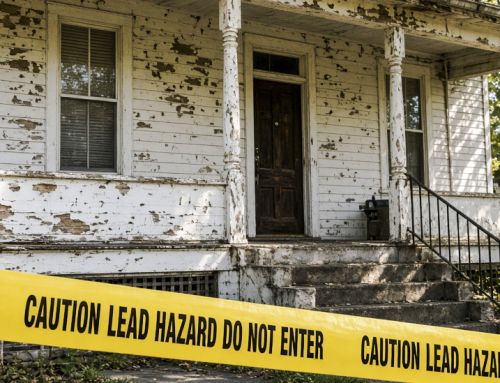
 The Lead Paint Legacy Real Estate Owners Must Take SeriouslySaturday, August 22nd, 2026
 -

-
 Puerto Rico’s Water Crisis – The Era of Potable Water Bankruptcy Has ArrivedSaturday, August 8th, 2026
 -
 Commercial Space Launch Reform – FAA Proposal Will Cut Years from Licensing ApprovalsSaturday, August 1st, 2026
 -
 Radon – Test and Decide for YourselfSaturday, July 25th, 2026
View by Month/Year
“Green Building Law Update” Headlines
Recent Articles & News from
Stuart Kaplow’s blog
at GreenBuildingLawUpdate.com
Subscribe to the Green Building Law Update!
Stuart Kaplow brings his expertise and extensive experience to the table with his unique digital publication, "Green Building Law Update". Subscribers receive regular updates to keep them informed about important issues surrounding Environmental Law, Green Building & Real Estate Law, as well as the emerging demand for Environmental Social Governance (ESG).
Get fresh content through the lense of Stuart Kaplow's cutting-edge expertise, innovative commentary and insider perspective. Don't miss another issue! Subscribe below.
Litigation Over First Ever LEED Platinum Building Requires Contract Changes
Last week, a federal appeals court brought back from the dead, a more than $6 Million lawsuit filed over materials supplied for the first ever LEED certified Platinum building. Despite that the unpublished opinion is not binding precedent, it is having a chilling effect on green building and in particular on the selection of new or untried materials and products that are the keystone of many sustainable projects.
Most immediately the case is already causing contract forms for green building to be modified.
Contracts both between owners and architects and owners and erectors of green buildings are being revised to mitigate risk associated the selection of new or untried materials and products that are the keystone of many sustainable projects, risk associated with using an Integrative Process involving the project team in green building design (.. as opposed to the architect having sole responsibility), and risk arising from a contractually agreed upon period of statute of limitations.
The Chesapeake Bay Foundation v. Weyerhaeuser Companyarose from the construction in 1999 of the Chesapeake Bay Foundation’s headquarters in Annapolis, Maryland. SmithGroup designed the building and Clark Construction oversaw its construction. SmithGroup’s “green” design called for exposed structural wood members outside the building envelope, including some that penetrated the facade. Under a March 3, 2000 purchase order that it entered into with Clark, Weyerhaeuser agreed to provide Parallam PSL columns and beams for use as the exposed wood members.
Parallams, which have a rough-hewn appearance, are manufactured by bonding together strips of wood. Its contract with Clark required Weyerhaeuser to treat the Parallams with the preservative PolyClear 2000, something then new and untested.
Water damage to the Parallams was observed during construction. Following final completion of construction in late December 2000, water began leaking through the Parallams into the building. In 2001 and 2002, the leakage was investigated by two outside consultants hired by Clark. A 2001 report by one of those consultants addressed to the Bay Foundation described that such water could cause deterioration or rot in the Parallams themselves if they were not properly treated with a wood preservative.
In a damning fact that may have had more to do with this court decision than the law, the Bay Foundation “… subsequently learned that the Parallams had not been treated with PolyClear 2000 as certified, that PolyClear 2000 was not in any event well suited to the job of preserving the Parallams, and that Weyerhaeuser had knowingly given false assurances to the contrary.”
The Bay Foundation initiated this case in state court on December 3, 2010 (i.e., 9 years, 11 months and some odd days after final completion) and the case was ultimately removed to the US District of Maryland. The complaint focused on the deterioration of the Parallams. According to the complaint, Weyerhaeuser breached its contract with Clark, owed common law indemnity and contribution to SmithGroup and Clark, and was liable to the Bay Foundation and SmithGroup for negligent misrepresentation and negligence.
The federal trial court, in awarding summary judgment to Weyerhaeuser, concluded that the plaintiffs’ state law claims were time-barred. Maryland’s statute of limitations provides that “[a] civil action at law shall be filed within three years from the date it accrues unless another provision of the Code provides a different period of time within which an action shall be commenced.” Maryland follows the discovery rule, which provides that “the cause of action accrues when the claimant in fact knew or reasonably should have known of the wrong.” And the trial court reasoned the 2001 report did just that.
But, the three judge panel of the Fourth Circuit Court of Appeals vacated the more than 2 year old order (that had dismissed the case) and remanded the case for further proceedings.
The federal appellate court said, “viewing the evidence in the light most favorable to the plaintiffs, a genuine dispute exists as to whether knowledge of the water infiltration problem would have put a reasonable person on notice that the Parallams were susceptible to premature deterioration and that their PolyClear 2000 treatment would not preserve them.”
My Green Building Law Update Blog will continue to watch the saga that are these disputes and differences arising out of the first LEED Platinum certified building. And while only time will tell if this case will have a chilling effect on green building, it certainly will cause architects to give pause before specifying new or untried materials and products that are the keystone of many sustainable projects.
The case is already causing architects, construction companies, and other involved in sustainable building to modify their contract forms.
The risk associated with sustainable building can be averted with good, precise and uniquely drafted contract language; but make no mistake these are not your grandfather’s lawyer’s contracts. It is time now – today – to revise your form contracts.
About the Author: Stuart Kaplow