View by Topic
Recent Articles
-
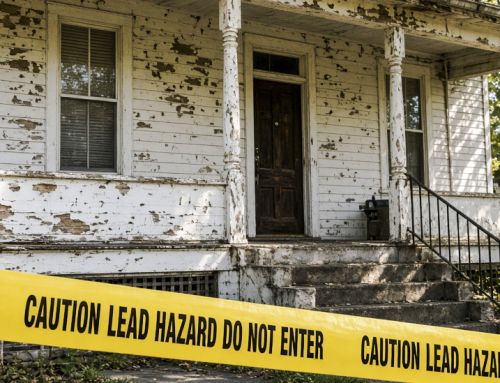
 The Lead Paint Legacy Real Estate Owners Must Take SeriouslySaturday, August 22nd, 2026
 -

-
 Puerto Rico’s Water Crisis – The Era of Potable Water Bankruptcy Has ArrivedSaturday, August 8th, 2026
 -
 Commercial Space Launch Reform – FAA Proposal Will Cut Years from Licensing ApprovalsSaturday, August 1st, 2026
 -
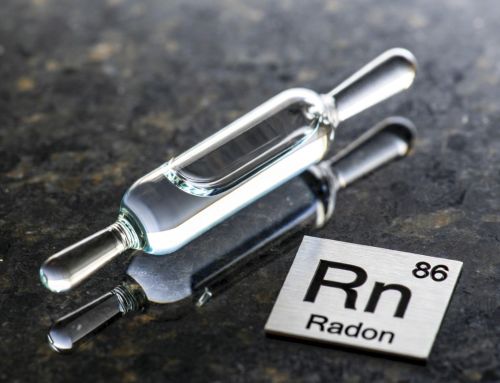
 Radon – Test and Decide for YourselfSaturday, July 25th, 2026
View by Month/Year
“Green Building Law Update” Headlines
Recent Articles & News from
Stuart Kaplow’s blog
at GreenBuildingLawUpdate.com
Subscribe to the Green Building Law Update!
Stuart Kaplow brings his expertise and extensive experience to the table with his unique digital publication, "Green Building Law Update". Subscribers receive regular updates to keep them informed about important issues surrounding Environmental Law, Green Building & Real Estate Law, as well as the emerging demand for Environmental Social Governance (ESG).
Get fresh content through the lense of Stuart Kaplow's cutting-edge expertise, innovative commentary and insider perspective. Don't miss another issue! Subscribe below.
ASHRAE 189.1 – 2014 Green Building Standard Is Now Available
Last week the 2014 version of the ASHRAE 189.1 Green Building Standard was published and became available for use.
ANSI/ASHRAE/USGBC/IES Standard 189.1-2014, Standard for the Design of High-Performance, Green Buildings Except Low-Rise Residential Buildings, addresses site sustainability; water-use efficiency; energy ef¬ficiency; indoor environmental quality; and the building’s impact on the atmosphere, materials and resources.
Standard 189.1 is an alternative compliance option of the International Green Construction Code. When Baltimore City adopted the IgCC last week, its enactment expressly described that buildings designed in compliance with Standard 189.1 were exempt from compliance with the IgCC. Given the timing of the enactment, Baltimore adopted the December 2011 version of 189.1.
The 2014 standard incorporates 67 addenda, reflecting changes made through the public review process since the standard was last published in 2011. Appendix H gives brief descriptions and approval dates of the addenda included in this new edition.
According to ASHRAE, major changes in the 2014 edition include:
• Energy: Significant updates are included to reflect the publication of Standard 90.1-2013, Energy Standard for Buildings Except Low-Rise Residential Buildings, including revised building envelope provisions. Fenestration orientation requirements were updated based on new research, as well as changes and updates made to equipment efficiency tables, ENERGYSTAR references and continuous air-barrier requirements.
• Energy Performance, Carbon Dioxide Emissions, and Renewables: Changes and clarifications are included to reflect changes to Standard 90.1. Carbon dioxide emission factors for different energy sources are updated.
• Indoor Environmental Quality: Lighting quality is added to the scope of this section, and requirements are added for lighting controls in specific space types. Requirements for air sealing of filtration and air-cleaning equipment are clarified, and new requirements for preoccupancy ventilation and building envelope moisture management are added.
• Site Sustainability: All site requirements are now mandatory, with prescriptive and performance options moved to the mandatory requirements. Requirements for stormwater management are enhanced, and new requirements added for bicycle parking and for preferred parking for low-emission, hybrid and electric vehicles. New requirements are added for predesign assessment of native and invasive plants.
• Water: More stringent water use requirements are included for toilets, clothes washers, dishwashers and green roofs.
• Building Impacts on the Atmosphere, Materials, and Resources: Requirements are updated for areas to store and collect recyclables, including batteries and electronics. Requirements also are updated for construction waste management and for life-cycle assessment. New requirements are added for multiple-attribute product declaration or certification and for maximum mercury content levels of certain types of electric lamps.
• Construction and Plans for Operation: Requirements related to environmental impacts associated with idling construction vehicles are updated. New requirements are added to reduce the entry of airborne contaminants associated with construction areas.
To appreciate the importance of a republished ASHRAE 189.1, note that the Department of Defense, the largest owner of buildings in North America, that is also the owner or more green building and more LEED certified building than anyone else, based its Unified Facilities Criteria 1-200-02 High Performance And Sustainable Building Requirement on 2009 version of the Standard.
This may also be the last time the ASHRAE publishes 189.1 as an independent standard. In August the International Code Council, ASHRAE, the American Institute of Architects, the Illuminating Engineering Society of North America, and the U.S. Green Building Council announced the signing of a memorandum to collaborate on the development of future versions of Standard 189.1.
To order the Standard visit www.ashrae.org/bookstore.
About the Author: Stuart Kaplow