View by Topic
Recent Articles
-
 The Lead Paint Legacy Real Estate Owners Must Take SeriouslySaturday, August 22nd, 2026
 -

-
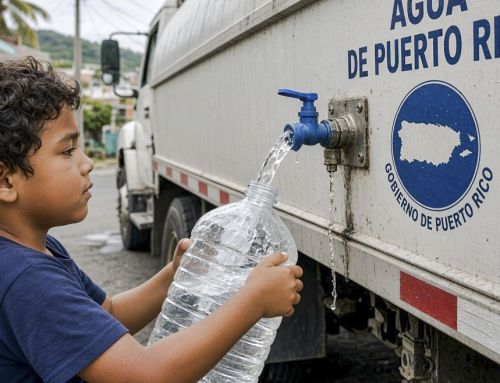
 Puerto Rico’s Water Crisis – The Era of Potable Water Bankruptcy Has ArrivedSaturday, August 8th, 2026
 -
 Commercial Space Launch Reform – FAA Proposal Will Cut Years from Licensing ApprovalsSaturday, August 1st, 2026
 -
 Radon – Test and Decide for YourselfSaturday, July 25th, 2026
View by Month/Year
“Green Building Law Update” Headlines
Recent Articles & News from
Stuart Kaplow’s blog
at GreenBuildingLawUpdate.com
Subscribe to the Green Building Law Update!
Stuart Kaplow brings his expertise and extensive experience to the table with his unique digital publication, "Green Building Law Update". Subscribers receive regular updates to keep them informed about important issues surrounding Environmental Law, Green Building & Real Estate Law, as well as the emerging demand for Environmental Social Governance (ESG).
Get fresh content through the lense of Stuart Kaplow's cutting-edge expertise, innovative commentary and insider perspective. Don't miss another issue! Subscribe below.
Environmental Performance Increasingly Key to CEOs
This article first appeared on my Green Building Law Update blog. The blog is intended for the entire environmental industrial complex, .. not just lawyers.
Please check out the blog and sign up for a weekly notice of new blog posts via email, at Green Building Law Update blog.
It is significant when the Harvard Business Review alters its methodology in ranking the best performing CEOs in the world to now take into account a company’s environmental performance.
Increasingly CEOs are coming to appreciate it is okay to make a profit while saving the planet.
Harvard Business Review’s self described mission is “to improve the practice of management in a changing world.” The business journal is highly regarded and widely read by business leaders across the globe.
Yes, the publication is not the conservative Eastern business school tome it was when it began in 1922, but it is also certainly not Mother Jones magazine.
And while the Harvard Business Review is not where you would turn for legal advice on the fiduciary duty of management to maximize corporate profit and shareholder value, the U.S. Supreme Court opinion in the recent Hobby Lobby proffered “Modern corporate law does not require for-profit corporations to pursue profit at the expense of everything else, and many do not.”
With that instruction maybe we should not be surprised that for the first time this year the Harvard Business Review ranking of the best performing CEOs added to the calculation a company’s environmental, social and governance performance. In past years the ranking was based solely on market numbers. The publication had ranked “total shareholder return, as well as change in each company’s market capitalization.” Those financial metrics are now weighted at 80% and environmental, social and governance performance at 20%.
On the hard numbers alone, Amazon’s Jeff Bezos would apparently lead all other CEOs in the ranking, as he did in 2014. But Amazon’s low environmental, social and governance performance score drops Bezos down to #87 overall in 2015. Novo Nordisk’s Lars Sørensen ranked 6th in financial metrics alone, but when coupled with a good environmental, social and governance performance rating, catapulted him to this year’s top performing CEO.
The article in the November issue includes quotes from an interview with Sørensen, including, “Corporate social responsibility is nothing but maximizing the value of your company over a long period.” Sørensen goes on to say, “In the long term, social and environmental issues become financial issues.”
Closely related, in a recent blog post I described how in recent weeks this law firm has received more inquiries than at any time in recent years about environmental disclosures from public companies as they consider climate change.
Moreover, historically less than 5% of this law firm’s work had been corporate sustainability (with green building being the majority of our work), and today that work, both law and non law, is nearly 50% of our new business.
The tide is turning and environmental issues are not only being appreciated more broadly in terms of fiduciary duty, but also understood as related to maximizing company value.
The Harvard Business Review rated and ranked 907 CEOs from 896 companies. Those executives represented 46 nationalities and ran businesses based in 30 countries. The article is worthy of your read.
About the Author: Stuart Kaplow